
Cart

Your cart is currently empty.

Sub Total: 0.00

Category: Cyber Security

Cyber Security Salary in India

Cyber Security Salary in India (2026): Complete Guide

Cyber security is one of the fastest-growing fields in the Indian IT industry, and salaries reflect that demand. Rather than one fixed number, think of cyber security salary as a range that depends heavily on where you are in your career, which specific role you hold, and which city you work in. A fresher just entering the field will naturally earn less than someone with five years of hands-on experience handling real security incidents. Similarly, a generalist security analyst role usually pays differently compared to a specialised role like a penetration tester or cloud security engineer. Instead of chasing an exact number, it helps to understand the factors that push salaries higher, since these are things you can actually work on. Factors That Affect Cyber Security Salary Several factors directly influence how much a cyber security professional earns in India: Experience level: More years of hands-on experience generally means higher pay, especially experience handling real incidents, not just theoretical knowledge. Job role and specialisation: Specialised roles like penetration testing or cloud security often pay more than generalist roles, since fewer professionals have deep expertise in these areas. City and company: Metro cities like Bangalore, Mumbai, and Hyderabad, along with larger companies and MNCs, generally offer higher packages than smaller cities or companies. Certifications: Industry-recognised certifications can strengthen your profile and often support higher pay, especially for mid-level and senior roles. Industry: Sectors like banking, fintech, and IT services often invest more heavily in security, which can reflect in the packages they offer. Skill set: Practical skills in tools like network monitoring, penetration testing, and cloud security platforms tend to be valued more than certificates alone. Salary by Experience Level Experience Level | Typical Role | General Salary TrendEntry-Level (0–2 years) | Security Analyst, SOC Analyst | Lower end of the pay scale, growing with hands-on project exposureMid-Level (2–5 years) | Security Engineer, Penetration Tester | Noticeably higher than entry-level, based on specialised skillsSenior-Level (5–10 years) | Security Architect, Incident Response Lead | Significantly higher, reflecting deep expertise and responsibilityLeadership (10+ years) | CISO, Head of Security | Among the highest in the field, tied to strategic responsibility Note: These are general trends, not fixed figures. Actual pay depends on the specific company, city, and individual skill set. Salary by Job Role Different cyber security roles come with different responsibilities, and pay usually reflects that. Security Analyst: Monitors systems for threats and handles initial-level incident response. Usually an entry point into the field. Penetration Tester: Legally tests systems to find vulnerabilities before attackers do. Requires specialised, hands-on offensive security skills. Security Engineer: Designs and implements security infrastructure and tools. Requires strong technical and networking knowledge. Cloud Security Specialist: Focuses on securing cloud-based systems and platforms, a fast-growing and well-paid specialisation. Incident Responder: Investigates and manages active security breaches, requiring quick thinking under pressure. Security Consultant: Advises organisations on improving their overall security posture, often requiring both technical and communication skills. CISO (Chief Information Security Officer): A senior leadership role overseeing an organisation’s entire security strategy, typically requiring many years of experience. Salary by City City generally plays a meaningful role in cyber security salaries across India, mainly because of cost of living and concentration of IT and security-focused companies. Metro cities like Bangalore, Hyderabad, Pune, and Mumbai tend to offer higher packages, largely due to a higher concentration of IT companies, startups, and MNCs actively hiring for security roles. Tier-2 cities like Lucknow, Jaipur, and Indore are steadily growing in terms of IT and security-related job opportunities, though packages may currently trend lower compared to metro cities. Remote and hybrid roles have also become more common in cyber security, which is gradually reducing the gap between city-based and location-independent pay in some companies. How Certifications Impact Salary Certifications alone do not guarantee a specific salary, but they often strengthen a candidate’s profile and can support better pay, especially when combined with practical skills. Some widely recognised areas of certification in the cyber security field include network security, ethical hacking, cloud security platforms, and security management frameworks. Employers generally value certifications more when they are backed by real, hands-on project experience, rather than treated as a replacement for practical skills. This is why many training programs combine certification preparation with actual lab-based practice. Highest Paying Cyber Security Jobs While exact figures vary by company and location, certain roles are generally recognised as being among the higher-paying paths within cyber security as professionals gain experience: Security Architect — designs the overall security structure for an organisation’s systems. Cloud Security Engineer — a fast-growing, specialised role due to rising cloud adoption. Penetration Tester (Senior-Level) — highly skilled offensive security experts are in strong demand. Incident Response Manager — leads teams responding to major security breaches. CISO — the senior-most cyber security leadership role in most organisations. How to Increase Your Cyber Security Salary Build hands-on experience through labs, internships, or real projects, not just theoretical study. Specialise in a high-demand area like cloud security, penetration testing, or incident response rather than staying purely generalist. Earn relevant, recognised certifications that align with your chosen specialisation. Keep learning continuously, since cyber threats and defence techniques evolve constantly. Develop strong documentation and communication skills, since explaining risks clearly is valued at senior levels. Consider relocating to or working remotely for companies based in metro cities if location flexibility is possible for you. Skills That Help You Earn More Strong understanding of networking and how data flows between systems Hands-on experience with tools like Wireshark, Nmap, and Metasploit Familiarity with cloud platforms and cloud-specific security practices Scripting knowledge, often in Python, to automate security tasks Strong analytical thinking to identify unusual patterns quickly Clear communication skills for explaining technical risks to non-technical teams Career Growth Path A typical cyber security career often follows a path like this: starting as a Security Analyst or SOC Analyst, moving into a more specialised role like Penetration Tester or Security Engineer, then progressing into Senior Security Engineer or Security Architect, and

Explore More

Cyber Security Salary in India

Cyber Security Salary in India (2026): Complete Guide

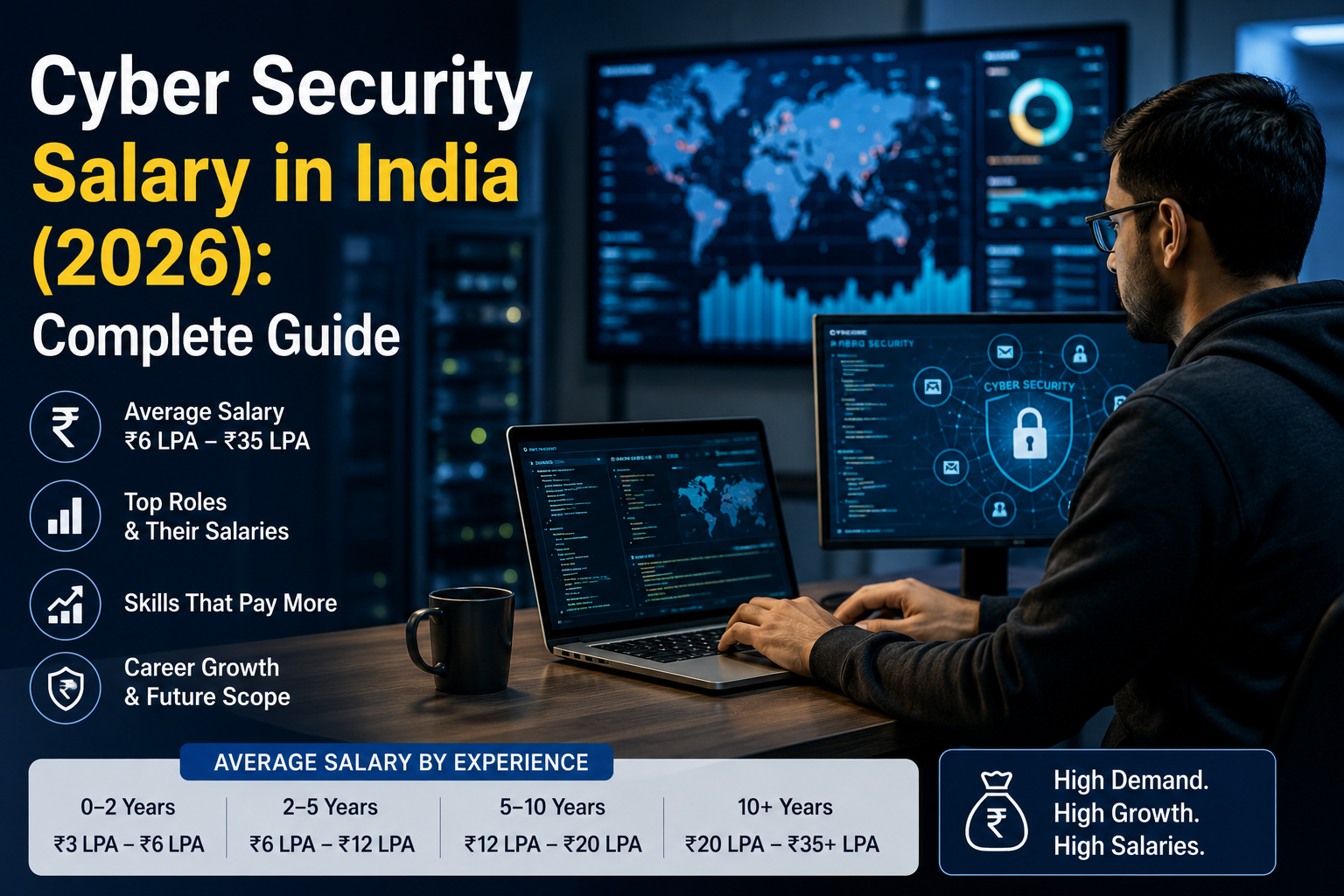
Cyber security is one of the fastest-growing fields in the Indian IT industry, and salaries reflect that demand. Rather than one fixed number, think of cyber security salary as a range that depends heavily on where you are in your career, which specific role you hold, and which city you work in. A fresher just entering the field will naturally earn less than someone with five years of hands-on experience handling real security incidents. Similarly, a generalist security analyst role usually pays differently compared to a specialised role like a penetration tester or cloud security engineer. Instead of chasing an exact number, it helps to understand the factors that push salaries higher, since these are things you can actually work on. Factors That Affect Cyber Security Salary Several factors directly influence how much a cyber security professional earns in India: Experience level: More years of hands-on experience generally means higher pay, especially experience handling real incidents, not just theoretical knowledge. Job role and specialisation: Specialised roles like penetration testing or cloud security often pay more than generalist roles, since fewer professionals have deep expertise in these areas. City and company: Metro cities like Bangalore, Mumbai, and Hyderabad, along with larger companies and MNCs, generally offer higher packages than smaller cities or companies. Certifications: Industry-recognised certifications can strengthen your profile and often support higher pay, especially for mid-level and senior roles. Industry: Sectors like banking, fintech, and IT services often invest more heavily in security, which can reflect in the packages they offer. Skill set: Practical skills in tools like network monitoring, penetration testing, and cloud security platforms tend to be valued more than certificates alone. Salary by Experience Level Experience Level | Typical Role | General Salary TrendEntry-Level (0–2 years) | Security Analyst, SOC Analyst | Lower end of the pay scale, growing with hands-on project exposureMid-Level (2–5 years) | Security Engineer, Penetration Tester | Noticeably higher than entry-level, based on specialised skillsSenior-Level (5–10 years) | Security Architect, Incident Response Lead | Significantly higher, reflecting deep expertise and responsibilityLeadership (10+ years) | CISO, Head of Security | Among the highest in the field, tied to strategic responsibility Note: These are general trends, not fixed figures. Actual pay depends on the specific company, city, and individual skill set. Salary by Job Role Different cyber security roles come with different responsibilities, and pay usually reflects that. Security Analyst: Monitors systems for threats and handles initial-level incident response. Usually an entry point into the field. Penetration Tester: Legally tests systems to find vulnerabilities before attackers do. Requires specialised, hands-on offensive security skills. Security Engineer: Designs and implements security infrastructure and tools. Requires strong technical and networking knowledge. Cloud Security Specialist: Focuses on securing cloud-based systems and platforms, a fast-growing and well-paid specialisation. Incident Responder: Investigates and manages active security breaches, requiring quick thinking under pressure. Security Consultant: Advises organisations on improving their overall security posture, often requiring both technical and communication skills. CISO (Chief Information Security Officer): A senior leadership role overseeing an organisation’s entire security strategy, typically requiring many years of experience. Salary by City City generally plays a meaningful role in cyber security salaries across India, mainly because of cost of living and concentration of IT and security-focused companies. Metro cities like Bangalore, Hyderabad, Pune, and Mumbai tend to offer higher packages, largely due to a higher concentration of IT companies, startups, and MNCs actively hiring for security roles. Tier-2 cities like Lucknow, Jaipur, and Indore are steadily growing in terms of IT and security-related job opportunities, though packages may currently trend lower compared to metro cities. Remote and hybrid roles have also become more common in cyber security, which is gradually reducing the gap between city-based and location-independent pay in some companies. How Certifications Impact Salary Certifications alone do not guarantee a specific salary, but they often strengthen a candidate’s profile and can support better pay, especially when combined with practical skills. Some widely recognised areas of certification in the cyber security field include network security, ethical hacking, cloud security platforms, and security management frameworks. Employers generally value certifications more when they are backed by real, hands-on project experience, rather than treated as a replacement for practical skills. This is why many training programs combine certification preparation with actual lab-based practice. Highest Paying Cyber Security Jobs While exact figures vary by company and location, certain roles are generally recognised as being among the higher-paying paths within cyber security as professionals gain experience: Security Architect — designs the overall security structure for an organisation’s systems. Cloud Security Engineer — a fast-growing, specialised role due to rising cloud adoption. Penetration Tester (Senior-Level) — highly skilled offensive security experts are in strong demand. Incident Response Manager — leads teams responding to major security breaches. CISO — the senior-most cyber security leadership role in most organisations. How to Increase Your Cyber Security Salary Build hands-on experience through labs, internships, or real projects, not just theoretical study. Specialise in a high-demand area like cloud security, penetration testing, or incident response rather than staying purely generalist. Earn relevant, recognised certifications that align with your chosen specialisation. Keep learning continuously, since cyber threats and defence techniques evolve constantly. Develop strong documentation and communication skills, since explaining risks clearly is valued at senior levels. Consider relocating to or working remotely for companies based in metro cities if location flexibility is possible for you. Skills That Help You Earn More Strong understanding of networking and how data flows between systems Hands-on experience with tools like Wireshark, Nmap, and Metasploit Familiarity with cloud platforms and cloud-specific security practices Scripting knowledge, often in Python, to automate security tasks Strong analytical thinking to identify unusual patterns quickly Clear communication skills for explaining technical risks to non-technical teams Career Growth Path A typical cyber security career often follows a path like this: starting as a Security Analyst or SOC Analyst, moving into a more specialised role like Penetration Tester or Security Engineer, then progressing into Senior Security Engineer or Security Architect, and

Explore More
Is Cyber Security a Good Career Option for Freshers

Is Cyber Security a Good Career Option for Freshers in 2026?

With cyberattacks, data breaches, and online fraud increasing every year, Cyber Security has become one of the most talked-about career fields in India. But for freshers still deciding on their career path, a common question remains — is Cyber Security actually a good career option in 2026? This blog breaks down the job scope, salary potential, required skills, and long-term growth to help you make an informed decision. Why Cyber Security Is Gaining Importance in 2026 As businesses shift more operations online, cloud platforms, digital payments, and remote work have increased the risk of cyber threats. Companies across every sector now need skilled professionals to protect sensitive data, making Cyber Security a high-priority hiring area. Key Reasons Cyber Security Is a Good Career for Freshers Reason Why It Matters High Job Demand Growing cyber threats have increased hiring across industries Strong Salary Packages Even entry-level roles offer competitive pay Multiple Career Paths Options like analyst, ethical hacker, consultant & more Future-Proof Field Cyber threats are unlikely to reduce, ensuring long-term demand Remote Work Opportunities Many roles allow hybrid or remote working options Entry-Level Cyber Security Job Roles Job Role Key Responsibilities Security Analyst Monitoring systems & identifying threats SOC Analyst Handling real-time security alerts Junior Penetration Tester Testing systems for vulnerabilities IT Security Support Managing basic security infrastructure Cyber Security Salary for Freshers in India (2026) Experience Level Job Role Average Salary (INR/Year) 0–1 Year Security Analyst ₹4 – ₹6 LPA 1–3 Years Cyber Security Engineer ₹6 – ₹10 LPA 3–5 Years Security Consultant ₹10 – ₹16 LPA 5+ Years Security Manager/Lead ₹16 LPA+ Skills Freshers Need to Start This Career Skill Category Key Skills Technical Basics Networking, Operating Systems Security Fundamentals Firewalls, IDS/IPS, Ethical Hacking Basics Tools Wireshark, Nmap, Metasploit Certifications CompTIA Security+, CEH Soft Skills Analytical Thinking, Communication Challenges Freshers Should Be Aware Of While Cyber Security offers strong growth, freshers should expect continuous learning, as threats and technologies evolve constantly. Staying updated through certifications and practical labs is essential for long-term success in this field. How Freshers Can Start Their Cyber Security Journey Enrolling in a structured Cyber Security course with hands-on labs, real-world simulations, and certification guidance helps freshers build practical skills faster compared to self-study alone. Frequently Asked Questions (FAQs) Final Thoughts Cyber Security is proving to be a strong and future-proof career option for freshers in 2026. With rising cyber threats, growing job opportunities, and competitive salary packages, this field offers both stability and long-term growth potential. For freshers willing to build the right technical skills and stay updated through certifications, Cyber Security can be a rewarding career path with multiple growth opportunities across industries.

Explore More
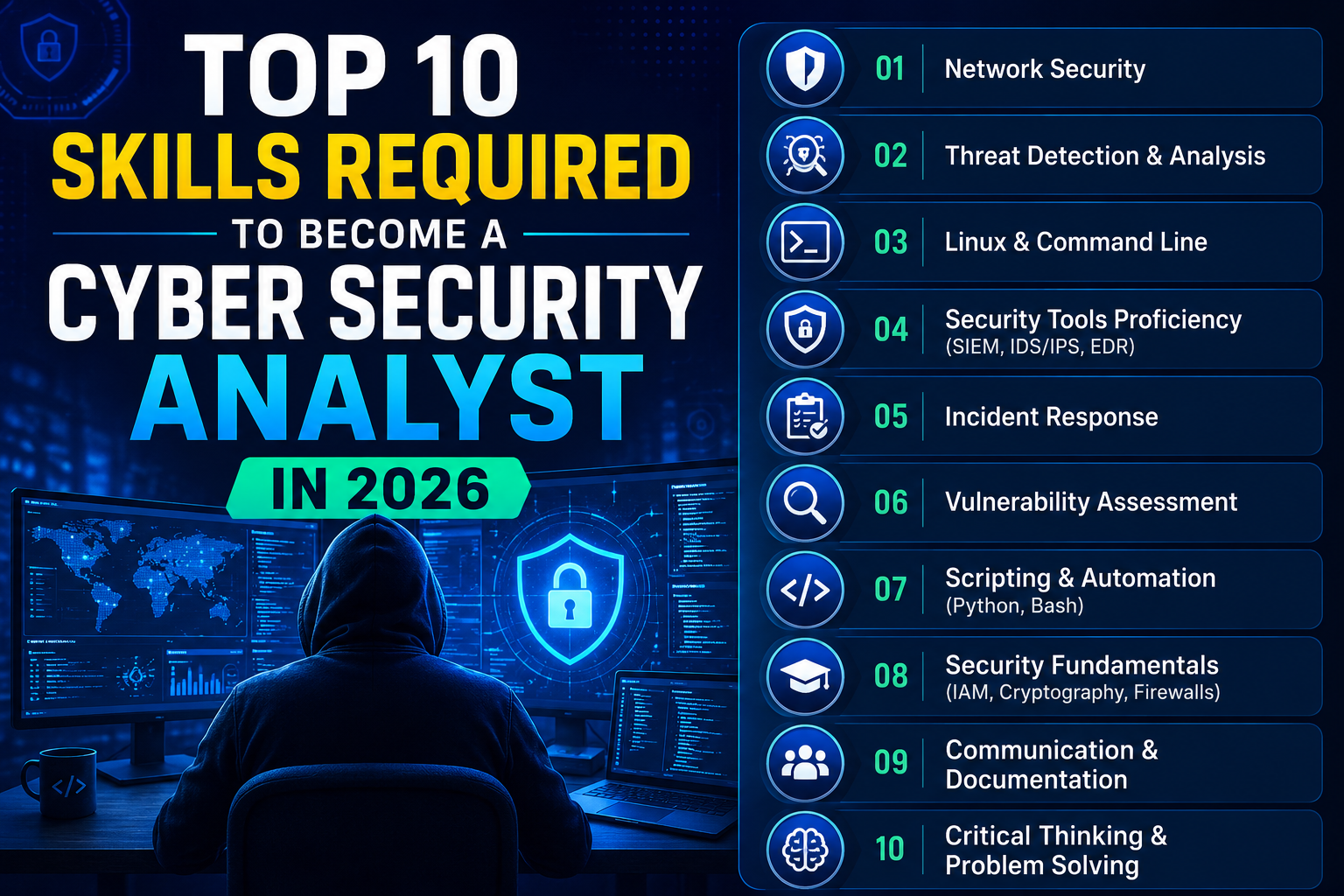
Top 10 Skills Required to Become a Cyber Security Analyst in 2026

Top 10 Skills Required to Become a Cyber Security Analyst in 2026

Cyber Security has become one of the most critical career fields in India, as businesses face growing threats from hackers, data breaches, and cyberattacks. Companies are actively hiring skilled Cyber Security Analysts to protect their systems and data. But to land this role in 2026, beginners need to build the right mix of technical and analytical skills. This blog breaks down the top 10 skills every aspiring Cyber Security Analyst must learn. Why Cyber Security Skills Matter in 2026 With rising digital transactions, cloud adoption, and remote work, cyber threats are increasing every year. Organizations need professionals who not only understand security tools but can also think like attackers to prevent breaches before they happen. Top 10 Skills Required for a Cyber Security Analyst Rank Skill Why It’s Important 1 Networking Fundamentals Helps understand how data flows and where vulnerabilities exist 2 Operating Systems Knowledge Essential for securing Windows, Linux & Mac environments 3 Ethical Hacking Basics Helps identify weaknesses before attackers exploit them 4 Firewall & IDS/IPS Management Protects networks from unauthorized access 5 Security Information & Event Management (SIEM) Used for real-time threat monitoring 6 Cryptography Basics Important for data encryption and secure communication 7 Risk Assessment & Management Helps identify and prioritize security risks 8 Scripting (Python/Bash) Useful for automating security tasks 9 Cloud Security Knowledge Critical as more companies shift to cloud platforms 10 Communication & Reporting Skills Needed to explain risks to non-technical teams Tools Every Cyber Security Analyst Should Know Tool Category Popular Tools Network Monitoring Wireshark, Nmap SIEM Tools Splunk, IBM QRadar Vulnerability Scanning Nessus, OpenVAS Penetration Testing Metasploit, Burp Suite Certifications That Add Value in 2026 Certification Best For CompTIA Security+ Beginners entering Cyber Security Certified Ethical Hacker (CEH) Ethical hacking & penetration testing CISSP Advanced security management roles CISM Security governance & risk roles Career Growth After Gaining These Skills Experience Level Job Role Average Salary (INR/Year) 0–1 Year Security Analyst ₹4 – ₹6 LPA 1–3 Years Cyber Security Engineer ₹6 – ₹10 LPA 3–5 Years Security Consultant ₹10 – ₹16 LPA 5+ Years Security Manager/Lead ₹16 LPA+ How to Start Building These Skills Enrolling in a structured Cyber Security course with hands-on labs, real-world simulations, and certification guidance helps beginners learn faster compared to self-study, especially when practical exposure is limited. Frequently Asked Questions (FAQs) Final Thoughts Becoming a Cyber Security Analyst in 2026 requires a strong mix of technical knowledge, practical tools, and analytical thinking. From understanding networking basics to mastering SIEM tools and earning the right certifications, each skill plays a role in building a strong foundation for this career. As cyber threats continue to grow across industries, skilled analysts remain in high demand, offering excellent salary growth and long-term career stability. With the right training and consistent practice, beginners can confidently step into this fast-growing field and build a successful future in Cyber Security.

Explore More
Cyber Security Course Fees in India — Complete Cost Breakdown 2026

Cyber Security Course Fees in India — Complete Cost Breakdown 2026

Most students searching for a cyber security course do the same thing — they look at one number on a website and assume that is the full cost. It rarely is. Course costs for cyber security vary widely depending on the level, delivery mode, and services included — and students often focus only on the sticker price and miss extra value items such as lab hours, exam vouchers, mentorship, and placement support. This guide gives you the complete, honest picture — what you actually pay, what is often hidden, and which option makes the most sense for your career stage in 2026. Cyber Security Course Fees by Program Type — 2026 Cyber security education in India is offered across multiple levels, with fees ranging from ₹10,000 for certificate courses to around ₹12,00,000 for postgraduate programmes. Here is how that breaks down clearly: GRMI Program Type Fee Range Duration Best For Short-term Certificate ₹10,000 – ₹30,000 1 – 3 months Basics, awareness, beginners Diploma / Offline Institute ₹25,000 – ₹60,000 3 – 6 months Freshers needing placement Ethical Hacking / CEH Track ₹20,000 – ₹2,00,000 1 – 6 months Specialized security roles Online Bootcamp ₹50,000 – ₹1,50,000 4 – 8 months Working professionals PG Diploma ₹2,00,000 – ₹5,00,000 1 – 2 years Long-term investment UG / PG Degree ₹1,00,000 – ₹20,00,000 3 – 4 years Academic career path For freshers in Lucknow and UP, a quality offline institute program priced between ₹25,000 and ₹60,000 delivers the best early-career outcome — strong enough curriculum with local placement support at a fraction of premium bootcamp costs. Hidden Costs Most Students Miss This is where budgets fall short. Access to SIEM tools, cloud infrastructure, penetration-testing software, and virtual attack labs can add ₹50,000 to ₹1,00,000 or more to the total investment if not included within the course fee. Always ask these questions before paying: Scaler Hidden Cost Typical Range Ask Before Joining Certification exam voucher ₹20,000 – ₹1,00,000 Is this included in fees? Lab / simulator access ₹5,000 – ₹50,000/year Are labs provided in-house? Study material / courseware ₹3,000 – ₹15,000 Included or separate? GST (18%) Added on top Is quoted price GST-inclusive? Re-examination fee ₹15,000 – ₹40,000 Is one free attempt included? A course that looks affordable at ₹30,000 can easily cost ₹80,000+ once exam vouchers and lab subscriptions are added. Always ask for a full cost breakup — not just the training fee. Fees by Specialization — Which Track Costs What Not all cyber security courses are the same. Different specializations carry different price points: Specialization Fee Range Entry-Level Salary After General Cyber Security (Foundation) ₹15,000 – ₹50,000 ₹3 – ₹5 LPA Ethical Hacking / Penetration Testing ₹25,000 – ₹2,00,000 ₹5 – ₹9 LPA SOC Analyst Training ₹35,000 – ₹80,000 ₹4 – ₹7 LPA Cloud Security (AWS/Azure) ₹40,000 – ₹1,20,000 ₹6 – ₹10 LPA Network Security (CCNA Security) ₹20,000 – ₹60,000 ₹4 – ₹7 LPA Digital Forensics ₹30,000 – ₹1,00,000 ₹4 – ₹8 LPA For freshers with no IT background, a general cyber security foundation course is the right starting point — it costs less, takes less time, and gives you the base needed before moving into specialized tracks. Online vs Offline Cyber Security Course — Fee and Value Comparison Classroom training is typically 20–30% more expensive than online-only courses but offers superior lab access and networking opportunities. Nexson IT Academy Factor Online Course Offline Institute Typical Fee ₹30,000 – ₹1,50,000 ₹25,000 – ₹60,000 Lab Access Self-managed, often extra cost Included, supervised Placement Support Generic job board access Local recruiter network Doubt Resolution Forum / delayed ticket Instant, in-person Best For Self-starters, working professionals Freshers needing structure Return on Investment — How Fast Does the Fee Pay Back? This is the number that actually matters. Entry-level salaries for SOC Analyst and junior penetration tester roles in India range from ₹4 to ₹7 LPA — meaning a ₹40,000 to ₹60,000 course fee pays back within 2 to 3 months of first salary. Networkers Home Course Investment Entry Salary Payback Period ₹25,000 – ₹60,000 (Institute) ₹3.5 – ₹6 LPA 1 – 3 months ₹80,000 – ₹1,50,000 (Bootcamp) ₹5 – ₹8 LPA 3 – 6 months ₹2,00,000+ (PG Diploma) ₹6 – ₹10 LPA 6 – 12 months For freshers with no IT background, an offline institute program offers the fastest return — lower fee, active placement support, and a direct path to first salary. Aptech Learning Lucknow — Cyber Security Course Details Feature Details Eligibility Class 12 pass or above, any stream Course Duration 3 to 6 months Batch Options Morning / Evening / Weekend Mode Offline — Mahanagar, Lucknow Certification Aptech — recognized pan-India Topics Covered Network security, ethical hacking basics, cyber hygiene, security tools Placement Support Resume + Mock Interviews + Recruiter Referrals Contact +91 6386 119 566 No prior IT background required. The program is built for beginners from any stream and builds progressively toward job-ready skills. Frequently Asked Questions (FAQs) Know What You Are Paying For Before You Pay The right cyber security course is not the cheapest or the most expensive — it is the one that gets you job-ready with the least hidden cost and the most placement support. 📞 Call / WhatsApp: +91 6386 119 566📧 Email: digilearninglko@gmail.com🌐 Website: aptechlearninglko.com📍 Address: First Floor, Above Radiance, 18 J Road, Near Midland Healthcare, Mahanagar, Lucknow

Explore More
Cyber Security vs Ethical Hacking: Which Course Should You Choose

Cyber Security vs Ethical Hacking: Which Course Should You Choose?

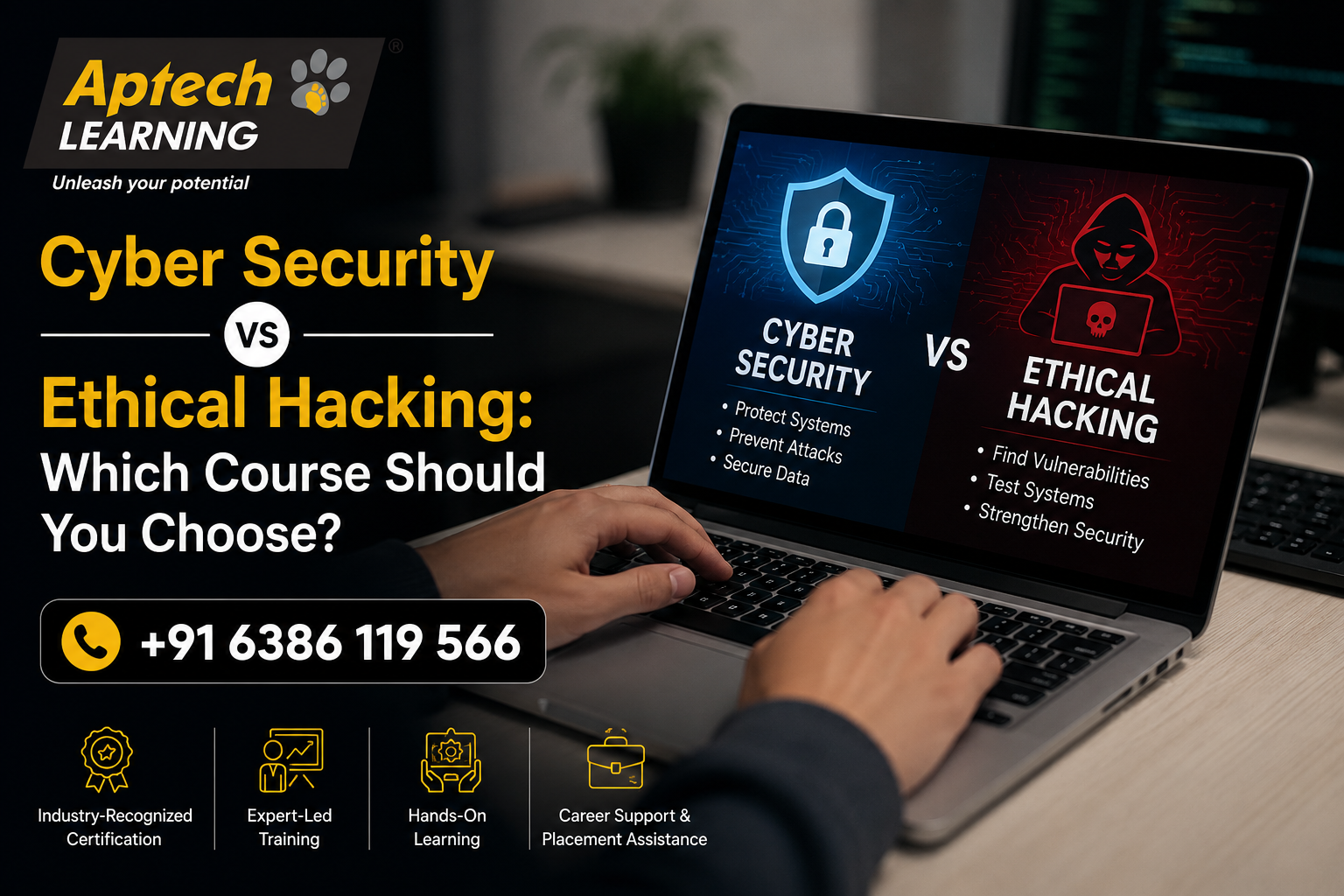
If you’re planning a career in IT security, you’ve probably asked yourself this question: should I learn Cyber Security or Ethical Hacking? Both fields sound similar, but they are actually quite different in scope, skills, and career paths. In this blog, we’ll break down the real differences so you can make the right choice for your future. What is Cyber Security? Cyber Security is a broad field that focuses on protecting systems, networks, and data from digital attacks. It covers everything from securing servers and firewalls to managing risk and compliance. A cyber security professional builds and maintains the defense system of an organization. What is Ethical Hacking? Ethical Hacking is a specialized branch within cyber security. Ethical hackers, also called “white hat hackers,” legally break into systems to find vulnerabilities before real hackers can exploit them. It’s a hands-on, attack-focused skill set used to test how strong a system’s defense really is. Cyber Security vs Ethical Hacking: Key Differences Parameter Cyber Security Ethical Hacking Scope Broad field covering defense, policies, risk management Narrow, focused on finding system vulnerabilities Approach Defensive Offensive (attack-based testing) Goal Prevent attacks and protect data Identify weaknesses before hackers exploit them Skills Needed Networking, risk analysis, security tools, compliance Penetration testing, coding, exploit techniques Job Roles Security Analyst, SOC Analyst, Security Consultant Penetration Tester, Ethical Hacker, Red Team Specialist Career Path Long-term, stable, management-friendly Technical, specialist-driven Best For Beginners wanting a broad IT security career Those who enjoy hands-on technical challenges Which Course Should You Choose? Many students actually start with a Cyber Security course first, then move into Ethical Hacking as a specialization. This gives you both foundational knowledge and a technical edge. Career Scope and Salary Both fields are in high demand across India. Cyber security professionals often start with roles in security operations, while ethical hackers move into penetration testing and red teaming roles. As experience grows, salaries in both fields increase significantly, especially with certifications and practical project exposure. Frequently Asked Questions Final Thoughts There’s no “better” option between the two — it depends on your interest. If you like the idea of building strong defense systems, go for Cyber Security. If you enjoy thinking like a hacker to find loopholes, Ethical Hacking is your path. The good news? You don’t have to choose blindly — a well-structured course can help you explore both before you specialize

Explore More
Best Cyber Security Certification Courses for Beginners

Best Cyber Security Certification Courses for Beginners in 2026

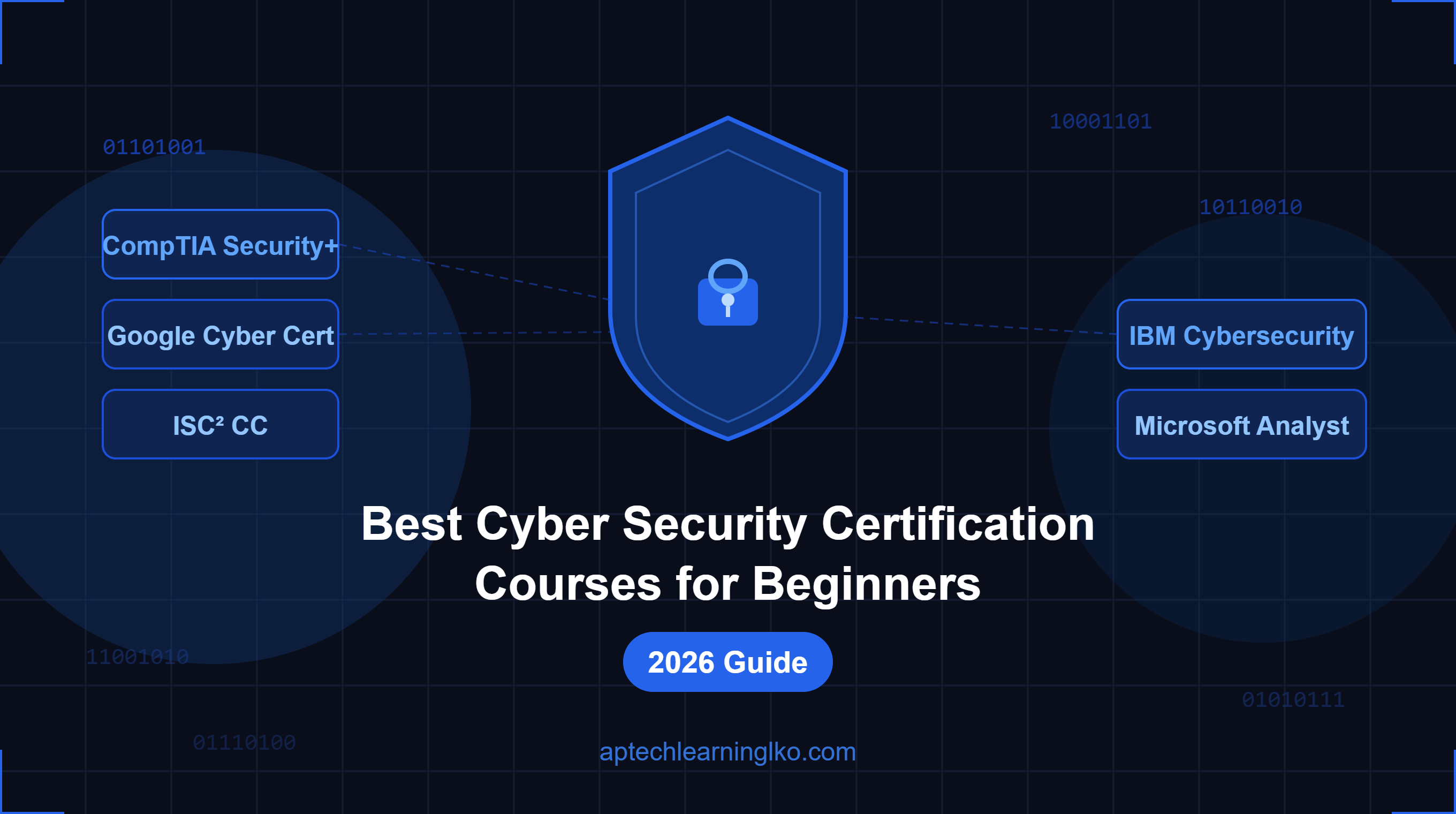
Cyber security is one of the fastest-growing career fields in the world right now. As companies move more of their operations online, the need for trained security professionals keeps rising. If you are a student or a working professional thinking about stepping into this field, 2026 is genuinely the best time to start. The good news? You do not need a computer science degree or any prior coding experience to begin. The right certification course can take you from zero to job-ready in just a few months. Here is a quick guide to the best cyber security certification courses for beginners in 2026. Why Get a Cyber Security Certification? Before jumping into the list, it helps to understand why certifications matter so much in this field. Employers across industries — banking, healthcare, e-commerce, government — all need security professionals. A recognized certification proves to hiring managers that you understand real-world threats and know how to handle them. It is faster than a degree, often more affordable, and directly tied to the skills companies are looking for today. Top Cyber Security Certifications for Beginners in 2026 Certification Provider Level Avg. Duration Best For Google Cybersecurity Professional Certificate Google / Coursera Beginner 6 months Complete freshers CompTIA Security+ CompTIA Beginner–Intermediate 2–3 months Entry-level jobs ISC² Certified in Cybersecurity (CC) ISC² Beginner 1–2 months Career switchers IBM Cybersecurity Analyst Certificate IBM / Coursera Beginner 6 months Analyst roles CompTIA Network+ CompTIA Beginner 2–3 months Networking base Microsoft Cybersecurity Analyst Microsoft / Coursera Beginner 6 months Cloud security A Closer Look at Each Certification 1. Google Cybersecurity Professional CertificateThis is the most beginner-friendly option available in 2026. Hosted on Coursera, it covers network security, Linux, Python basics, threat detection, and incident response. No prior experience is needed. You also get a discount voucher for the CompTIA Security+ exam after completing it. 2. CompTIA Security+Considered the gold standard for entry-level cyber security jobs, Security+ is vendor-neutral and accepted by employers globally. It covers risk management, cryptography, network security, and much more. Many government and private sector job listings specifically ask for this certification. 3. ISC² Certified in Cybersecurity (CC)Offered by one of the most respected cybersecurity organizations in the world, this free or low-cost certification is ideal if you want to build a strong foundation quickly. It covers security principles, access controls, and incident response basics. 4. IBM Cybersecurity Analyst CertificateIf you want to get into security operations, this IBM program gives you hands-on experience with real tools like SIEM platforms, endpoint security tools, and threat intelligence dashboards. It is structured as a job-ready program from day one. 5. CompTIA Network+Understanding how networks work is the backbone of cyber security. Network+ is a smart first step before moving into security-focused certifications. It teaches you protocols, infrastructure, and basic troubleshooting. 6. Microsoft Cybersecurity AnalystThis relatively new certification from Microsoft is gaining strong traction in 2026, especially for anyone interested in cloud-based security roles. It also prepares you for the Microsoft SC-900 exam. How to Choose the Right Certification Picking the right course depends on a few simple factors: A good training institute will help you map out a learning path based on your goals, so you are not just collecting certificates but actually building career-ready skills. Frequently Asked Questions Conclusion Cyber security is not just a career option anymore — it is one of the most in-demand and future-proof skills you can have in 2026. Whether you are a fresh graduate, a working professional looking to switch fields, or someone who simply wants to understand how digital systems stay protected, starting with the right certification makes all the difference. The courses listed above are beginner-friendly, globally recognized, and directly aligned with what employers are hiring for right now. You do not need a fancy degree or years of technical experience to get started. What you need is the right guidance, consistent effort, and a training environment that gives you real hands-on practice. If you are serious about building a career in cyber security, do not wait. The sooner you start, the faster you grow. Reach out to Aptech Learning Lucknow at aptechlearninglko.com and take the first step toward a secure and rewarding career today

Explore More
Cyber Security Course Syllabus: Topics, Duration & Eligibility Explained

Cyber Security Course Syllabus: Topics, Duration & Eligibility Explained

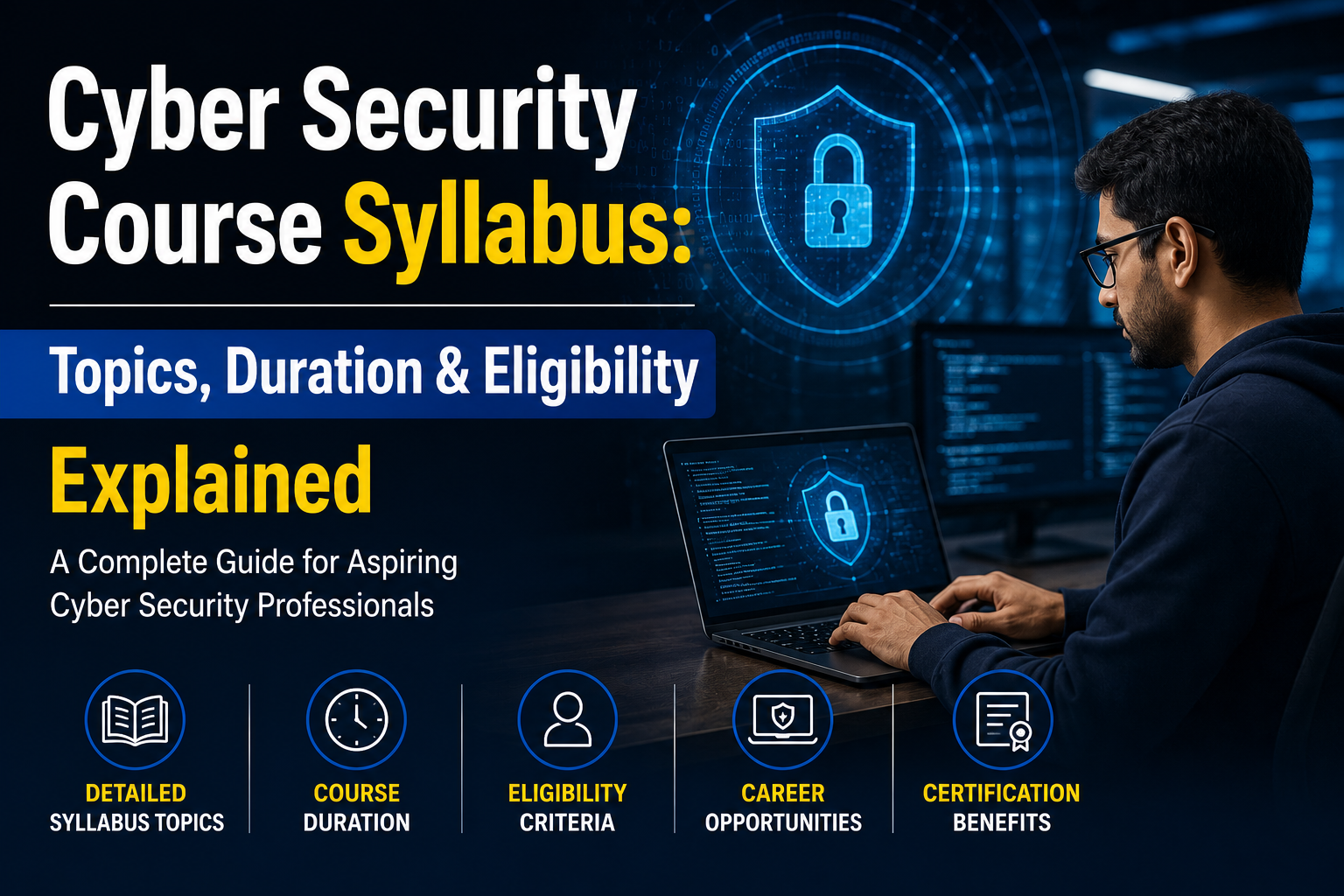
Before enrolling in any program, most students search for one thing: the cyber security course syllabus. Knowing exactly what topics are covered, how long the course runs, and whether you are eligible helps you make a confident decision rather than a confused one. This guide breaks down the complete syllabus structure, duration options, and eligibility criteria so you know exactly what to expect before you join. Cyber security courses are designed in a layered format, starting with networking basics and gradually moving into hands-on, practical security skills. The exact syllabus may vary slightly between institutes, but most follow a similar core structure recognized across the industry. Complete Cyber Security Course Syllabus Breakdown Module Topics Covered Networking Fundamentals OSI model, IP addressing, firewalls, VPNs Operating System Security Windows and Linux security basics Ethical Hacking Footprinting, scanning, vulnerability assessment Cryptography Encryption algorithms, hashing, digital signatures Malware and Threat Analysis Viruses, ransomware, trojans, spyware detection Web Application Security SQL injection, XSS, session hijacking prevention Network Security Tools Wireshark, Nmap, Metasploit, Kali Linux Cloud Security Basics AWS, Azure, Google Cloud security fundamentals Incident Response Detecting, reporting, and handling cyberattacks Compliance and Policies GDPR, ISO 27001, basic legal frameworks This structure ensures students move from theory to real-world application, which is exactly what employers look for in entry-level hires. Cyber Security Course Duration Options Duration usually depends on how deep and specialized the program is: Course Type Typical Duration Short Certification Course 4 to 8 weeks Diploma Course 6 months Advanced Specialization Course 6 to 12 months Weekend Batch (Working Professionals) 3 to 6 months Students who want quick job-readiness usually start with a certification course and later upgrade to a diploma or specialization once they decide their focus area, such as ethical hacking or cloud security. Eligibility Criteria for Cyber Security Courses One of the biggest advantages of cyber security as a career is that eligibility requirements are quite flexible: Criteria Details Minimum Qualification 12th pass or graduate (any stream) Preferred Background BCA, BTech, MCA, or basic computer knowledge Coding Requirement Not mandatory for beginner-level courses Age Limit Usually no strict upper age limit This flexible eligibility makes cyber security accessible to students from non-technical backgrounds as well, including commerce and arts graduates who want to switch into IT. How the Syllabus Prepares You for Real Jobs Most institutes structure the syllabus around practical lab work rather than only theory. Students get hands-on exposure to real attack-and-defense scenarios using industry-standard tools, which makes the transition into roles like SOC Analyst or Security Trainee much smoother after course completion. Why Choose Aptech Learning Lucknow for Cyber Security Training Aptech Learning Lucknow offers a well-structured cyber security course syllabus covering networking, ethical hacking, cryptography, and cloud security with hands-on lab sessions. The course is designed for both beginners and working professionals, with flexible batch timings and placement support. Visit aptechlearninglko.com to download the detailed syllabus or book a free demo class. Frequently Asked Questions | Aptech Learning Mahanagar Conclusion A clear understanding of the cyber security course syllabus, duration, and eligibility helps you choose the right program with confidence instead of guesswork. With flexible eligibility criteria and structured, hands-on syllabus design, this field remains accessible to students from almost any academic background, technical or not. If you are ready to start, Aptech Learning Lucknow offers a complete cyber security syllabus with practical training and placement support to help you build real, job-ready skills. Visit aptechlearninglko.com today to explore the full syllabus or book your free demo class.

Explore More
How to Become a Cyber Security Expert: Step-by-Step Career Path

How to Become a Cyber Security Expert: Step-by-Step Career Path

Cyber security has become one of the most rewarding and future-proof career paths in technology today. Every business, from small startups to large banks, needs experts who can protect their systems from hackers and data breaches. If you are wondering how to become a cyber security expert, the good news is that you do not need a fixed background or years of coding experience to start. What you need is the right roadmap, consistent learning, and hands-on practice. This guide breaks down the exact steps, skills, and certifications required to build a successful career in cyber security, whether you are a student, a graduate, or someone switching careers from a non-tech field. Step-by-Step Path to Becoming a Cyber Security Expert Step What You Need to Do Step 1 Build basic IT knowledge: networking, operating systems, databases Step 2 Learn the fundamentals of cyber security through a structured course Step 3 Practice with tools like Wireshark, Nmap, Kali Linux, Metasploit Step 4 Get an industry-recognized certification Step 5 Work on real or simulated projects to build a portfolio Step 6 Apply for entry-level roles like SOC Analyst or Security Trainee Step 7 Specialize further (ethical hacking, cloud security, forensics) This step-by-step structure ensures you build a strong foundation before moving into advanced or specialized areas of cyber security. Core Skills Every Cyber Security Expert Needs Skill Why It Matters Networking Concepts Helps you understand how attacks travel across systems Ethical Hacking Teaches you to find vulnerabilities before hackers do Cryptography Essential for protecting sensitive data Risk Assessment Helps identify and prioritize security threats Cloud Security Increasingly important as companies shift to cloud platforms Communication Skills Needed to report risks clearly to non-technical teams Technical skills alone are not enough. Employers also look for problem-solving ability and a habit of staying updated with new types of cyber threats. Certifications That Help You Stand Out While a degree is helpful, certifications often matter more in cyber security hiring. Some widely recognized starting points include foundational ethical hacking certifications, network security certifications, and cloud security certifications. Many institutes also offer structured certification courses designed specifically for beginners who want practical, job-ready skills rather than just theory. Career Roles You Can Apply For Experience Level Common Job Roles Entry-Level SOC Analyst, Security Trainee, IT Support with Security focus Mid-Level Penetration Tester, Network Security Engineer Advanced Security Architect, Cyber Security Consultant As you gain experience, you can move into leadership roles such as Chief Information Security Officer (CISO) in larger organizations. How Long Does It Take to Become a Cyber Security Expert? On average, it takes 6 months to 1 year of focused learning and practice to become job-ready at an entry level. Becoming a true expert, however, is an ongoing process since cyber threats keep evolving, requiring continuous learning even after you start working. Why Choose Aptech Learning Lucknow to Start Your Cyber Security Journey If you are looking for a structured path to become a cyber security expert, Aptech Learning Lucknow offers practical training with certified trainers, real-world lab access, and placement support. Their cyber security course is designed for beginners and professionals alike, helping you build job-ready skills step by step. Visit aptechlearninglko.com to check the syllabus, batch timings, and book a free demo class. FAQs Conclusion Becoming a cyber security expert is a realistic goal for anyone willing to follow a structured learning path and stay consistent with practice. From building basic IT knowledge to earning certifications and gaining hands-on experience, each step brings you closer to a stable, high-demand career. The field rewards curiosity and continuous learning more than a specific degree, making it accessible to students and career-switchers alike. If you are ready to begin this journey, Aptech Learning Lucknow can help you get there faster with structured training, expert mentorship, and placement support. Visit aptechlearninglko.com today to explore the course details or book a free demo class and take your first step toward becoming a cyber security expert.

Explore More
What Is a Cyber Security Course? Complete Beginner's Guide

What Is a Cyber Security Course? Complete Beginner’s Guide

If you have ever wondered what is a cyber security course and whether it is the right career move for you, you are not alone. With cyberattacks rising every year across banks, hospitals, and government systems, the demand for trained cyber security professionals has never been higher. A cyber security course is a structured training program that teaches you how to protect computer systems, networks, and data from hackers, malware, and online threats. In simple words, this course trains you to think like both a defender and an attacker. You learn how hackers break into systems, and more importantly, how to stop them. It is one of the most practical and job-ready IT courses available today, especially for students and working professionals in tier-2 cities like Lucknow who want global career opportunities without relocating immediately. What Do You Learn in a Cyber Security Course? A good cyber security course is divided into multiple modules, starting from basics and moving toward advanced, hands-on skills. Here is a simple breakdown: Module What You Learn Networking Fundamentals How data travels, IP addresses, firewalls, ports Ethical Hacking Basics Scanning systems, identifying vulnerabilities legally Cryptography Encryption, decryption, secure data transmission Malware Analysis Detecting viruses, ransomware, trojans Web Application Security Protecting websites from SQL injection, XSS attacks Cloud Security Securing data on AWS, Azure, Google Cloud Incident Response Handling and reporting a live cyberattack Most institutes also include real-world lab exercises and tools like Wireshark, Kali Linux, Nmap, and Metasploit so students get practical exposure, not just theory. Who Should Join a Cyber Security Course? This course is not only for IT graduates. Here is who typically benefits the most: Background Why This Course Fits BCA/BTech/MCA students Builds a strong technical career foundation Non-tech graduates Career switch into a high-demand IT field Working professionals Upskilling for promotions or job change Freshers with no coding background Many beginner courses need zero prior coding Cyber Security Course Duration and Format Course duration usually depends on the depth of the program: Course Type Duration Basic Certification 1 to 3 months Diploma Course 6 months Advanced/Specialized Course 6 to 12 months Both online and offline formats are available, and many institutes now offer weekend batches for working professionals. Career Scope After a Cyber Security Course Cyber security is consistently ranked among the fastest-growing IT careers worldwide. After completing a course, you can apply for roles such as Security Analyst, Penetration Tester, SOC Analyst, Network Security Engineer, or Ethical Hacker. Salaries in India for freshers typically start between 3 to 6 LPA, with rapid growth as experience and certifications increase. Why Choose Aptech Learning Lucknow for Cyber Security Training If you are searching for a trusted cyber security course in Lucknow, Aptech Learning Lucknow offers industry-aligned training with hands-on labs, certified trainers, and placement support. The course is designed for both beginners and professionals looking to build a strong, future-proof career in cyber security. Visit aptechlearninglko.com to explore the syllabus, fee structure, and upcoming batch schedule, or connect with the institute directly to book a free demo class. FAQs Conclusion A cyber security course is one of the smartest investments you can make for your career in 2026, given how fast digital threats are growing across every industry. Whether you are a student exploring your first tech career or a working professional looking to switch into a high-demand field, this course gives you the practical skills, tools, and certifications needed to succeed. The best part is that you do not need a strong coding background to get started, just curiosity and willingness to learn. If you are based in or around Lucknow and looking for hands-on, job-ready training, Aptech Learning Lucknow is a great place to begin. With certified trainers, real-world lab practice, and placement support, you can take your first confident step toward becoming a cyber security professional. Visit aptechlearninglko.com today to check the latest batch schedule or book a free demo class.

Explore More
About Image
Guaranteed & Certified

Students are joining

For our career programs like Full Stack Development, Data Science, Data Analyst, and Business Analyst, we guarantee to arrange job interviews for you with our 100+ hiring partners until you get placed

You will be trained by experienced faculty and top-notch mentors. Our senior mentors bring over 20+ years of real-world industry experience directly to your classroom

All our programs are conducted in 100% offline mode at our modern training center in Aliganj, Lucknow. We believe in face-to-face, hands-on learning for the best results

“Aptech Learning Center Mahanagar, founded by renowned educationists, provides high-quality IT education to empower Lucknow’s youth for competitive tech careers.”

Contact Info.

Aptech Learning Center, first floor, Above Radiance, 18 J Road, Near Midland Healthcare and Research center, Mahanagar Lucknow
+91 6386 119 566
digilearninglko@gmail.com

© 2025 Aptech Learning Center Mahanagar | All Rights Reserved | Designed and Developed By DigiGrow Solutions