
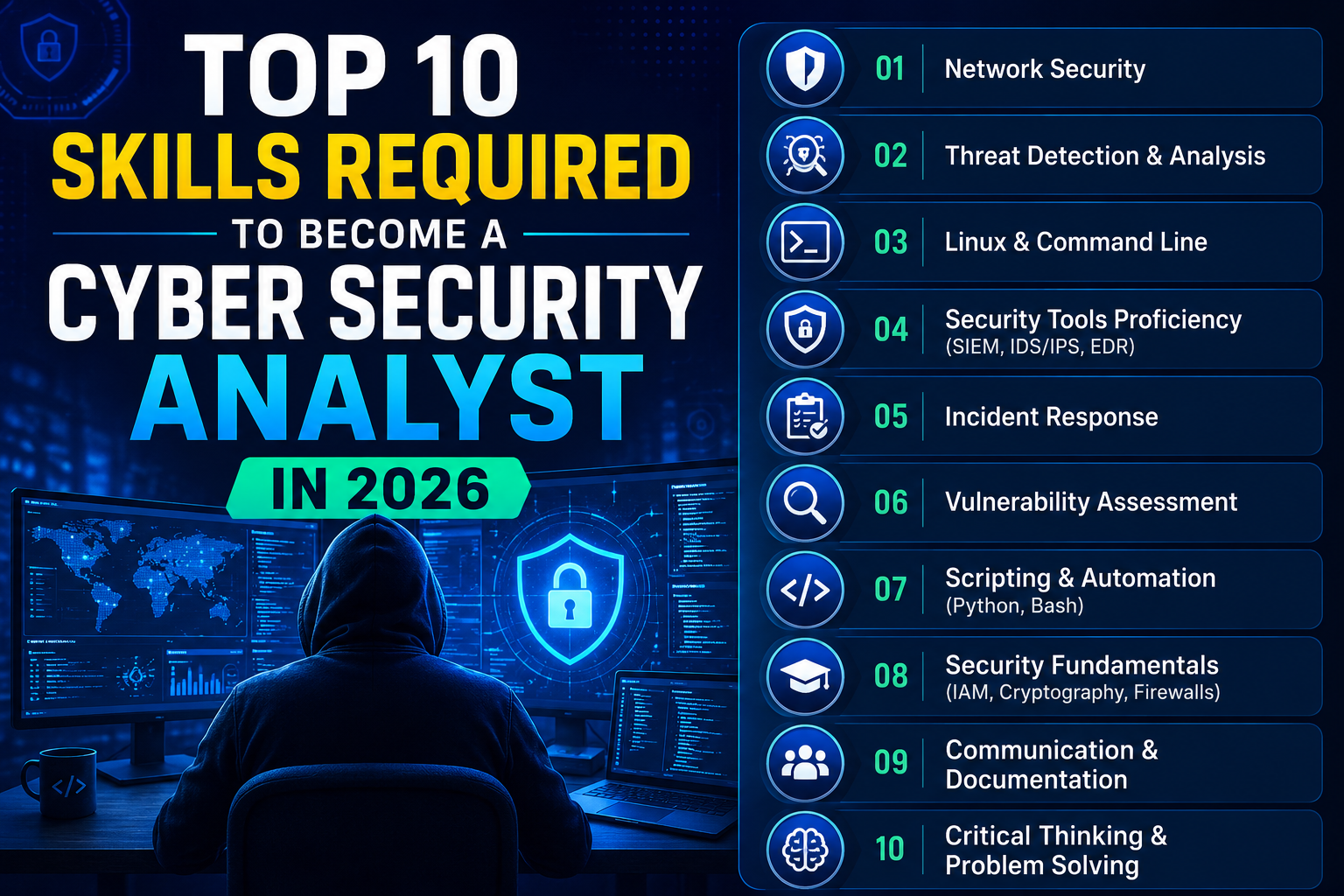
Top 10 Skills Required to Become a Cyber Security Analyst in 2026
Cyber Security has become one of the most critical career fields in India, as businesses face growing threats from hackers, data breaches, and cyberattacks. Companies are actively hiring skilled Cyber Security Analysts to protect their systems and data. But to land this role in 2026, beginners need to build the right mix of technical and analytical skills.
This blog breaks down the top 10 skills every aspiring Cyber Security Analyst must learn.

Why Cyber Security Skills Matter in 2026
With rising digital transactions, cloud adoption, and remote work, cyber threats are increasing every year. Organizations need professionals who not only understand security tools but can also think like attackers to prevent breaches before they happen.
Top 10 Skills Required for a Cyber Security Analyst
| Rank | Skill | Why It’s Important |
|---|---|---|
| 1 | Networking Fundamentals | Helps understand how data flows and where vulnerabilities exist |
| 2 | Operating Systems Knowledge | Essential for securing Windows, Linux & Mac environments |
| 3 | Ethical Hacking Basics | Helps identify weaknesses before attackers exploit them |
| 4 | Firewall & IDS/IPS Management | Protects networks from unauthorized access |
| 5 | Security Information & Event Management (SIEM) | Used for real-time threat monitoring |
| 6 | Cryptography Basics | Important for data encryption and secure communication |
| 7 | Risk Assessment & Management | Helps identify and prioritize security risks |
| 8 | Scripting (Python/Bash) | Useful for automating security tasks |
| 9 | Cloud Security Knowledge | Critical as more companies shift to cloud platforms |
| 10 | Communication & Reporting Skills | Needed to explain risks to non-technical teams |
Tools Every Cyber Security Analyst Should Know
| Tool Category | Popular Tools |
|---|---|
| Network Monitoring | Wireshark, Nmap |
| SIEM Tools | Splunk, IBM QRadar |
| Vulnerability Scanning | Nessus, OpenVAS |
| Penetration Testing | Metasploit, Burp Suite |
Certifications That Add Value in 2026
| Certification | Best For |
|---|---|
| CompTIA Security+ | Beginners entering Cyber Security |
| Certified Ethical Hacker (CEH) | Ethical hacking & penetration testing |
| CISSP | Advanced security management roles |
| CISM | Security governance & risk roles |
Career Growth After Gaining These Skills
| Experience Level | Job Role | Average Salary (INR/Year) |
|---|---|---|
| 0–1 Year | Security Analyst | ₹4 – ₹6 LPA |
| 1–3 Years | Cyber Security Engineer | ₹6 – ₹10 LPA |
| 3–5 Years | Security Consultant | ₹10 – ₹16 LPA |
| 5+ Years | Security Manager/Lead | ₹16 LPA+ |
How to Start Building These Skills
Enrolling in a structured Cyber Security course with hands-on labs, real-world simulations, and certification guidance helps beginners learn faster compared to self-study, especially when practical exposure is limited.
Frequently Asked Questions (FAQs)
1. Can a beginner become a Cyber Security Analyst without an IT background?
Yes, students from any background can enter Cyber Security by learning networking basics, security tools, and gaining relevant certifications.
2. Which programming language is important for Cyber Security?
Python is widely used for scripting and automating security tasks, making it a valuable skill for analysts.
3. Is certification necessary to become a Cyber Security Analyst?
While not mandatory, certifications like CompTIA Security+ or CEH significantly boost job opportunities and credibility.
4. How long does it take to learn Cyber Security skills?
Most beginners can build job-ready skills within 6–10 months through structured courses and consistent practice.
5. What is the average salary of a Cyber Security Analyst in India?
Freshers can expect an average starting salary of ₹4 – ₹6 LPA, which increases significantly with experience.
6. Do Cyber Security Analysts need coding skills?
Basic scripting knowledge helps, but deep coding expertise is not always required for entry-level roles.
Final Thoughts
Becoming a Cyber Security Analyst in 2026 requires a strong mix of technical knowledge, practical tools, and analytical thinking. From understanding networking basics to mastering SIEM tools and earning the right certifications, each skill plays a role in building a strong foundation for this career.
As cyber threats continue to grow across industries, skilled analysts remain in high demand, offering excellent salary growth and long-term career stability. With the right training and consistent practice, beginners can confidently step into this fast-growing field and build a successful future in Cyber Security.