Cart

Your cart is currently empty.

Sub Total: 0.00

Category: Web Developer

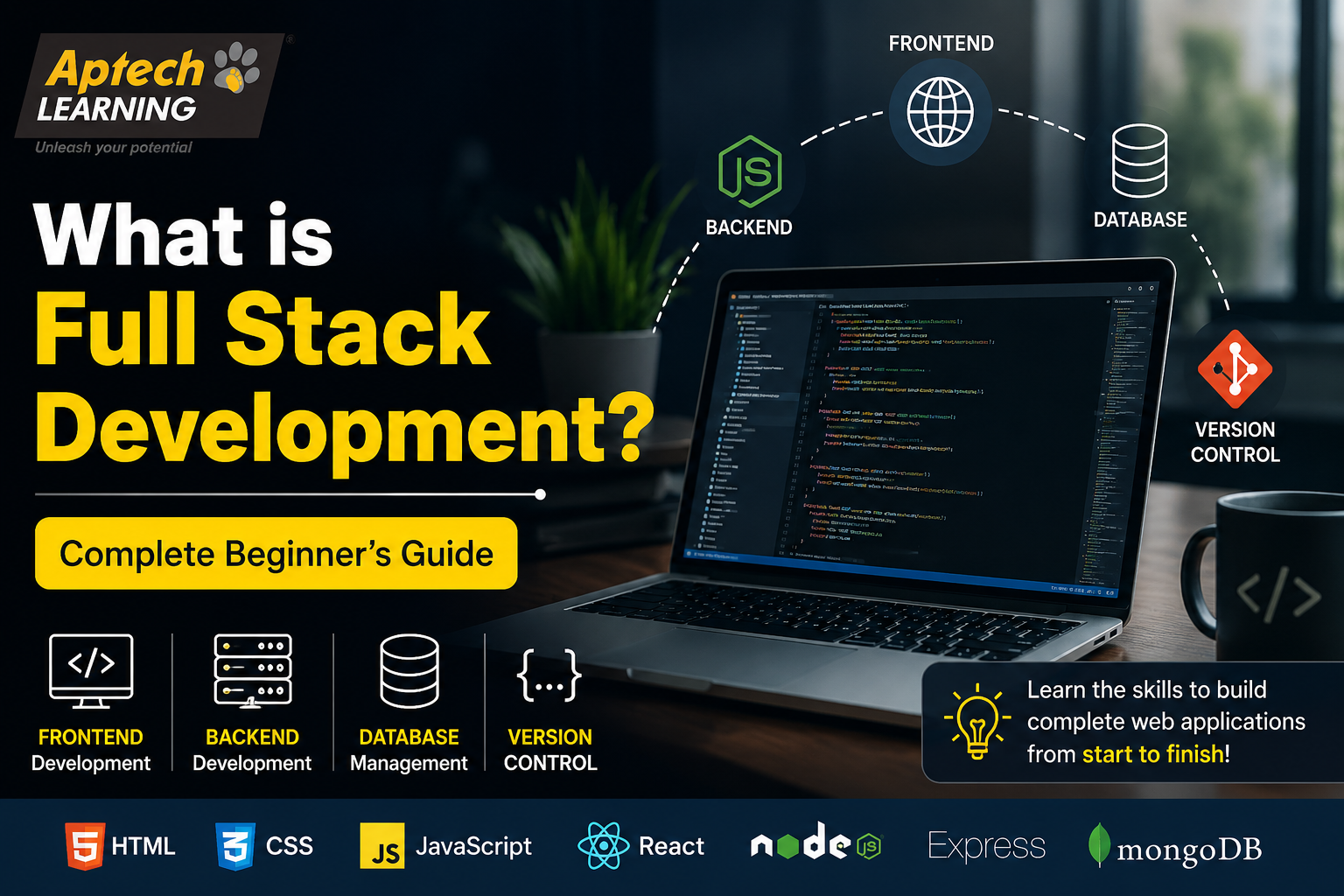
What is Full Stack Development? Complete Beginner's Guide

What is Full Stack Development? Complete Beginner’s Guide

Full stack development means being able to work on every layer of a web application, not just one part of it. The word “stack” refers to the collection of technologies used to build an application, layered on top of each other, from the visual interface down to the database. Think of a restaurant. The front-end is like the dining area, the menu, and the waiter, everything a customer directly sees and interacts with. The back-end is like the kitchen, the inventory system, and the billing setup, working behind the scenes to make everything function properly. A full stack developer is someone comfortable working in both the dining area and the kitchen, understanding how the two connect. A full stack developer does not necessarily need to be an expert in every single technology, but they need enough working knowledge across the stack to build, connect, and troubleshoot a complete application on their own. Why Full Stack Development Matters Full stack development has grown in importance for a few clear reasons: Startups and small companies often prefer hiring one full stack developer who can handle both front-end and back-end work, rather than hiring separate specialists. Understanding the complete application flow makes it easier to debug issues, since full stack developers can trace a problem across the entire system, not just one layer. It offers strong career flexibility, since full stack developers can move between front-end-heavy, back-end-heavy, or balanced roles depending on project needs. Modern frameworks and tools have made it more practical for one developer to manage both layers efficiently, especially in small to mid-sized teams. It gives developers a broader understanding of how web applications actually work, which is valuable even for those who later choose to specialise. Components of Full Stack Development Full stack development typically includes four main components working together. Front-End (Client-Side)This is what users directly see and interact with in their browser, built using technologies like HTML, CSS, and JavaScript, often with a framework like React. Back-End (Server-Side)This handles the application’s logic, processes requests, and communicates with the database, commonly built using technologies like Node.js, Python, or Java. DatabaseThis stores and manages the application’s data, such as user accounts, product listings, or messages, using database systems like MySQL or MongoDB. Server and DeploymentThis involves hosting the application so it is accessible online, along with managing how the front-end and back-end communicate through APIs. Component | What It Handles | Example TechnologyFront-End | User interface and interactions | HTML, CSS, JavaScript, ReactBack-End | Application logic and processing | Node.js, Python, JavaDatabase | Storing and managing data | MySQL, MongoDBDeployment | Hosting and connecting the app | APIs, cloud hosting platforms How Full Stack Development Works (Step-by-Step) Full Stack vs Front-End vs Back-End Development These terms are closely related but describe different levels of responsibility. Front-end development focuses specifically on the user-facing part of an application, handling layout, design, and interactivity using tools like HTML, CSS, and JavaScript. Back-end development focuses specifically on the server side, managing databases, business logic, and how data is processed, without directly handling the visual interface. Full stack development combines both of these skill sets, allowing a developer to build and connect the complete application independently, from interface to database. In simple words: front-end developers focus on what users see, back-end developers focus on what happens behind the scenes, and full stack developers are comfortable working across both. Practical Examples E-commerce Platform: A full stack developer builds the product browsing interface, the shopping cart logic, the order database, and the payment processing connection, all as part of one complete system. Social Media App: A full stack developer might build the user profile pages, the backend logic for posting and liking content, and the database that stores user posts and connections. Booking System: A full stack developer building a hotel booking system handles the calendar interface users interact with, along with the backend logic that checks room availability and processes bookings. Personal Portfolio with Contact Form: A full stack developer builds the visual portfolio pages and also sets up the backend logic that sends form submissions to an email address or database. Common Mistakes Beginners Make Trying to learn every technology at once. Beginners often attempt to learn multiple front-end and back-end technologies simultaneously, which slows progress instead of building solid fundamentals. Skipping the basics of HTML, CSS, and JavaScript. Jumping straight into frameworks without understanding core web fundamentals often leads to confusion later. Ignoring database concepts. Some beginners focus heavily on the visual interface while neglecting how data is actually stored and managed, which is equally important. Not practising how front-end and back-end connect. Understanding each layer separately is not enough; beginners also need to practise connecting them using APIs. Underestimating deployment and hosting. Many beginners build applications locally but never learn how to actually host and deploy them for real users. Comparing depth with specialists too early. A full stack developer’s knowledge is broad, not necessarily as deep in one area as a dedicated specialist, and that is a normal part of the role. Career Opportunities Full stack development opens up a wide range of career paths across startups, established companies, and freelance work. Common roles include: Full Stack Developer — builds and maintains both front-end and back-end parts of applications. Front-End Developer (with full stack knowledge) — focuses mainly on interface work but understands backend integration. Back-End Developer (with full stack knowledge) — focuses mainly on server-side work but understands front-end connectivity. Software Engineer — a broader role that often involves full stack responsibilities depending on the company and project. Technical Lead — oversees development projects, often requiring full stack understanding to guide both front-end and back-end teams. Freelance Full Stack Developer — independently builds complete web applications for multiple clients. As experience grows, professionals can move into senior developer roles, technical leadership positions, or specialise further in either front-end or back-end work if they choose. Salary Information Salary in full stack development depends on factors such as your city, the

Explore More
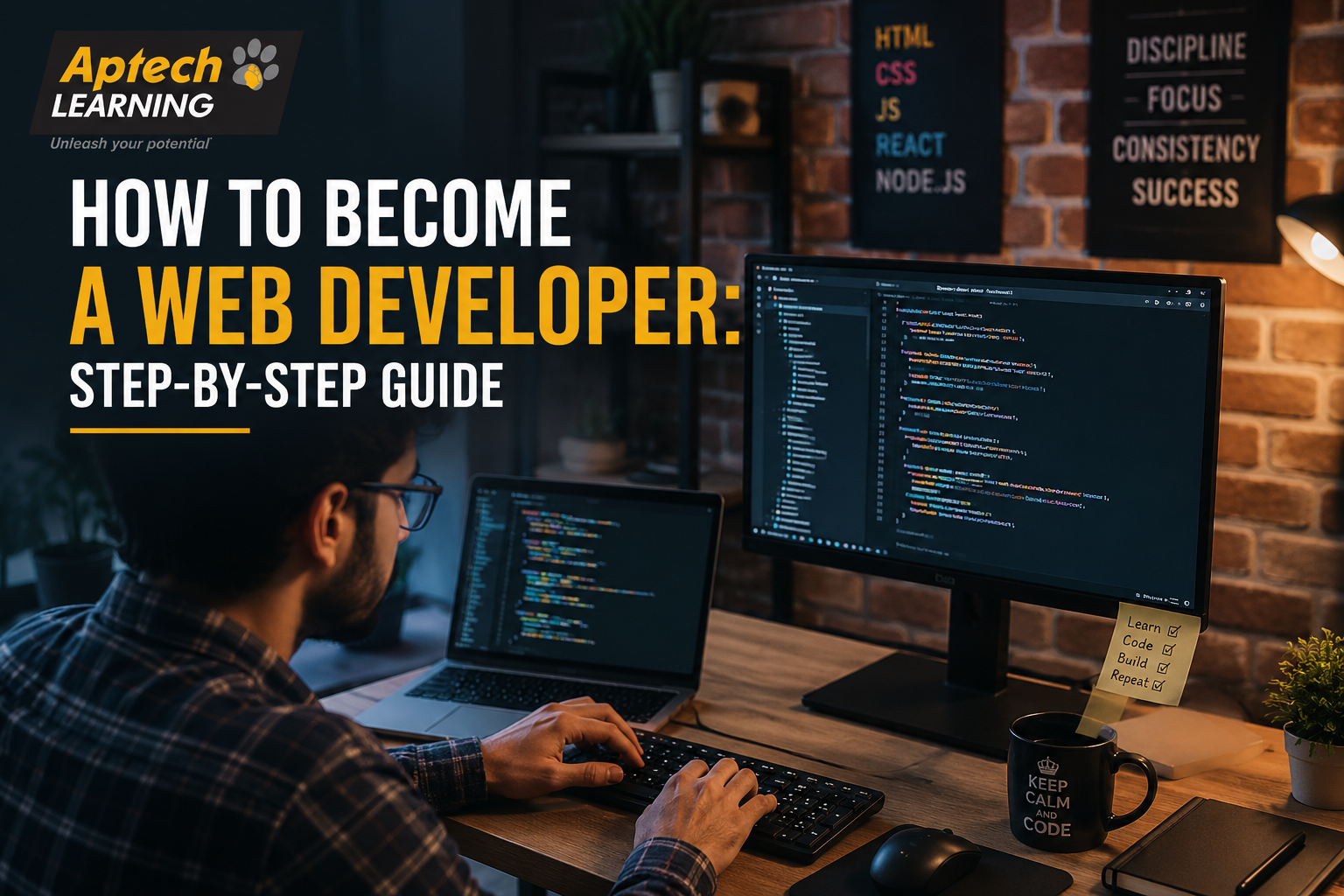
How to Become a Web Developer

How to Become a Web Developer: Step-by-Step Guide

A web developer is someone who builds and maintains websites and web applications. This includes everything from the visual layout you see on a screen to the systems working behind the scenes that handle data, logins, and payments. Think of building a website like constructing a house. Some developers focus on what the visitors actually see and interact with, like the layout, colours, and buttons. Others focus on what happens behind the walls, like plumbing and electrical systems, which in web development means databases, servers, and application logic. Some developers do both. Web developers work across almost every industry today, since nearly every business, from a small local shop to a large corporation, needs some kind of online presence or web-based tool to function. Why Web Development is a Good Career Choice Web development remains one of the more accessible entry points into the tech industry, and here is why it continues to attract so many learners: Almost every business needs a website or web application, keeping demand for developers fairly consistent across industries. The learning path is very project-based, meaning you can build a visible portfolio of real work fairly early in your learning journey. There is flexibility in career paths, including full-time jobs, freelancing, remote work, and even building your own products. The field constantly evolves, which keeps the work interesting for people who enjoy continuous learning. Many core skills, like HTML, CSS, and JavaScript, do not require expensive tools or setups to start learning. Types of Web Developers Web development is generally divided into a few core specialisations, each focusing on a different part of building a website. Front-End DeveloperFront-end developers focus on everything users see and interact with directly, such as layout, design, and interactive elements on a webpage. Back-End DeveloperBack-end developers focus on the server side of an application, handling databases, business logic, and how data is processed and stored. Full-Stack DeveloperFull-stack developers work across both front-end and back-end, handling the complete development of a web application from start to finish. Web Designer (Related Role)While not strictly a developer role, web designers focus on the visual and user experience side, often working closely with front-end developers. Type | Main Focus | Example WorkFront-End Developer | User interface and interactions | Building responsive page layoutsBack-End Developer | Server, database, application logic | Managing user data and authenticationFull-Stack Developer | Both front-end and back-end | Building a complete web application Step-by-Step Guide to Becoming a Web Developer Front-End vs Back-End vs Full-Stack Development These three terms describe different areas of focus within web development, and beginners often wonder which one to choose first. Front-end development focuses on the visual, interactive part of a website that users directly see and engage with, built mainly using HTML, CSS, and JavaScript. Back-end development focuses on the server side, handling things like databases, user authentication, and business logic that power the website behind the scenes. Full-stack development combines both front-end and back-end skills, allowing a developer to build a complete web application independently, from user interface to database. In simple words: front-end is what users see, back-end is what runs behind the scenes, and full-stack means being comfortable working on both sides. Practical Examples E-commerce Website: A front-end developer builds the product pages and shopping cart interface, while a back-end developer manages the database of products, orders, and payment processing. Portfolio Website: A beginner web developer might build a personal portfolio site using HTML, CSS, and JavaScript to showcase their skills and projects to potential employers. Booking System: A full-stack developer might build an entire appointment booking system for a clinic, handling both the visible calendar interface and the backend logic that stores and manages bookings. Company Website: A small business website often involves a front-end developer creating the layout and a back-end developer setting up a contact form that sends data to the business’s email or database. Common Mistakes Beginners Make Jumping into frameworks too early. Learning a framework like React before understanding core HTML, CSS, and JavaScript often leads to confusion later. Watching tutorials without building projects. Passive learning without hands-on practice makes it hard to retain and apply concepts. Trying to learn everything at once. Beginners often try to learn front-end, back-end, and multiple frameworks simultaneously, which slows progress instead of speeding it up. Ignoring responsive design. Building websites that only work well on desktop, while ignoring how they appear on mobile devices, is a common early mistake. Not learning version control early. Skipping Git and GitHub early on makes collaboration and project management harder later in your career. Comparing progress with others online. Everyone learns at a different pace, and comparing your journey to curated online progress can create unnecessary pressure. Career Opportunities Web development offers multiple career paths across industries like IT services, e-commerce, startups, and freelancing. Common roles include: Front-End Developer — builds the visual and interactive parts of websites and applications. Back-End Developer — manages servers, databases, and application logic. Full-Stack Developer — handles both front-end and back-end development. Web Designer — focuses on layout, user experience, and visual design. WordPress Developer — specialises in building and customising websites using WordPress. Freelance Web Developer — works independently with multiple clients rather than a single employer. As experience grows, professionals can move into roles like Senior Developer, Technical Lead, or transition into related fields like software engineering. Salary Information Salary in web development varies depending on factors such as your city, the size and industry of the company, your specific role, your skill level, and your years of experience. Entry-level positions naturally pay less than senior roles, and metro cities generally offer higher packages than smaller towns. Rather than fixed numbers, it is more useful to know that salaries tend to grow steadily as you build a strong portfolio, gain project experience, and develop expertise in both front-end and back-end technologies. Skills Required Technical Skills HTML and CSS for structuring and styling web pages JavaScript for adding interactivity and dynamic behaviour A front-end framework

Explore More
About Image
Guaranteed & Certified

Students are joining

For our career programs like Full Stack Development, Data Science, Data Analyst, and Business Analyst, we guarantee to arrange job interviews for you with our 100+ hiring partners until you get placed

You will be trained by experienced faculty and top-notch mentors. Our senior mentors bring over 20+ years of real-world industry experience directly to your classroom

All our programs are conducted in 100% offline mode at our modern training center in Aliganj, Lucknow. We believe in face-to-face, hands-on learning for the best results

“Aptech Learning Center Mahanagar, founded by renowned educationists, provides high-quality IT education to empower Lucknow’s youth for competitive tech careers.”

Contact Info.

Aptech Learning Center, first floor, Above Radiance, 18 J Road, Near Midland Healthcare and Research center, Mahanagar Lucknow
+91 6386 119 566
digilearninglko@gmail.com

© 2025 Aptech Learning Center Mahanagar | All Rights Reserved | Designed and Developed By DigiGrow Solutions