
How to Become a Data Analyst in India: Step-by-Step Guide
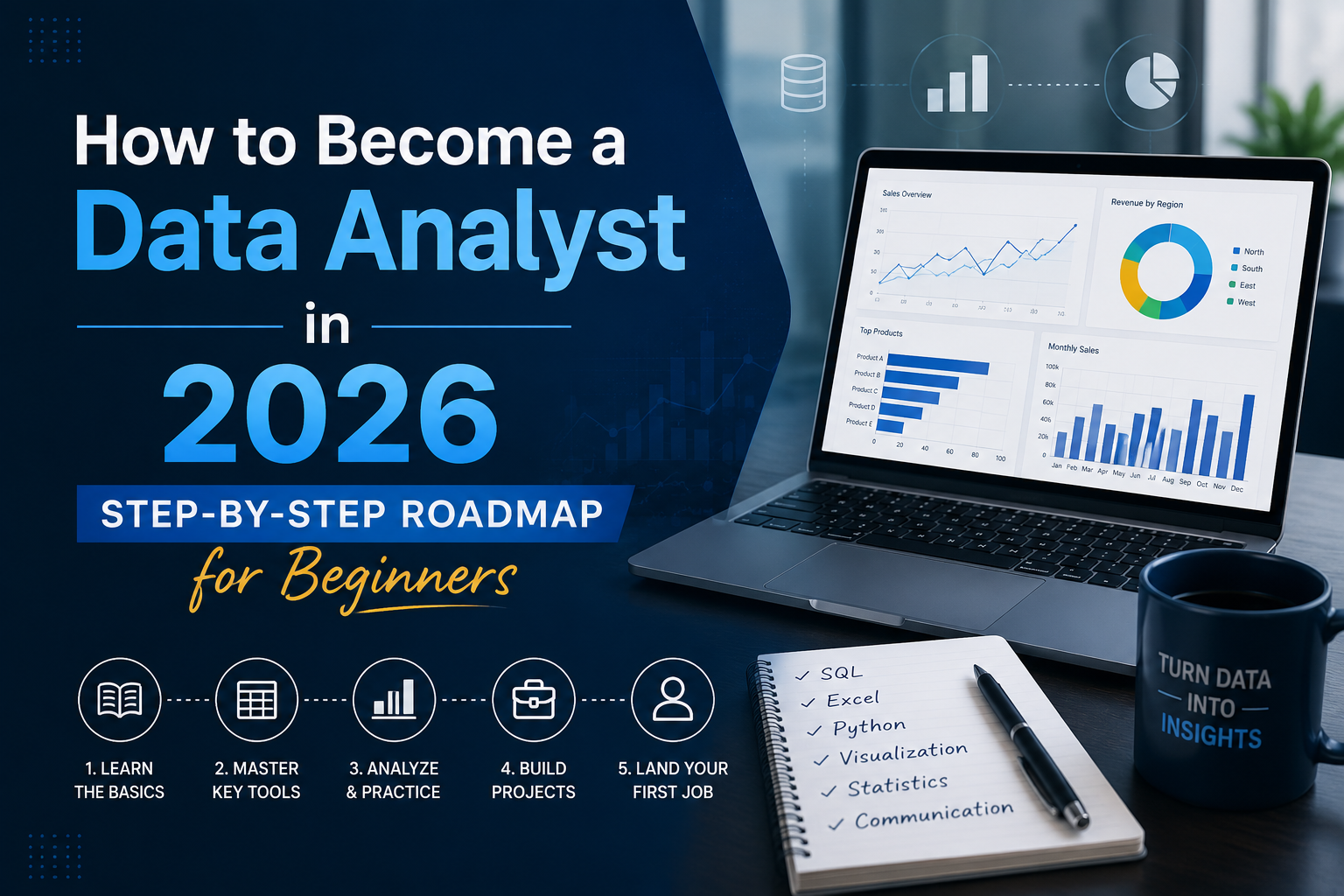
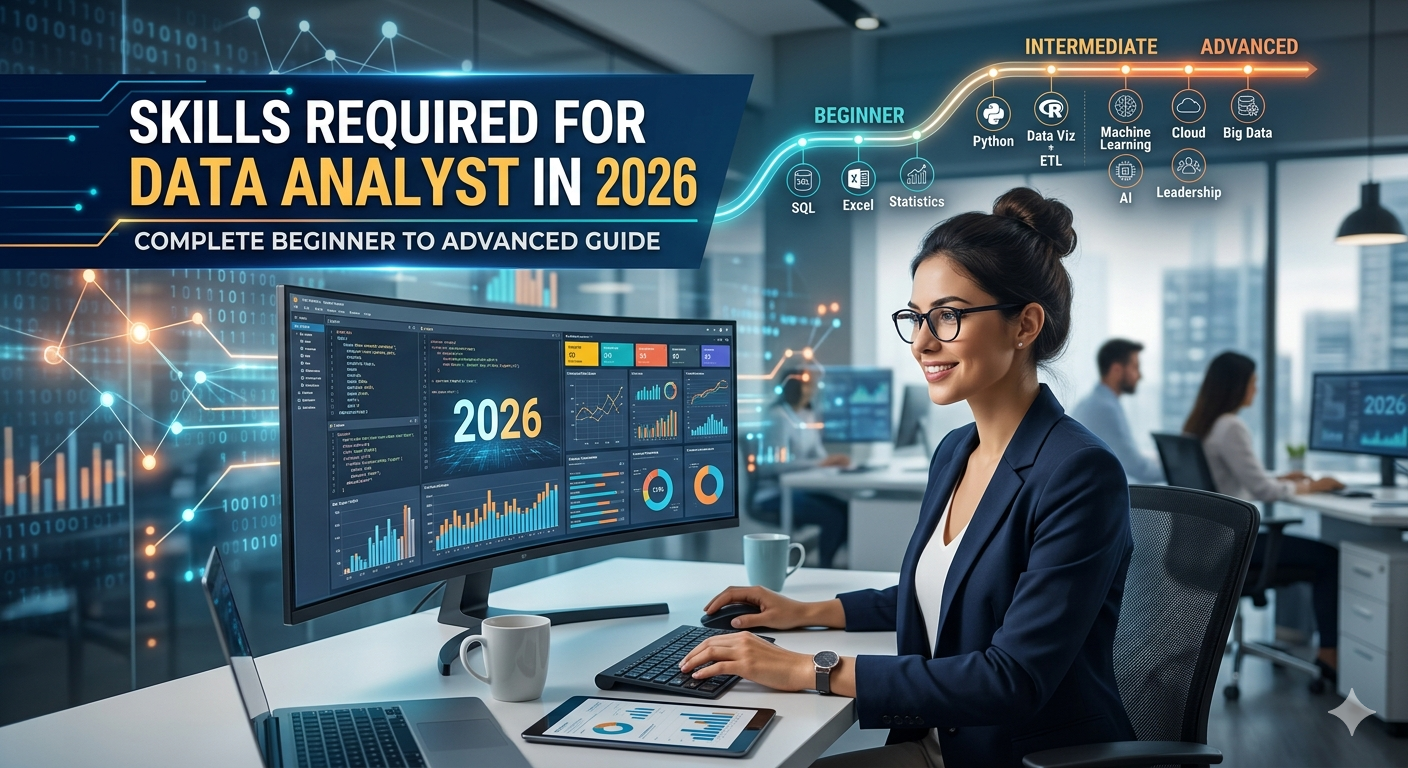
A data analyst is someone who collects, cleans, and studies data to help businesses make informed decisions. Instead of guessing why sales dropped or which customers are most valuable, companies rely on data analysts to look at the actual numbers and explain what is really happening. Think of a data analyst like a detective, but instead of solving crimes, they solve business problems using evidence found in data. A retail company might ask, “Why did sales fall in Lucknow last month?” A data analyst would look at sales records, customer behaviour, and other relevant data to find a clear, evidence-based answer, rather than relying on assumptions. In India, data analysts work across almost every industry, including IT, banking, e-commerce, healthcare, and manufacturing, since nearly every business today collects some form of data worth analysing. Why Data Analytics is a Strong Career Choice in India Data analytics continues to be a strong career choice in India for a few clear reasons: Indian businesses across sectors are increasingly relying on data to guide decisions, creating consistent demand for people who can interpret that data. The learning path is fairly practical and project-based, allowing learners to build a visible portfolio of real analysis work fairly early. It does not strictly require a technical or engineering degree, making it accessible to commerce, science, and even arts graduates with strong logical thinking. It offers a clear pathway into more advanced data roles, such as data science, for those who want to grow further in this direction. Remote and hybrid opportunities have grown in this field, giving Indian data analysts access to both domestic and international job opportunities. Types of Data Analyst Roles Data analyst roles can vary slightly depending on the industry and specific focus area. Business Data AnalystThis role focuses on analysing business performance data to support decisions related to sales, operations, or strategy. Marketing Data AnalystThis role focuses on studying customer behaviour, campaign performance, and marketing data to guide marketing decisions. Financial Data AnalystThis role focuses on analysing financial data to support budgeting, forecasting, and investment-related decisions. Operations Data AnalystThis role focuses on analysing data related to processes, logistics, or supply chains to improve efficiency. Healthcare Data AnalystThis role focuses on analysing patient, treatment, or hospital operations data to support better healthcare decisions. Role Type | Main Focus | Example TaskBusiness Data Analyst | Overall business performance | Sales trend analysisMarketing Data Analyst | Customer and campaign data | Campaign performance reportingFinancial Data Analyst | Financial data and forecasting | Budget variance analysisOperations Data Analyst | Process and logistics data | Supply chain efficiency reports Step-by-Step Guide to Becoming a Data Analyst Data Analyst vs Data Scientist vs Business Analyst These three roles are related but focus on different responsibilities. A data analyst focuses on analysing existing data to answer specific business questions, typically using tools like SQL, Excel, and visualisation software. A data scientist goes further, building predictive models using machine learning and advanced statistics, often requiring stronger programming skills. A business analyst focuses more on understanding business processes and requirements, using data as one input among several to guide strategy and decision-making. In simple words: a data analyst studies existing data to answer questions, a data scientist builds systems that predict future outcomes, and a business analyst focuses more broadly on business needs, using data as supporting evidence. Practical Examples E-commerce Company: A data analyst studies customer purchase data to identify which product categories perform best during festive seasons, helping the business plan inventory and marketing in advance. Banking Sector: A data analyst reviews transaction data to identify patterns linked to loan defaults, helping the bank refine its risk assessment process. Healthcare Organisation: A data analyst studies patient appointment data to identify peak hours, helping the hospital adjust staffing schedules more efficiently. Retail Business: A data analyst compares sales performance across different store locations in Lucknow and nearby cities, helping management understand regional demand differences. Common Mistakes Beginners Make Learning tools without understanding core concepts. Beginners sometimes learn Power BI or SQL commands without understanding the underlying logic of data analysis itself. Skipping the data cleaning step. Jumping straight to analysis without properly cleaning data often leads to inaccurate or misleading conclusions. Focusing only on technical skills. Communication skills matter significantly in this field, and beginners sometimes underestimate how much explaining insights clearly is part of the job. Not building a portfolio early. Waiting too long to start real projects delays building the practical proof of skill that employers actually look for. Trying to learn too many tools at once. Beginners often try to learn Excel, SQL, Python, and multiple visualisation tools simultaneously, which slows down genuine mastery of any one of them. Ignoring business context. Beginners sometimes focus purely on numbers without considering the actual business problem the analysis is meant to solve. Career Opportunities Data analytics offers a wide range of career paths across almost every industry in India. Common roles include: Data Analyst — collects, cleans, and analyses data to support business decisions. Business Intelligence Analyst — builds dashboards and reports that support ongoing business monitoring. Marketing Analyst — studies customer behaviour and campaign performance data. Financial Analyst — analyses financial data to guide budgeting and forecasting decisions. Operations Analyst — studies process and logistics data to improve efficiency. Data Visualisation Specialist — focuses specifically on building clear, effective dashboards and reports. As experience grows, professionals can move into senior analyst roles, specialised analytics positions, or transition further into data science. Salary Information Salary for data analysts in India depends on factors such as your city, the size and industry of the company, your specific role, your skill level, and your years of experience. Entry-level roles naturally pay less than senior analyst positions, and metro cities generally offer higher packages than smaller towns. Rather than fixed numbers, it is more useful to know that salaries tend to grow steadily as you gain hands-on project experience and strengthen skills in SQL, visualisation tools, and, increasingly, basic Python. Skills
Explore More