
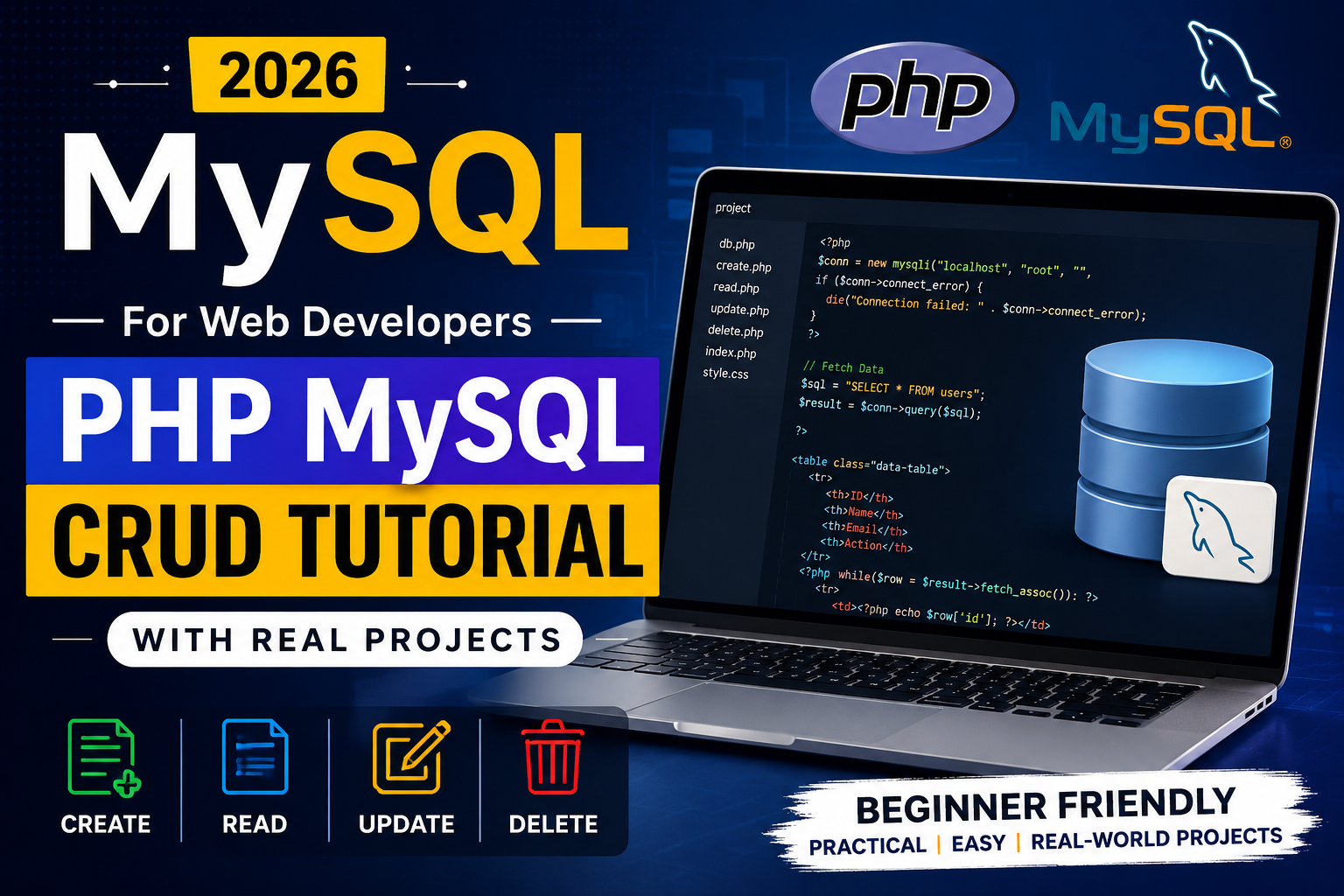
MySQL for Web Developers | PHP MySQL CRUD Tutorial with Real Projects 2026
Modern websites are powered by databases. From login systems and eCommerce websites to school portals and admin dashboards, databases handle everything behind the scenes. If you want to become a professional web developer in 2026, learning MySQL with PHP is one of the most valuable skills you can have. Quick Answer: SQL & MySQL training at Aptech Learning Center, Mahanagar Extension, Kapoorthala, Lucknow, runs in offline classroom and live online batches across Uttar Pradesh. Indicative fee: ₹8,000 to ₹20,000, with a flat 10% festive discount on admission and placement assistance included. If you prefer learning with an instructor, the web development course in Lucknow with placement at Aptech Learning Lucknow teaches this step by step — offline at Mahanagar Extension, Kapoorthala, or live online from anywhere in Uttar Pradesh. In this complete guide, you will learn how PHP and MySQL work together, what CRUD operations are, how developers build real-world projects using MySQL, and why companies still prefer PHP MySQL development for scalable websites. If you are planning to build dynamic websites or start backend development, this tutorial is the perfect starting point. If you want professional training in web development and database programming, visit Aptech Learning Lucknow for career-oriented programming courses. Table of Contents Toggle What is MySQL in Web Development? Why PHP and MySQL Are Still Popular in 2026 Understanding CRUD Operations in PHP MySQL PHP MySQL CRUD Tutorial for Beginners Step 1: Create a MySQL Database Step 2: Connect PHP with MySQL Step 3: Create Data (Insert Records) Step 4: Read Data from Database Step 5: Update Existing Records Step 6: Delete Records Real Projects You Can Build Using PHP MySQL Best Practices for PHP MySQL Development Common Mistakes Beginners Make Career Opportunities After Learning PHP MySQL Why Learn PHP MySQL from a Professional Institute? Future of MySQL and PHP in 2026 Frequently Asked Questions Conclusion What is MySQL in Web Development? MySQL is one of the most popular relational database management systems used in web development. It stores website data such as user accounts, products, blog posts, orders, payments, and much more. Developers use MySQL because it is: Fast and reliable Open-source Easy to integrate with PHP Highly scalable for web applications Widely supported by hosting providers Even in 2026, MySQL remains one of the most used databases for PHP-based websites and applications. Why PHP and MySQL Are Still Popular in 2026 Many beginners think newer technologies have replaced PHP, but the reality is different. PHP powers millions of websites worldwide, including CMS platforms, eCommerce stores, and business websites. PHP with MySQL is still preferred because: Development is fast Hosting is affordable CRUD systems are easy to build Large community support is available It is perfect for beginners and startups According to modern developer tutorials and backend guides, PHP MySQL remains a strong foundation for learning full-stack development. Understanding CRUD Operations in PHP MySQL CRUD stands for: Operation Meaning Create Insert new data Read Fetch and display data Update Modify existing records Delete Remove records Almost every modern application uses CRUD functionality. Whether it is a hospital management system, online shopping website, student portal, or CRM software, CRUD operations are the core foundation. PHP MySQL CRUD Tutorial for Beginners Step 1: Create a MySQL Database First, create a database using phpMyAdmin or MySQL command line. Example database: CREATE DATABASE student_management; Now create a table: CREATE TABLE students ( id INT AUTO_INCREMENT PRIMARY KEY, name VARCHAR(100), email VARCHAR(100), course VARCHAR(100)); Step 2: Connect PHP with MySQL Create a database connection file. <?php$conn = mysqli_connect(“localhost”, “root”, “”, “student_management”);if(!$conn){ die(“Connection Failed”);}?> This connection allows PHP to communicate with your MySQL database. Step 3: Create Data (Insert Records) <?phpinclude ‘db.php’;$name = $_POST[’name’];$email = $_POST[’email’];$course = $_POST[’course’];$sql = “INSERT INTO students(name,email,course)VALUES(‘$name’,’$email’,’$course’)”;mysqli_query($conn,$sql);?> Step 4: Read Data from Database <?php$result = mysqli_query($conn,”SELECT * FROM students”);while($row = mysqli_fetch_assoc($result)){ echo $row[’name’];}?> Step 5: Update Existing Records <?php$id = $_GET[’id’];$sql = “UPDATE students SET course=’Full Stack Development’ WHERE id=$id”;mysqli_query($conn,$sql);?> Step 6: Delete Records <?php$id = $_GET[’id’];$sql = “DELETE FROM students WHERE id=$id”;mysqli_query($conn,$sql);?> These are the core CRUD operations every web developer must know. Real Projects You Can Build Using PHP MySQL Learning theory alone is not enough. Real-world projects help you gain practical experience. Here are some beginner-to-advanced projects you can build: 1. Student Management System Store and manage student records with CRUD operations. 2. Employee Management Portal Add employee details, update salaries, and generate reports. 3. Online Shopping Website Create products, manage orders, and build customer dashboards. 4. Blog Management System Publish, edit, and delete blog posts dynamically. 5. Hospital Management Software Manage appointments, patients, doctors, and billing systems. 6. Library Management System Track books, issue dates, and student records. Building projects improves your practical coding skills and portfolio. Best Practices for PHP MySQL Development Professional developers follow secure coding practices while building CRUD applications. Important best practices include: Use prepared statements Prevent SQL injection Validate user input Use password hashing Optimize database queries Create indexes for faster performance Keep database backups regularly Modern PHP tutorials strongly recommend using prepared statements and secure query handling for production websites. Common Mistakes Beginners Make Many beginners face issues while learning PHP MySQL development. Avoid these mistakes: Writing SQL queries directly without validation Ignoring database normalization Using weak passwords Storing plain text passwords Not handling database errors Mixing frontend and backend code in one file Improving coding structure makes your projects more scalable and professional. Career Opportunities After Learning PHP MySQL Once you master PHP and MySQL, you can apply for roles such as: PHP Developer Backend Developer Full Stack Web Developer WordPress Developer Web Application Developer Database Administrator Thousands of companies still use PHP MySQL for website development and business applications in 2026. Why Learn PHP MySQL from a Professional Institute? Self-learning is useful, but guided learning helps you grow faster. Professional institutes provide: Live projects Expert mentorship Interview preparation Portfolio development Internship opportunities Placement assistance If you are serious about becoming a web developer, explore professional web development courses at Aptech Learning Lucknow. Future of
Explore More