
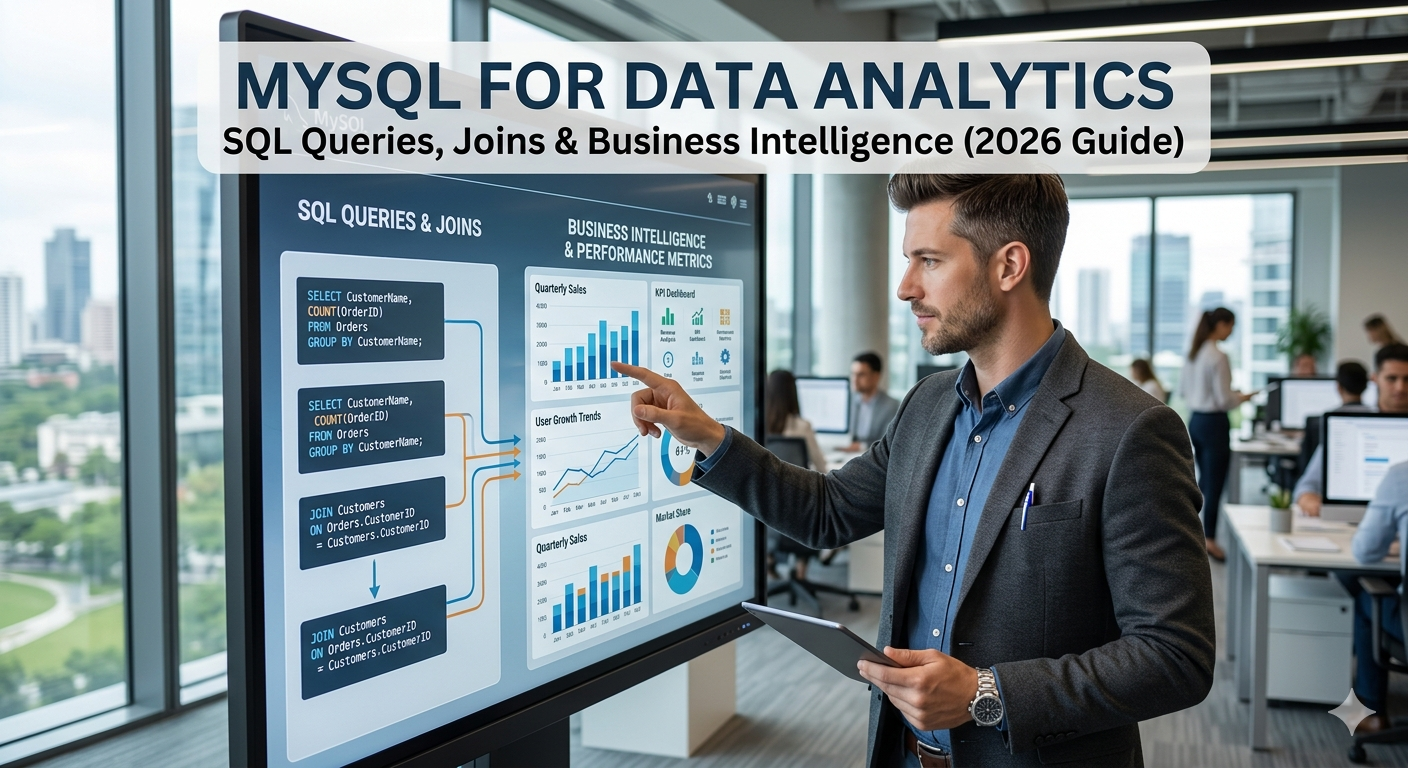
MySQL for Data Analytics | SQL Queries, Joins & Business Intelligence (2026 Guide)
MySQL for data analytics involves using SQL queries, joins, and database techniques to analyze, manage, and extract meaningful insights from structured data. It plays a key role in business intelligence by helping organizations make data-driven decisions efficiently. 1. Introduction to MySQL for Data Analytics MySQL is one of the most powerful relational database systems used by data analysts to store and analyze structured data. With the help of SQL, analysts can filter, sort, and manipulate large datasets efficiently. 2. Importance in Business Intelligence Using business intelligence MySQL, companies can: 3. SQL Queries for Data Analysis SQL queries are the backbone of mysql for data analytics. These queries help extract useful insights from databases. Basic Query Example: SELECT name, sales FROM customers WHERE sales > 5000; Aggregation Example: SELECT region, SUM(sales) FROM orders GROUP BY region; 4. SQL Joins Explained (Step-by-Step) A sql joins tutorial is essential for combining data from multiple tables. Example: SELECT customers.name, orders.amountFROM customersINNER JOIN orders ON customers.id = orders.customer_id; 5. Types of SQL Joins (Table Format) Join Type Description Use Case INNER JOIN Returns matching records Common data analysis LEFT JOIN Returns all left + matched Customer analysis RIGHT JOIN Returns all right + matched Inventory tracking FULL JOIN Returns all records Complete dataset 6. Real-World Use Cases Use Case Description Sales Analysis Identify top-performing products Customer Segmentation Group users based on behavior Financial Reporting Track revenue and expenses Marketing Insights Analyze campaign performance 7. Tools & Integration MySQL integrates with popular BI and analytics tools: These tools enhance business intelligence MySQL capabilities by providing visual dashboards. 8. Career Opportunities After mastering mysql for data analytics, you can become: 9. Frequently Asked Questions | Aptech Learning Mahanagar 10. Conclusion Learning MySQL for data analytics is essential in 2026 for anyone working with data. By mastering SQL queries and joins, you can unlock powerful insights and contribute to business intelligence strategies. Start practicing with real datasets to build strong analytical skills.
Explore More