Cart

Your cart is currently empty.

Sub Total: 0.00

Category: Data Analytics

What is Data Analytics? A Complete Beginner's Guide

What is Data Analytics? A Complete Beginner’s Guide

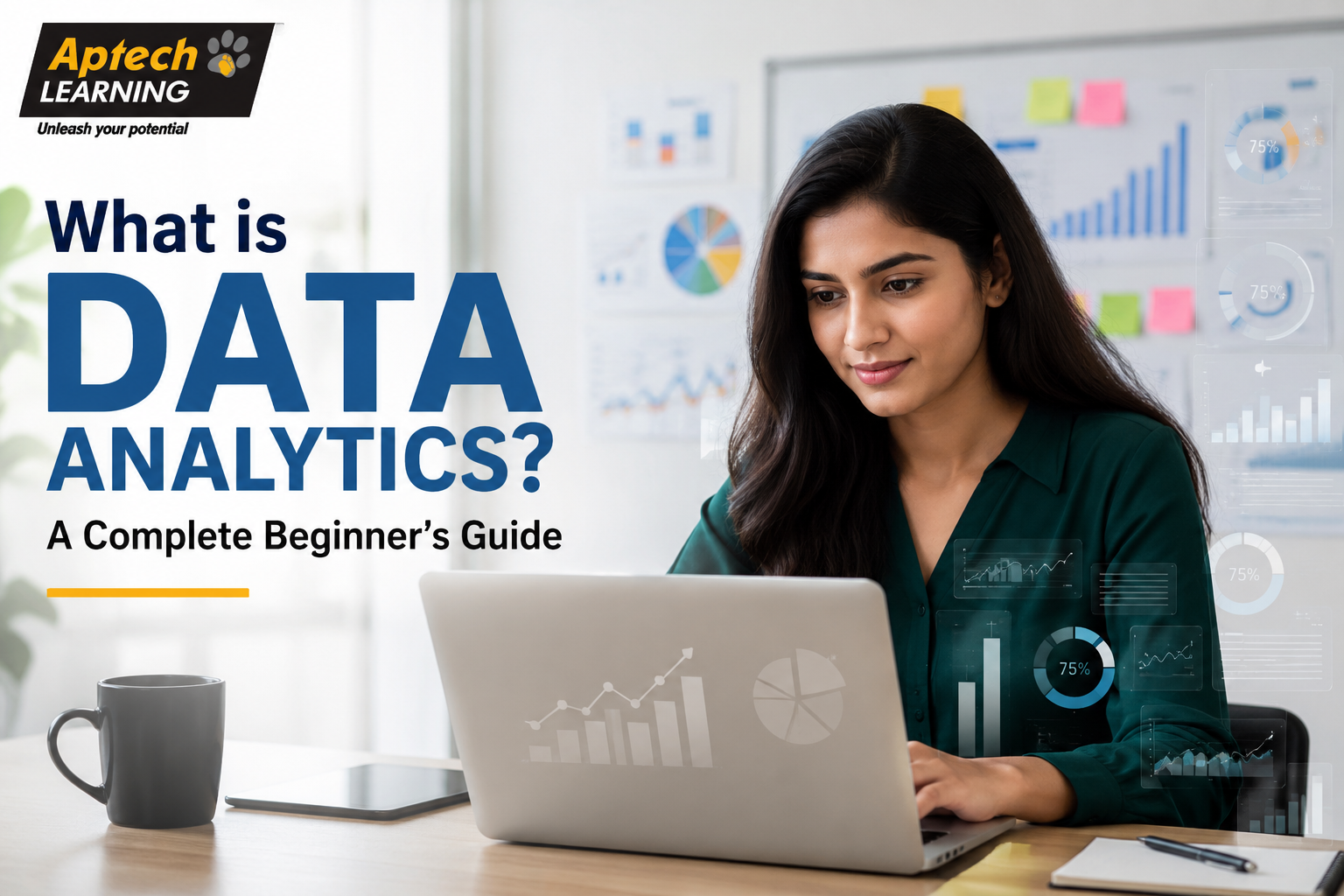
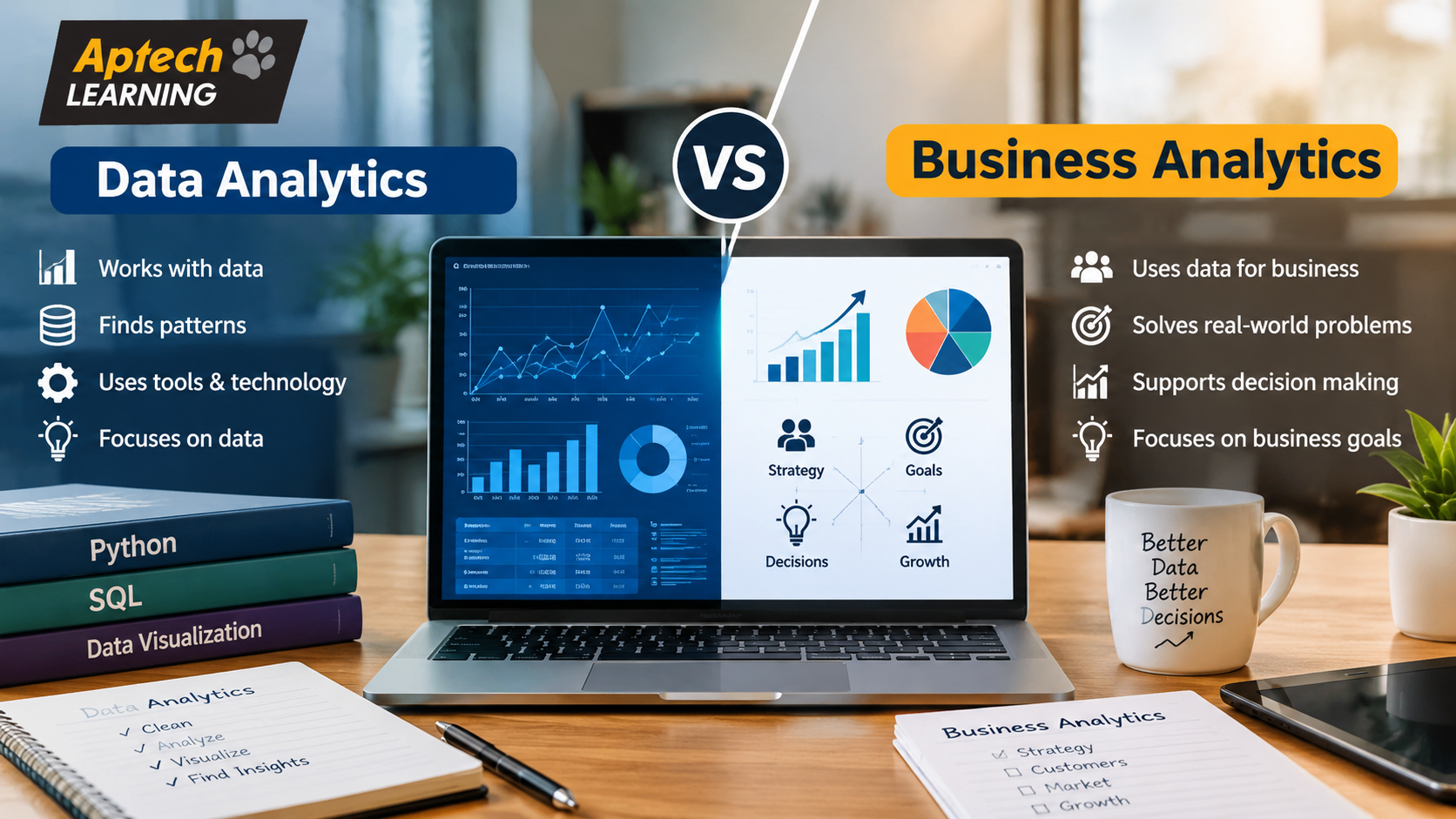
Data analytics is the process of collecting, cleaning, and studying data to find useful patterns and answers that help people make better decisions. It combines statistics, technology, and business thinking. Companies use data analytics to understand customers, improve products, cut costs, and predict future trends based on past information. What is Data Analytics Data analytics means taking raw, messy data and turning it into information that actually makes sense. Think of it like a doctor looking at your blood test report. The lab gives numbers — sugar level, cholesterol, blood count. On their own, these numbers mean nothing to most of us. But a doctor studies these numbers and tells you something useful: whether you are healthy, what to eat, whether you need medicine. A data analyst does the same thing for businesses. They take numbers — sales figures, website visits, customer complaints — and turn them into decisions. Should the company launch a new product? Which city has the most demand? Why did sales drop last month? Data analytics answers these questions using facts, not guesswork. Why Data Analytics Matters Every industry today runs on data. A retail store tracks which products sell fastest. A hospital tracks patient recovery rates. A bank tracks which customers are likely to miss a loan payment. Without data analytics, businesses would be making decisions based on assumptions and guesswork, which often leads to losses. Here is why it matters so much right now: Businesses generate more data than ever before, from mobile apps, websites, sensors, and social media. Competition has increased, so companies need every advantage, including smarter decisions based on real numbers. Customers expect personalised experiences, and this is only possible when businesses understand their behaviour through data. Automation and AI tools depend heavily on clean, well-analysed data to function correctly. Types of Data Analytics There are four main types of data analytics, and each one answers a different kind of question. Descriptive Analytics This type answers “What happened?” It looks at past data and summarises it. For example, a report showing last month’s total sales by region is descriptive analytics. Diagnostic Analytics This type answers “Why did it happen?” It digs deeper into the data to find the cause of a result. For example, finding out why sales dropped in a particular city last quarter. Predictive Analytics This type answers “What is likely to happen next?” It uses historical data and statistical models to forecast future outcomes, such as predicting next month’s demand for a product. Prescriptive Analytics This type answers “What should we do about it?” It goes one step further than prediction and suggests specific actions, such as recommending which products to restock before a festive season. Type of Analytics | Question It Answers | ExampleDescriptive | What happened? | Monthly sales reportDiagnostic | Why did it happen? | Reason behind a sales dropPredictive | What will happen? | Forecasting next quarter’s demandPrescriptive | What should we do? | Recommending stock levels How Data Analytics Works (Step-by-Step) Data Analytics vs Data Science vs Data Analysis These three terms are often used interchangeably, but they are not the same. Data analysis is the general act of examining data to draw conclusions. It can be a single task within a bigger project. Data analytics is broader. It includes the tools, techniques, and processes used to analyse data at scale, often across an entire organisation. Data science goes even further. It combines analytics with programming, machine learning, and advanced statistics to build predictive models and AI systems, not just study existing data. In simple words: data analysis is a task, data analytics is a practice, and data science is a full field that includes analytics plus advanced technology. Practical Examples Retail: A clothing brand studies purchase data and notices that jackets sell more in North Indian cities during October and November. They increase stock in those regions before winter starts, avoiding lost sales. Healthcare: A hospital analyses patient readmission data and finds that patients discharged without a follow-up call are more likely to return within 30 days. They introduce a mandatory follow-up call system, reducing readmissions. Banking: A bank analyses transaction patterns and flags unusual activity, such as a sudden large withdrawal from an inactive account, helping catch fraud early. Education: A college studies attendance and exam data and finds that students missing more than 20 percent of classes score significantly lower. This helps them design early intervention programs for at-risk students. Common Mistakes Beginners Make Skipping the data cleaning step. Many beginners jump straight to analysis without cleaning the data, which leads to wrong conclusions. Confusing correlation with causation. Just because two things happen together does not mean one causes the other. Ignoring the business context. Numbers alone do not tell the full story; understanding the industry and situation matters just as much. Overcomplicating visuals. Beginners sometimes add too many colours, charts, and details, making reports harder to understand instead of easier. Not asking a clear question before starting. Analysis without a clear goal often wastes time and produces vague results. Relying only on one tool. Beginners often stick to Excel alone, but real-world roles usually expect familiarity with SQL, Python, or BI tools too. Career Opportunities Data analytics offers a wide range of career paths across almost every industry, including IT, banking, healthcare, retail, and e-commerce. Common roles include: Data Analyst — collects and interprets data to support business decisions. Business Analyst — focuses on translating data insights into business strategy. Data Visualisation Specialist — builds dashboards and reports using tools like Power BI or Tableau. Marketing Analyst — studies customer behaviour and campaign performance. Financial Analyst — uses data to guide investment and budgeting decisions. Operations Analyst — improves efficiency in supply chains and processes using data. As experience grows, professionals can move into senior roles such as Senior Data Analyst, Analytics Manager, or transition into data science. Salary Information Salary in data analytics varies widely depending on factors such as your city, the size and industry of

Explore More
Excel vs SQL vs Python — Which Skill Should You Master First for Data Analytics?

Excel vs SQL vs Python — Which Skill Should You Master First for Data Analytics?

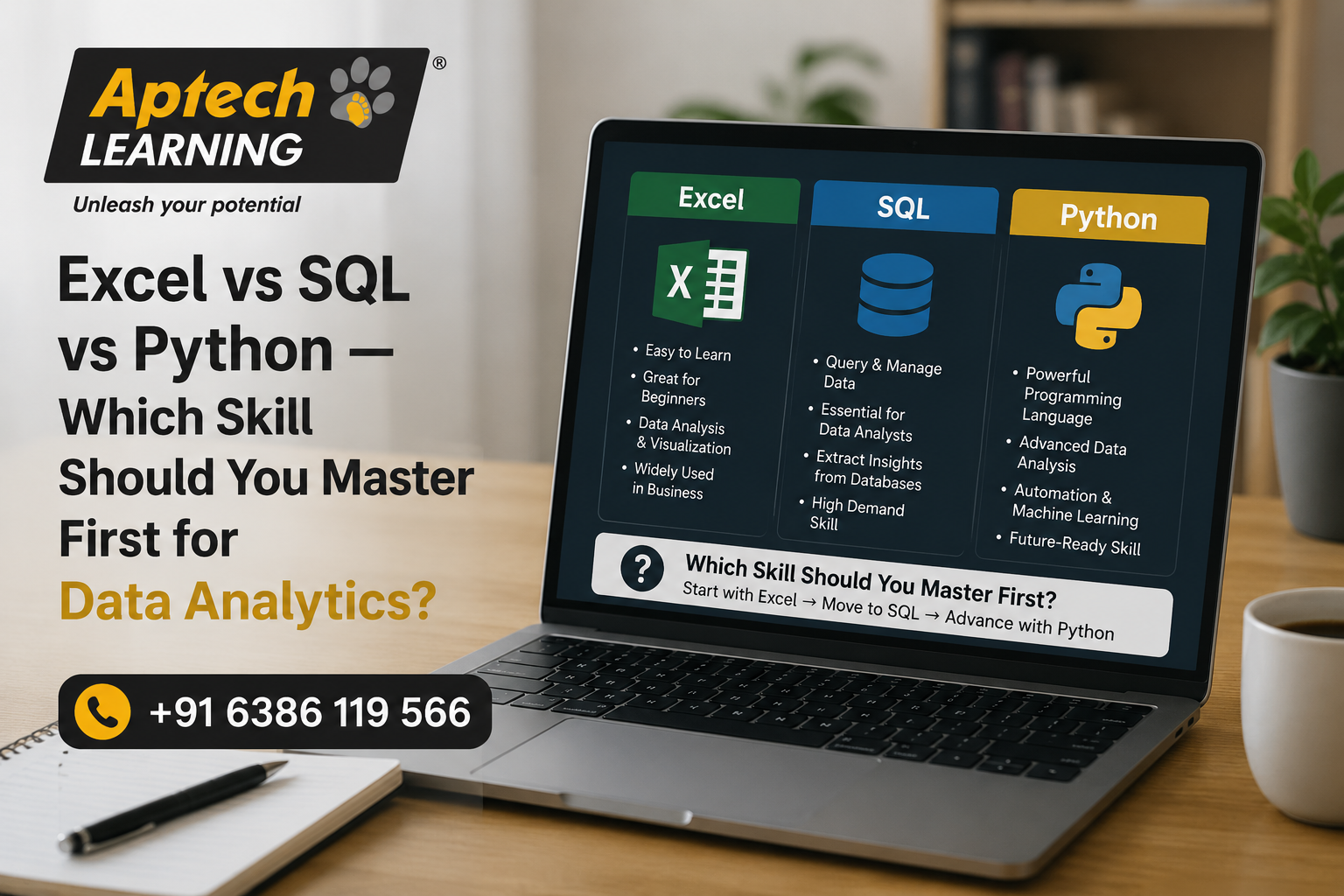
If you’re planning a career in data analytics, one question almost every beginner asks is: should I learn Excel, SQL, or Python first? With so many courses, YouTube videos, and conflicting opinions online, it’s easy to feel stuck before you even begin. The truth is, all three tools are essential for a successful data analytics career, but there’s a smart, logical order to learning them that can genuinely speed up your growth and save you months of confusion. In this blog, we’ll break down which skill to learn first, what each tool is actually used for in real jobs, common mistakes beginners make, and a practical step-by-step roadmap you can follow today. Excel, SQL and Python — Where Each One Fits Tool Main Use Case Difficulty Level Best Suited For Excel Data cleaning, basic analysis, reporting, pivot tables Easy Beginners, small datasets SQL Extracting data from databases, filtering, handling large data Medium Data extraction, real-world databases Python Automation, advanced analysis, machine learning, visualization Medium-High Career growth, advanced analytics Why the Order Actually Matters A lot of beginners try to jump straight into Python because it sounds “advanced” and impressive. But without understanding how data is structured and cleaned (which Excel teaches) or how data is stored and queried (which SQL teaches), Python ends up feeling overwhelming and disconnected from real-world use. Learning in the right sequence means every new tool builds naturally on what you already know, instead of starting from scratch each time. Step 1: Start With Excel Excel is the foundation of data analytics. If you’re a complete beginner, starting with Excel is the easiest and most practical entry point. You should be comfortable with pivot tables, VLOOKUP/XLOOKUP, conditional formatting, charts, and building basic dashboards. Excel also teaches you essential habits like spotting errors, cleaning messy data, and organizing information logically — skills that carry over directly into SQL and Python later on. Most small businesses and even many large companies still rely heavily on Excel for daily reporting, which means this skill alone can open early job opportunities. Step 2: Learn SQL — The Real Source of Data When you start working at actual companies, data usually doesn’t live in Excel sheets — it lives in databases with thousands or millions of rows. SQL (Structured Query Language) helps you pull specific information out of these large datasets, filter it, join multiple tables together, and analyze it efficiently. Almost every data analyst job posting lists SQL as a mandatory skill, often above Python. Learning SQL after Excel also feels natural, since concepts like filtering, sorting, and summarizing data are already familiar to you from spreadsheets. Step 3: Python — Takes Your Career to the Next Level Python becomes essential once you want to move into automation, statistical analysis, predictive modeling, or machine learning. Python libraries like Pandas, NumPy, and Matplotlib make data analysis faster, more powerful, and far more scalable than Excel or SQL alone. If your long-term goal is to grow from data analyst into data scientist or analytics engineer, Python is a must-learn skill. The good news is that by the time you reach Python, you already understand how data behaves (from Excel) and how it’s structured and queried (from SQL) — so Python becomes a tool for deeper analysis rather than a confusing new language. The Right Learning Order Excel → SQL → Python This sequence works best for beginners because each step prepares you for the next. Excel teaches you to understand and clean data, SQL teaches you to extract and manage it at scale, and Python teaches you to analyze, automate, and visualize it at an advanced level. Common Mistakes Beginners Should Avoid Many learners try to study all three tools simultaneously, which often leads to half-finished knowledge in each. Others skip Excel entirely, assuming it’s “too basic,” only to struggle later with fundamental data concepts. A focused, sequential approach — spending real time mastering one tool before moving to the next — almost always produces stronger, job-ready skills. Career Tip If you want to learn all three skills in a structured way without wasting time figuring out what to study next, a proper data analytics course can save you months of confusion. Practical training, real projects, mentorship from industry experts, and placement support can significantly speed up your career growth compared to learning everything alone online. Frequently Asked Questions Conclusion Data analytics isn’t built on a single skill — it’s a combination of tools, and learning them in the right order can make your career path far smoother and far less stressful. Start with Excel to build your foundation, move to SQL to master data extraction, and then learn Python to take your analysis to an advanced, future-ready level. For anyone serious about building a long-term career in this field, following this Excel → SQL → Python roadmap is a smart, practical, and proven approach.

Explore More
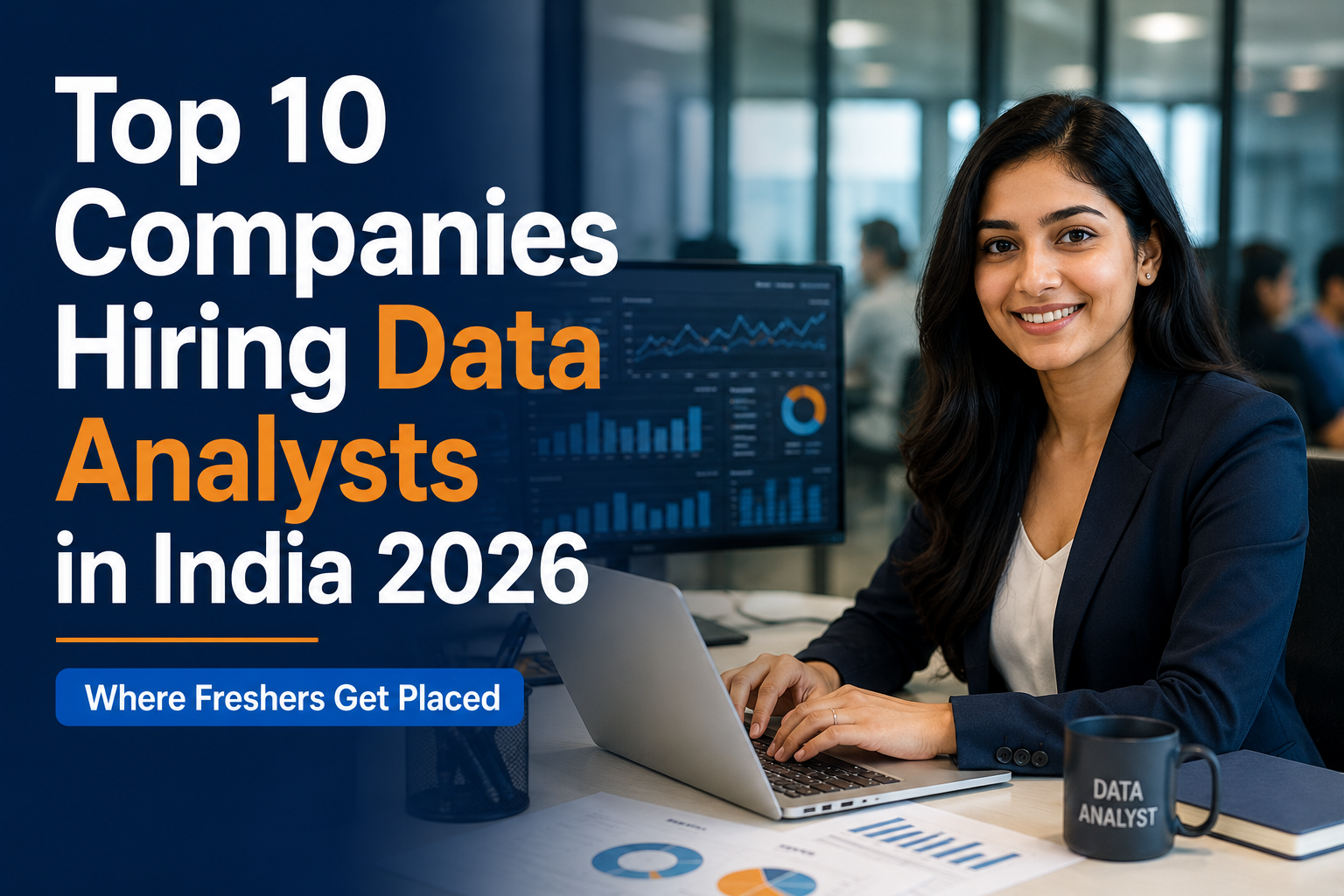
Top 10 Companies Hiring Data Analysts in India 2026

Top 10 Companies Hiring Data Analysts in India 2026 — Where Freshers Get Placed

Knowing how to become a data analyst is only half the journey. The other half — and the part most guides skip — is knowing exactly which companies are actually hiring freshers right now, and what each one expects from you. India’s data analytics market was valued at USD 2.6 billion in 2024 and is projected to reach USD 27 billion by 2033, which means hiring volume is only going up. But not every company on a generic “top 20” list genuinely recruits freshers. Some look impressive on paper but rarely open entry-level seats. This list focuses on companies that consistently hire data analyst freshers in India — with realistic expectations on salary and entry difficulty. Aptechlearninglko Top 10 Companies Hiring Data Analysts in India — 2026 # Company Type Fresher Roles Offered Avg. Starting Salary 1 TCS IT Services Data Analyst, Business Analyst ₹3.5 – ₹5 LPA 2 Infosys IT Services Data Analyst, Reporting Analyst ₹3.5 – ₹5.5 LPA 3 Wipro IT Services Data Analyst (via Early Careers Program) ₹3.5 – ₹5 LPA 4 Accenture IT Services / Consulting Data Analyst, Analytics Associate ₹4 – ₹6 LPA 5 Cognizant IT Services Data Analyst, BI Analyst ₹3.5 – ₹5.5 LPA 6 EXL Analytics / BPM Analyst (Insurance, Healthcare, Finance) ₹4 – ₹6 LPA 7 Genpact Analytics / BPM Data Analyst, Process Analyst ₹3.5 – ₹5.5 LPA 8 Mu Sigma Pure Analytics Firm Decision Scientist Trainee ₹5 – ₹7 LPA 9 Fractal Analytics Pure Analytics Firm Junior Analyst, Data Analyst ₹5 – ₹7.5 LPA 10 Capgemini IT Services Data Analyst, MIS Executive ₹3.5 – ₹5 LPA Most freshers from Tier 2 or Tier 3 colleges typically enter through companies like Tata Consultancy Services, Infosys, or analytics firms rather than direct product-company roles — and this is exactly the realistic entry point for most students from Lucknow and other UP cities. Aptech India IT Giants vs Pure Analytics Firms — Which Should You Target First? Both categories hire freshers, but the experience is very different. Here is an honest comparison: Factor IT Giants (TCS, Wipro, Infosys) Pure Analytics Firms (Mu Sigma, Fractal, EXL) Hiring Volume Very high — mass recruitment Lower — more selective Entry Difficulty Moderate Higher — structured interviews Starting Salary ₹3.5 – ₹5.5 LPA ₹5 – ₹7.5 LPA Day 1 Data Role Guarantee Not guaranteed — depends on project Guaranteed — hired specifically for analytics Learning Curve Slower, broader IT exposure Faster, deep analytics exposure Best For Stability, brand name on resume Skill-building, faster analytics career growth At companies like Wipro, placement into a data role is not guaranteed from day one — the practical path is to join the early careers program, get placed in a project, and actively work toward a data-related team transfer. Pure analytics firms, by contrast, hire you specifically for analytics work from the start. Aptechlearninglko What These Companies Actually Test in Fresher Interviews Knowing the company name means nothing without knowing what they screen for. Here is what shows up consistently across these top 10: Skill Tested How Often It Appears Companies That Emphasize It SQL (joins, subqueries, aggregation) Almost every interview All 10 companies Excel (pivot tables, VLOOKUP) Very common TCS, Wipro, Capgemini, Genpact Power BI / Tableau dashboards Common Accenture, EXL, Fractal Basic Python (Pandas) Increasingly common Fractal, Mu Sigma, EXL Case study / business reasoning Standard at analytics firms Mu Sigma, Fractal, EXL Communication & presentation Universal All 10 companies If your training does not cover SQL deeply, you will struggle regardless of which company you target. It is the single most consistently tested skill across this entire list. How Freshers From Lucknow Actually Reach These Companies Most students assume these companies only hire from metro cities or top-tier colleges. That is no longer fully true. Path How It Works Realistic For Lucknow Students? Campus Placement Through college tie-ups Only if your college has direct partnerships Off-Campus Drives Apply directly via careers page Yes — open to all, more competition Institute Placement Cell Through training institute recruiter network Yes — most accessible route for skill-based hiring Remote/Hybrid Roles Apply to product companies hiring pan-India Yes — growing option post-2024 A structured training program with an active placement cell remains the most realistic and fastest route for freshers in Tier 2 cities to reach recruiter shortlists at these companies. How Aptech Learning Lucknow Helps You Reach These Companies Feature Details Tools Taught Excel, SQL, Python, Power BI, Tableau Live Projects Compulsory, on real business datasets Placement Support Resume + Mock Interviews + Recruiter Referrals Eligibility Class 12 pass or above, any stream Duration 3 to 6 months Contact +91 6386 119 566 Students trained on the exact tools these top companies test for — SQL, Power BI, and Excel — consistently perform better in fresher interviews than candidates with only theoretical course knowledge. Frequently Asked Questions (FAQs) Start Building the Skills These Companies Actually Test For Knowing the company list is step one. Building the SQL, Excel, and Power BI skills they screen for is what actually gets you the offer. 📞 Call / WhatsApp: +91 6386 119 566📧 Email: digilearninglko@gmail.com🌐 Website: aptechlearninglko.com📍 Address: First Floor, Above Radiance, 18 J Road, Near Midland Healthcare, Mahanagar, Lucknow

Explore More
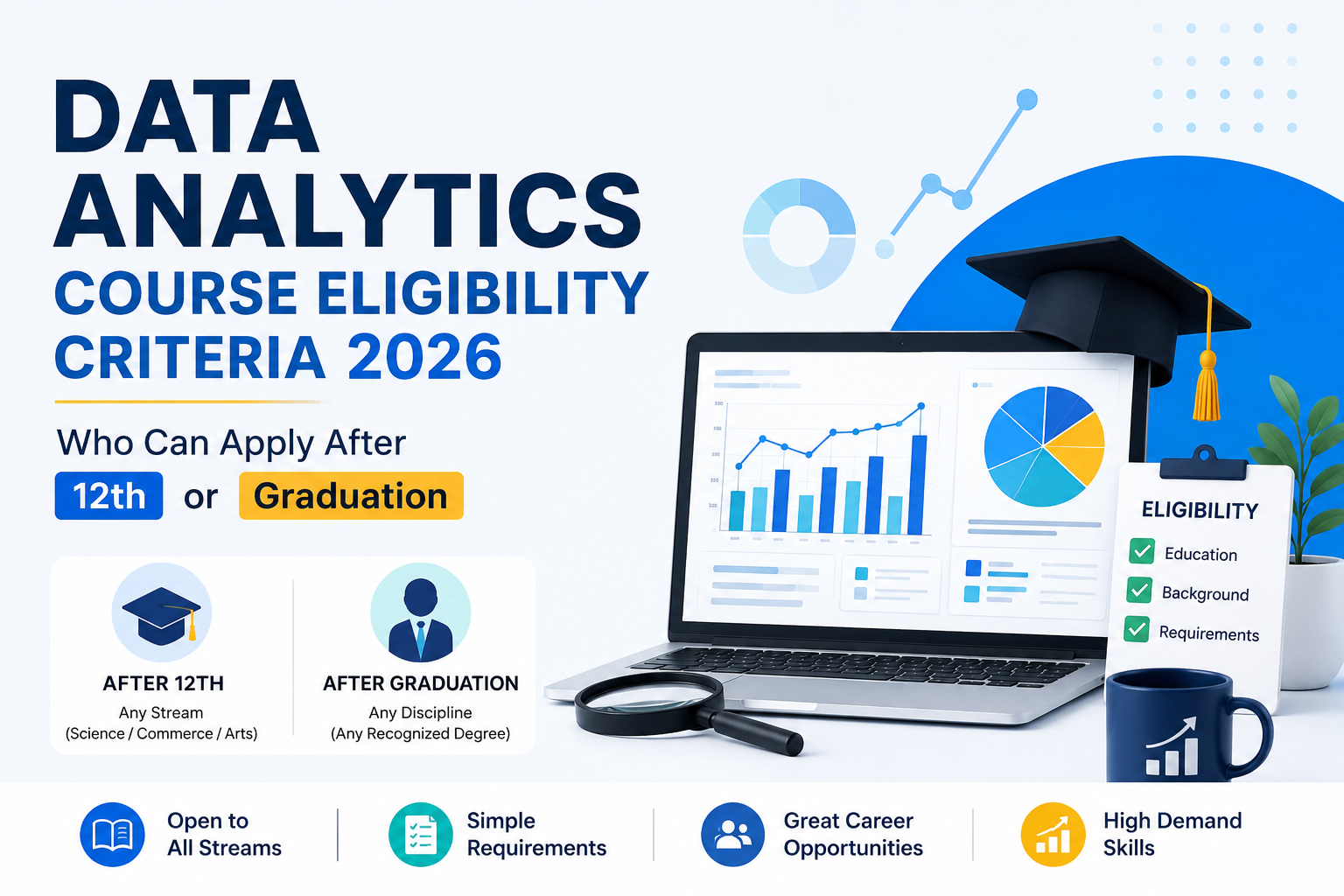
Data Analytics Course Eligibility Criteria 2026

Data Analytics Course Eligibility Criteria 2026 — Who Can Apply After 12th or Graduation

A lot of students hesitate before enrolling in a data analytics course because of one simple doubt — “Am I even eligible?” They assume it is only for engineering students or people who were good at maths in school. That assumption stops thousands of capable students from starting a career that genuinely does not require any of that. The real eligibility for a data analytics certification course is far more relaxed than most people expect — and far more relaxed than what is required for a full data science degree. This guide clears up exactly who can apply, what background you need, and what the actual entry requirements look like in 2026. Data Analytics Course vs Data Science Degree — Eligibility Is Different This is the confusion most students run into first. A data analytics certification and a data science degree are not the same thing, and their eligibility rules are very different. Factor Data Analytics Certification Course Data Science Degree (BSc/BTech) Minimum Qualification Class 12 pass, any stream Class 12 with Maths/Science usually preferred Minimum Marks Required None — open to all percentages Often 50–60% in 10th and 12th Maths Background Needed Not mandatory Strongly preferred Entrance Exam Not required Sometimes required (JEE, CUET, etc.) Duration 3 to 6 months 3 to 4 years Best Suited For Quick, job-ready skill building Long-term academic + research path If your goal is a job — not a degree — a certification course is the faster, more accessible route, and stream or marks do not block your entry. Who Exactly Can Apply — Stream-Wise Breakdown This is the part most students actually want clarity on. Here is exactly where each background stands: Your Background Eligible for Data Analytics Course? Where You Start Class 12 — Science (PCM/PCB) ✅ Yes Excel + SQL, fastest progression Class 12 — Commerce ✅ Yes Excel + SQL, strong fit Class 12 — Arts/Humanities ✅ Yes Excel basics, then SQL gradually BCom / BBA Graduate ✅ Yes Business analytics track BA / BSc Graduate ✅ Yes Statistics + Power BI focus BTech / BCA / MCA Graduate ✅ Yes Faster track — Python + advanced SQL Working Professional (any field) ✅ Yes Evening/weekend batch, career switch track The honest reality: general data-related courses prefer a graduation background in subjects like Mathematics, Computer Science, or Statistics for formal degree programs. But certification-based data analytics training works differently — it is built for beginners from any stream, which is exactly why thousands of Commerce and Arts graduates complete it successfully every year. Aptechlearninglko Do You Need a Maths or Coding Background? This is the single biggest myth stopping non-technical students from applying. Here is the truth: Skill Area Is It Required to Join? How Much You Actually Need Advanced Calculus ❌ Not required None Basic Statistics (averages, percentages) ✅ Helpful Class 10–12 level is enough Prior Coding Experience ❌ Not required Taught from scratch English Communication ✅ Important Conversational level is sufficient Logical Thinking ✅ Helpful Builds naturally through practice A comfortable understanding of concepts taught in 10th and 12th grade — like averages, percentages, and basic probability — is sufficient to start a data analytics course. You do not need to have scored well in maths to qualify. Aptechlearninglko Minimum Qualification Checklist for 2026 Use this simple checklist before you apply anywhere: Requirement Mandatory? Notes Class 12 Pass Certificate ✅ Yes Any stream, any board accepted Minimum Percentage ❌ No Most institutes do not enforce a cutoff Graduation Degree ❌ No Helpful but not compulsory for certification courses Laptop/Computer Access ✅ Recommended For practice; labs are usually provided at institutes Age Limit ❌ None Suitable for students, freshers, and working professionals alike If you meet just the first row, you are eligible to start. Aptech Learning Lucknow — Eligibility & Course Details For students and professionals in Lucknow and UP looking for a structured, beginner-friendly entry point: Feature Details Eligibility Class 12 pass or above, any stream Minimum Marks Required None Course Duration 3 to 6 months Batch Options Morning / Evening / Weekend Mode Offline — Mahanagar, Lucknow Tools Taught Excel, SQL, Python, Power BI, Tableau Placement Support Resume + Mock Interviews + Recruiter Referrals Contact +91 6386 119 566 Students from Commerce, Arts, BCom, BBA, and engineering backgrounds train together here — eligibility is never a barrier; only commitment to learning is. Frequently Asked Questions (FAQs) Eligibility Is Not the Barrier — Starting Is If you have passed Class 12 from any stream, you already meet the eligibility for a data analytics course. The only real requirement left is the decision to begin. 📞 Call / WhatsApp: +91 6386 119 566📧 Email: digilearninglko@gmail.com🌐 Website: aptechlearninglko.com📍 Address: First Floor, Above Radiance, 18 J Road, Near Midland Healthcare, Mahanagar, Lucknow

Explore More
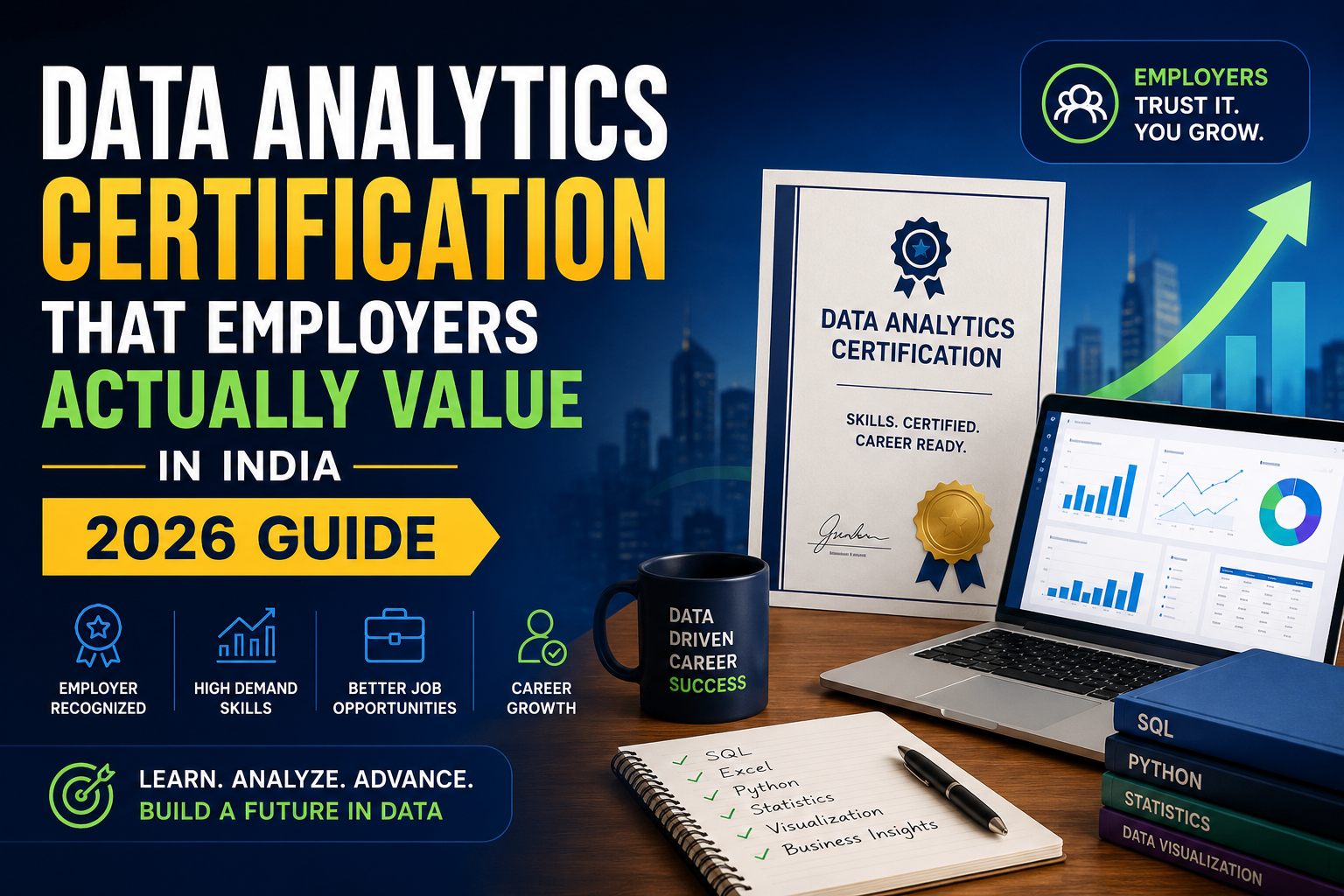
Data Analytics Certification That Employers Actually Value in India — 2026

Data Analytics Certification That Employers Actually Value in India — 2026 Guide

Everyone wants a certificate. Very few people ask the harder question — does this certificate actually get me a callback? There is a real gap between what gets marketed online and what HR teams in India actually screen for. Some certifications carry genuine weight in interviews. Others sit unused on a LinkedIn profile, never once mentioned by a recruiter. This guide breaks down which is which, based on what is actually happening in Indian hiring right now. The Honest Truth — Certificates Alone Don’t Get You Hired Before comparing certifications, understand this one fact clearly: a 2025 survey of 111 hiring executives found that employers value practical skills over certificates alone. Aptechlearninglko What Employers Actually Check First Weight in Hiring Decision Portfolio projects (SQL, Python, dashboards) High — most decisive factor Certification (Google, IBM, Power BI) Moderate — supports the resume Degree / educational background Low to moderate, varies by company Communication skills in interview High — often the deciding factor A certificate gets you past the resume filter. Projects and communication get you the offer. Top Data Analytics Certifications — How Employers in India Rate Them Here is a direct comparison of the most recognized certifications and what they actually signal to Indian recruiters: Certification Best For Duration Employer Recognition in India Google Data Analytics Professional Certificate Complete beginners 3–6 months High — widely known, beginner-friendly IBM Data Analyst Professional Certificate Those wanting Python/SQL depth 4–6 months High — strong technical signal Microsoft Power BI (PL-300) Business intelligence roles 2–3 months Excellent — for BI/dashboard-heavy roles Institute certification (with live projects) Freshers needing local placement 3–6 months Strong — when paired with real projects CompTIA Data+ Vendor-neutral skill proof 2–3 months Growing — more common in MNCs CAP (Certified Analytics Professional) Senior/experienced analysts Ongoing High — but only for experienced professionals For absolute beginners in India, Google’s certification connects certified individuals with over 130 companies actively seeking entry-level data analysts through its employer consortium — a genuine advantage for first-time job seekers. Aptechlearninglko Online Certificate vs Institute Certificate — Which Actually Works Better? This is the real decision most freshers in Lucknow and UP are facing. Here is an honest comparison: Factor Online Certificate (Google/IBM) Institute Certificate (with placement support) Cost ₹7,000 – ₹20,000 ₹25,000 – ₹60,000 Live Doubt Resolution Limited, forum-based Instant, in-person Placement Assistance Generic job board access Resume + mock interviews + recruiter referrals Project Guidance Self-paced, less feedback Mentored, real business datasets Best Suited For Self-disciplined learners Freshers needing structured support Local Job Market Connection None Strong — direct local hiring network Online certificates build credibility. Institute training with live mentorship builds job-readiness. The strongest resumes in 2026 combine both. What Actually Increases Your Salary — Certification + Skill Depth Numbers matter more than brand names here. In India, certification can drive a 15 to 30 percent salary boost, translating to roughly ₹50,000 to ₹2,00,000 annually depending on skill depth beyond the certificate. But the catch matters just as much: certificate-only candidates see modest increases, while certificate plus strong portfolio candidates see 25 to 35 percent increases. AptechlearninglkoAptechlearninglko Profile Type Expected Salary Impact Certificate only, no projects Minimal — 5–10% boost at best Certificate + 2–3 real projects Moderate — 15–25% boost Certificate + projects + institute placement support Strong — 25–35% boost, faster hiring The certificate is the entry ticket. The projects and placement support are what actually move the needle on your salary. Why Aptech Learning Lucknow’s Certification Works for Freshers A recognized institute certificate, when backed by real projects and active placement support, holds genuine weight with local and remote employers. Feature Details Certification Aptech — recognized pan-India for over 3 decades Tools Covered Excel, SQL, Python, Power BI, Tableau Live Projects Compulsory, real business datasets Placement Support Resume building + mock interviews + recruiter referrals Eligibility Class 12 pass or above, any stream Duration 3 to 6 months Contact +91 6386 119 566 This certification pairs structured learning with the placement push that online-only certificates typically cannot offer. Frequently Asked Questions (FAQs) Choose the Certification That Actually Works for You The right certification is not the one with the biggest logo — it is the one paired with real skills, real projects, and real placement support behind it. 📞 Call / WhatsApp: +91 6386 119 566📧 Email: digilearninglko@gmail.com🌐 Website: aptechlearninglko.com📍 Address: First Floor, Above Radiance, 18 J Road, Near Midland Healthcare, Mahanagar, Lucknow

Explore More
Data Analytics Institute Near Me — How to Actually Choose the Right One in 2026

Data Analytics Institute Near Me — How to Actually Choose the Right One in 2026

Typing “data analytics institute near me” into Google gives you fifty results in seconds. What it does not give you is the one thing that actually matters — which of those fifty is worth your time and money. Here is the problem most students run into. Every institute’s website looks the same. Same promises, same buzzwords, same “100% placement” claims. The difference only shows up after you have already paid the fee — which is too late. This guide gives you a practical checklist to evaluate any local data analytics institute near you, plus what a genuinely good one — like Aptech Learning Lucknow — actually offers. Why “Near Me” Actually Matters for This Course A lot of people assume online is automatically better. For data analytics specifically, that is not always true — especially for beginners. Factor Local Institute (Near You) Online-Only Program Doubt Resolution Instant, in-person Delayed, ticket-based Hands-on Practice Supervised lab sessions Self-monitored Placement Network Local recruiter connections Generic job portal access Peer Learning Real classroom interaction Limited or none Accountability Regular attendance, mentors check in Easy to drop off Travel Time Minimal if nearby None, but no real-world push For self-driven learners with strong discipline, online works fine. For most freshers — especially from non-technical backgrounds — a nearby institute with real classroom structure gets you to job-ready faster. The Checklist — What to Verify Before Enrolling Anywhere Use this table on every institute you shortlist. If two or more answers are “No,” walk away. What to Check Why It Matters Red Flag If… Trainer’s corporate experience Real industry exposure beats textbook teaching Trainers only have teaching backgrounds Updated 2026 curriculum Old syllabus = outdated skills No Power BI or Python mentioned Live projects on real datasets Builds actual portfolio for interviews Only PDF notes and recorded videos Batch size Smaller batches mean more attention 50+ students per batch Named placement partners Genuine support vs empty promise They can’t name a single hiring company Demo class availability Lets you judge quality before paying They refuse a trial session Certification recognition Matters for resume credibility Certificate not recognized outside the institute Walk into any institute and ask these questions directly. A good one will answer without hesitation. What Tools Should the “Near Me” Institute Actually Teach? Regardless of which institute you pick, the curriculum should include these five tools — non-negotiable for getting hired in 2026: Tool Purpose Used By Advanced Excel Data cleaning, MIS reporting Every industry SQL Database querying, data extraction IT, Banking, E-commerce Python (Pandas, NumPy) Automation, deeper analysis Tech, Healthcare, Finance Power BI Business dashboards Corporate, Retail, Startups Tableau Data storytelling for leadership Consulting, MNC reporting roles If an institute near you skips even one of these, your resume will have a visible gap compared to candidates trained elsewhere. Aptech Learning Lucknow — What You Get Locally in Mahanagar For students and professionals searching specifically in Lucknow, here is what is available right in Mahanagar — no long commute, no compromise on quality: Feature Details Location Mahanagar, Lucknow — Near Midland Healthcare Eligibility Class 12 pass or above, any stream Course Duration 3 to 6 months Batch Options Morning / Evening / Weekend Mode Offline, hands-on lab sessions Tools Taught Excel, SQL, Python, Power BI, Tableau Placement Support Resume + Mock Interviews + Recruiter Referrals Certification Aptech — recognized pan-India Contact +91 6386 119 566 Students from Commerce, Arts, BCA, and B.Tech backgrounds regularly train here and get placed in roles across Lucknow, Delhi NCR, and Bangalore — many working remotely without relocating. Frequently Asked Questions (FAQs) Stop Searching, Start Visiting Google searches only get you so far. The real decision happens when you walk in, ask questions, and see the training in person. 📞 Call / WhatsApp: +91 6386 119 566📧 Email: digilearninglko@gmail.com🌐 Website: aptechlearninglko.com📍 Address: First Floor, Above Radiance, 18 J Road, Near Midland Healthcare, Mahanagar, Lucknow

Explore More
Data Analytics Course for Working Professionals in India

Data Analytics Course for Working Professionals in India | Upskill While Working 2026

In today’s competitive job market, professionals can no longer rely only on experience. Companies are increasingly making decisions based on data, creating a strong demand for employees who can analyze information, build reports, and generate business insights. This is why a Data Analytics Course for Working Professionals India has become one of the most valuable career investments in 2026. The best part? You don’t need to quit your job to learn data analytics. Modern online learning programs are specifically designed for working professionals, offering flexible schedules, weekend classes, recorded sessions, and project-based learning. Many industry-focused programs now provide online and weekend learning options for professionals looking to upgrade their skills while continuing their careers. Why Working Professionals Should Learn Data Analytics Whether you work in finance, sales, marketing, operations, HR, healthcare, or IT, data plays a critical role in decision-making. A data analytics course helps you: Benefit How It Helps Better Decision-Making Use data to solve business problems Career Growth Qualify for promotions and leadership roles Higher Salary Potential Gain in-demand technical skills Industry Relevance Stay competitive in an AI-driven workplace Job Security Become valuable to employers using analytics Industry experts continue to emphasize that upskilling in analytics and AI-related fields is becoming essential for long-term career growth. What Skills Will You Learn? A quality Data Analytics Training India program typically covers the tools and technologies most employers expect from modern analysts. Skill Purpose Excel Data cleaning and reporting SQL Database querying and management Python Data analysis and automation Power BI Dashboard creation and visualization Statistics Understanding trends and patterns Data Visualization Presenting insights effectively Business Analytics Turning data into business decisions Most job-oriented programs now focus heavily on SQL, Python, Power BI, dashboard development, and real-world business projects. Can You Learn Data Analytics While Working Full-Time? Absolutely. Many professionals successfully transition into analytics by dedicating just 8–12 hours per week to structured learning. Several modern programs are specifically designed with evening and weekend schedules to accommodate working individuals. Suggested Weekly Learning Plan Day Time Monday–Friday 1–1.5 Hours Daily Saturday 3–4 Hours Sunday Practice Projects With consistent effort, most learners can become job-ready within 4–8 months depending on their background and learning pace. Who Should Enroll? A Data Analyst Course for Working Professionals is ideal for: Even professionals from non-technical backgrounds can start learning analytics because most programs begin with fundamentals before moving to advanced concepts. Career Opportunities After Completing a Data Analytics Course After gaining practical analytics skills, professionals can explore multiple career paths. Job Role Average Demand Level Data Analyst High Business Analyst High Power BI Developer High Reporting Analyst High Operations Analyst Growing Marketing Analyst Growing Data Visualization Specialist Growing Data analytics continues to be one of the fastest-growing career domains as organizations increasingly depend on data-driven decision-making. How to Choose the Right Data Analytics Course Before enrolling, consider these factors: 1. Industry-Relevant Curriculum The course should cover SQL, Python, Power BI, Excel, and analytics projects. 2. Flexible Learning Schedule Look for weekend or evening classes if you’re employed full-time. 3. Real Projects Hands-on projects help build practical experience. 4. Certification A recognized certificate adds credibility to your resume. 5. Placement Assistance Career guidance and interview preparation can significantly improve job opportunities. Why Choose Aptech Learning Lucknow? At Aptech Learning Lucknow, working professionals can learn industry-demand analytics skills through practical training, expert guidance, and flexible learning options. The curriculum focuses on real-world applications of SQL, Python, Power BI, Excel, and business analytics, helping learners become job-ready without interrupting their current careers. Website: Aptech Learning Lucknow Frequently Asked Questions Conclusion A Data Analytics Course for Working Professionals India is one of the smartest career investments you can make in 2026. As businesses increasingly rely on data for strategic decisions, professionals with analytics skills enjoy better career growth, stronger job security, and access to high-paying opportunities. The best time to start was yesterday. The second-best time is today. By dedicating a few hours each week to learning SQL, Python, Power BI, and analytics, you can future-proof your career without leaving your current job.

Explore More
6-Month Data Analytics Course in India — Complete Curriculum, Fees & Job Scope

6-Month Data Analytics Course in India — Complete Curriculum, Fees & Job Scope 2026

Six months is not a long time. But if those six months are spent learning the right tools, working on real projects, and preparing for actual interviews — they can completely change where your career goes next. A 6-month data analytics course is the sweet spot for most freshers and working professionals in India. Long enough to go deep into tools like SQL, Python, and Power BI. Short enough that you are not stuck in a classroom for two years before seeing results. This guide breaks down exactly what a 6-month program covers, what it costs, and what kind of jobs it opens up — so you can make an informed decision before enrolling anywhere. Month-by-Month Curriculum — What You Learn and When A well-structured 6-month data analytics program should not dump everything on you at once. Here is how a properly sequenced curriculum looks: Month Module Tools Covered Month 1 Data Foundations — statistics, data types, cleaning basics Advanced Excel, Google Sheets Month 2 Database Management — queries, joins, reporting SQL (MySQL / PostgreSQL) Month 3 Programming for Analytics — automation, data manipulation Python (Pandas, NumPy) Month 4 Data Visualization — dashboards, charts, business reporting Power BI Month 5 Advanced Visualization + Business Analytics Tableau, Excel advanced models Month 6 Capstone Projects + Interview Prep + Placement All tools, real datasets At Aptech Learning Lucknow, this sequence is followed strictly — Excel before SQL, SQL before Python, and projects only after fundamentals are solid. This order matters more than most students realize. Tools You Master in 6 Months These are not just names on a brochure. Each of these tools appears regularly in Indian data analyst job listings — and each one is tested in interviews. Tool Why It Matters Industry Usage Advanced Excel Foundation for all data work, MIS reports Every company, every sector SQL Most in-demand skill in data analyst JDs IT, Banking, E-commerce, Logistics Python (Pandas, NumPy) Automates analysis, handles large datasets Tech, Healthcare, Finance Power BI Standard BI dashboard tool across Indian corporates Corporate, Retail, Consulting Tableau Visual storytelling for senior stakeholder reporting MNC, Marketing, Strategy roles Miss any one of these and you will feel it in your interviews. A 6-month program gives you enough time to practice each tool properly — not just watch demos. Data Analytics Course Fees in India — 6-Month Programs Fees vary significantly based on format, institute reputation, and city. Here is an honest comparison: Course Format Fee Range Placement Support Best For Self-paced Online (YouTube / Coursera) ₹0 – ₹5,000 None Self-disciplined learners Online Certification (Google, IBM) ₹5,000 – ₹20,000 Minimal Resume additions Offline Institute — Tier 2 Cities ₹25,000 – ₹60,000 Active, local recruiter network Freshers needing placement Online Bootcamp (upGrad, Scaler) ₹80,000 – ₹1,50,000 Dedicated team Working professionals PG Diploma Programs ₹1.5 lakh – ₹3.5 lakh Premium Long-term investment For freshers in Lucknow and UP, a quality offline 6-month program — priced between ₹25,000 and ₹60,000 — consistently delivers better first-job outcomes than expensive online programs, because local recruiter networks and in-person placement support are hard to replace. Job Scope After a 6-Month Data Analytics Course This is what most people actually want to know. Here is what a 6-month certified data analyst can realistically apply for in India in 2026: Job Role Industries Hiring Average Starting Salary Data Analyst IT, E-commerce, Banking ₹3.5 – ₹6 LPA MIS Executive Finance, Logistics, Telecom ₹3 – ₹5 LPA Business Analyst Consulting, Retail, Healthcare ₹4 – ₹6.5 LPA Reporting Analyst FMCG, Insurance, Real Estate ₹3.5 – ₹5.5 LPA BI Analyst (Junior) Product Companies, IT Services ₹4.5 – ₹7 LPA Data Operations Executive Startups, BPO, SaaS ₹3 – ₹4.5 LPA Students from Aptech Lucknow have joined companies in Noida, Delhi NCR, Mumbai, and Bangalore — many working remotely from Lucknow, earning salaries competitive with metro markets. Why Choose Aptech Learning Lucknow for Your 6-Month Course Feature Details Eligibility Class 12 pass or above, any stream Course Duration 3 to 6 months — flexible tracks Batch Options Morning / Evening / Weekend Mode Offline — Mahanagar, Lucknow Certification Aptech — recognized pan-India Projects Compulsory live projects on real business data Placement Support Resume + Mock Interviews + Recruiter Referrals Contact +91 6386 119 566 No prior coding experience needed. No engineering degree required. The 6-month track is designed to take you from scratch to job-ready, in sequence, with real support at every stage. Frequently Asked Questions (FAQs) Conclusion Six months from now, you will either be job-hunting without direction — or placed as a data analyst with a skill set that grows with your career. The difference is the decision you make today. 📞 Call / WhatsApp: +91 6386 119 566 📧 Email: digilearninglko@gmail.com 🌐 Website: aptechlearninglko.com 📍 Address: First Floor, Above Radiance, 18 J Road, Near Midland Healthcare, Mahanagar, Lucknow

Explore More
Data Analyst vs Data Scientist — Which Course Should You Choose in 2026?

Data Analyst vs Data Scientist — Which Course Should You Choose in 2026?

This is one of the most searched questions in India right now — and most answers online make it more confusing than it needs to be. Here is the short version: both are excellent careers, both pay well, and both use overlapping tools. But they are not the same job, they do not require the same preparation, and choosing the wrong one for your current skill level is one of the fastest ways to waste time and money. This guide gives you a clear, honest comparison — so you can pick the path that actually makes sense for you in 2026. The Core Difference — What Each Role Actually Does Most people think data science is just a fancier version of data analytics. That is not quite right. Factor Data Analyst Data Scientist Primary Job Interpret existing data, build reports & dashboards Build predictive models, work with AI and machine learning Question They Answer What happened and why? What will happen next? Data Type Structured, organized datasets Structured + unstructured, large-scale Output Reports, dashboards, business insights ML models, algorithms, predictions Stakeholders Business teams, managers Product, engineering, leadership Coding Level Moderate — SQL + basic Python Heavy — Python, R, ML frameworks A data analyst explains patterns in last month’s sales. A data scientist builds a model that predicts next month’s sales. Both are valuable. One is significantly harder to learn from scratch. Skills Required — Side by Side This is where the real difference shows up. Look at what each role actually needs: Skill Data Analyst Data Scientist Advanced Excel ✅ Essential ⚠️ Helpful SQL ✅ Essential ✅ Essential Python (Pandas, NumPy) ✅ Required ✅ Required Power BI / Tableau ✅ Essential ⚠️ Helpful Statistics & Probability ✅ Basic level ✅ Deep level Machine Learning ❌ Not required ✅ Essential Deep Learning / AI ❌ Not required ✅ Advanced roles R Programming ❌ Optional ⚠️ Often needed The honest truth: data analytics has a shorter, more learnable skill path. Data science requires a deeper foundation in statistics, programming, and math — and skipping that foundation is exactly why most beginners struggle when they jump straight into data science courses. Salary Comparison — India 2026 Money matters. Here is a realistic picture of what each role pays: Experience Level Data Analyst Salary Data Scientist Salary Fresher (0–1 year) ₹3.5 – ₹6 LPA ₹6 – ₹12 LPA Mid-level (2–3 years) ₹7 – ₹12 LPA ₹14 – ₹22 LPA Senior (4–6 years) ₹15 – ₹25 LPA ₹25 – ₹40 LPA Product / MNC Roles ₹20 LPA+ ₹40 LPA+ Data scientists earn more — but the gap at fresher level is smaller than most people expect. And getting your first data analyst job is significantly easier and faster than landing your first data scientist role, especially without a postgraduate degree. Time to Get Job-Ready — Honest Comparison Factor Data Analytics Course Data Science Course Minimum Duration 3 – 6 months 8 – 18 months Prior Requirement Class 12 pass, any stream Strong math + programming base preferred Difficulty Level Beginner-friendly Intermediate to advanced First Job Timeline 3 – 5 months post-training 6 – 14 months post-training Placement Rate (Freshers) High — most industries hire Moderate — fewer entry-level openings Course Fees Range ₹20,000 – ₹80,000 ₹80,000 – ₹3.5 lakh For freshers in Lucknow and UP, a data analytics certification gets you earning faster, with lower investment, and lower risk of dropping out halfway through a course that is too advanced too soon. Which One Should YOU Choose? Stop overthinking it. Answer these three questions: Your Situation Best Choice You are a fresher or career switcher Start with Data Analytics You have no coding background Start with Data Analytics You want a job within 6 months Data Analytics You have 1–2 years of analytics experience already Move toward Data Science You love math, statistics, and algorithms Data Science is your path You want the highest long-term salary Data Analytics first → Data Science later The smartest move most working professionals and freshers can make is to start with data analytics, get placed, gain real experience, and then upgrade to data science skills. This path is faster, cheaper, and carries far less risk than jumping into data science from zero. How Aptech Learning Lucknow Fits In For freshers and working professionals in Lucknow and UP who want to start with data analytics the right way — with proper placement support and structured training: Feature Details Course Data Analytics — Excel, SQL, Python, Power BI, Tableau Eligibility Class 12 or above, any stream Duration 3 to 6 months Batches Morning / Evening / Weekend Mode Offline — Mahanagar, Lucknow Placement Support Resume + Mock Interviews + Recruiter Referrals Contact +91 6386 119 566 Once you are placed as a data analyst, the path to data science becomes much clearer — and you will have industry experience behind you when you take that next step. Frequently Asked Questions (FAQs) Make the Right Call Today Confusion between two career paths should not stop you from starting either one. If you are a fresher or career switcher in Lucknow, data analytics is almost always the right first move — and Aptech Learning Lucknow is built exactly for that. 📞 Call / WhatsApp: +91 6386 119 566 📧 Email: digilearninglko@gmail.com 🌐 Website: aptechlearninglko.com 📍 Address: First Floor, Above Radiance, 18 J Road, Near Midland Healthcare, Mahanagar, Lucknow

Explore More
Power BI + SQL + Python

Power BI + SQL + Python — Top Data Analyst Skills to Get Hired in 2026

The demand for data analysts is growing faster than ever in 2026. Every company today generates huge amounts of data, but very few professionals know how to convert that data into meaningful business insights. This is why companies are actively hiring skilled data analysts who understand Power BI, SQL, and Python. If you are planning to build a high-paying career in data analytics, mastering these three skills can significantly increase your job opportunities. Whether you are a student, working professional, or fresher, learning Power BI, SQL, and Python together creates a complete industry-ready skill set. If you want professional training with real-world projects, visit Aptech Learning Lucknow for industry-focused data analytics programs. Why Data Analytics is One of the Best Careers in 2026 Businesses now depend heavily on data-driven decisions. Companies analyze customer behavior, sales performance, marketing campaigns, financial reports, and operational efficiency using data analytics tools. According to industry hiring trends, organizations are searching for professionals who can: This growing dependency on analytics has made data analysts one of the most in-demand professionals globally. Why Power BI is Essential for Data Analysts What is Power BI? Microsoft Power BI is a business intelligence and data visualization tool developed by Microsoft. It helps businesses convert raw data into visual dashboards and reports. Power BI is widely used because it allows companies to: In 2026, Power BI remains one of the most requested skills in data analyst job descriptions. Why SQL is the Backbone of Data Analytics What is SQL? MySQL and SQL databases help analysts store, retrieve, and manage large amounts of business data. SQL is important because almost every company stores its data inside databases. A data analyst must know how to: Without SQL knowledge, handling real-world business data becomes difficult. Why Python Gives Data Analysts a Competitive Edge What is Python Used for in Data Analytics? Python is one of the most powerful programming languages for automation, data cleaning, machine learning, and analytics. Python helps analysts: Companies prefer candidates who can use Python because automation saves time and improves accuracy. Why Companies Prefer Candidates with All 3 Skills Many beginners learn only one tool, but companies prefer professionals who understand the complete analytics workflow. Here’s how these three skills work together: Skill Purpose SQL Collect and manage data Python Clean and analyze data Power BI Visualize and present insights When you combine all three, you become capable of handling complete business analytics projects independently. That is why recruiters actively search for candidates with Power BI, SQL, and Python expertise. Real Projects You Can Build Using Power BI, SQL & Python Practical projects help you become job-ready. Here are some popular data analytics projects you can build: 1. Sales Dashboard Analyze monthly sales performance using Power BI. 2. Customer Analytics Project Use SQL queries to identify customer purchasing behavior. 3. HR Analytics Dashboard Track employee performance, attrition, and recruitment data. 4. Financial Analysis System Visualize revenue trends and expense reports. 5. E-commerce Data Analysis Use Python for customer segmentation and sales forecasting. 6. Social Media Analytics Analyze engagement metrics and campaign performance. Building these projects strengthens your portfolio and improves interview confidence. Top Benefits of Learning Power BI, SQL & Python Together High Salary Opportunities Data analysts with multiple technical skills often receive better salary packages compared to candidates with basic Excel knowledge. Better Job Opportunities Companies prefer multi-skilled candidates who can handle reporting, databases, and analytics together. Faster Career Growth Professionals with strong analytical skills can grow into roles such as: Freelancing & Remote Work Opportunities Data analytics is one of the fastest-growing freelance and remote career options in 2026. Best Way to Learn Data Analytics in 2026 Self-learning is useful, but structured training provides faster growth. A professional data analytics course should include: If you are searching for practical training, check the professional analytics programs available at Aptech Learning Lucknow. Common Mistakes Beginners Make While Learning Data Analytics Many students struggle because they focus only on theory. Avoid these mistakes: Consistent practice and project-based learning are the keys to becoming a successful data analyst. Future Scope of Data Analytics in India India’s digital economy is growing rapidly, and businesses are investing heavily in analytics and AI-driven technologies. Industries hiring data analysts include: The demand for skilled analysts is expected to continue growing throughout 2026 and beyond. Who Should Learn Power BI, SQL & Python? This career path is ideal for: Even beginners with no coding background can start learning data analytics step by step. Frequently Asked Questions Conclusion In 2026, companies are not just looking for basic Excel users. They want professionals who can handle databases, automate analysis, and create powerful dashboards. That is why Power BI, SQL, and Python have become the ultimate combination for aspiring data analysts. If you want to build a successful career in analytics, start learning these three skills together and focus on real-world projects. With the right training and practical experience, you can unlock excellent career opportunities in India and abroad. To start your journey toward becoming a job-ready data analyst, explore the industry-focused courses available at Aptech Learning Lucknow.

Explore More
About Image
Guaranteed & Certified

Students are joining

For our career programs like Full Stack Development, Data Science, Data Analyst, and Business Analyst, we guarantee to arrange job interviews for you with our 100+ hiring partners until you get placed

You will be trained by experienced faculty and top-notch mentors. Our senior mentors bring over 20+ years of real-world industry experience directly to your classroom

All our programs are conducted in 100% offline mode at our modern training center in Aliganj, Lucknow. We believe in face-to-face, hands-on learning for the best results

“Aptech Learning Center Mahanagar, founded by renowned educationists, provides high-quality IT education to empower Lucknow’s youth for competitive tech careers.”

Contact Info.

Aptech Learning Center, first floor, Above Radiance, 18 J Road, Near Midland Healthcare and Research center, Mahanagar Lucknow
+91 6386 119 566
digilearninglko@gmail.com

© 2025 Aptech Learning Center Mahanagar | All Rights Reserved | Designed and Developed By DigiGrow Solutions