Cart

Your cart is currently empty.

Sub Total: 0.00

Category: Data Science

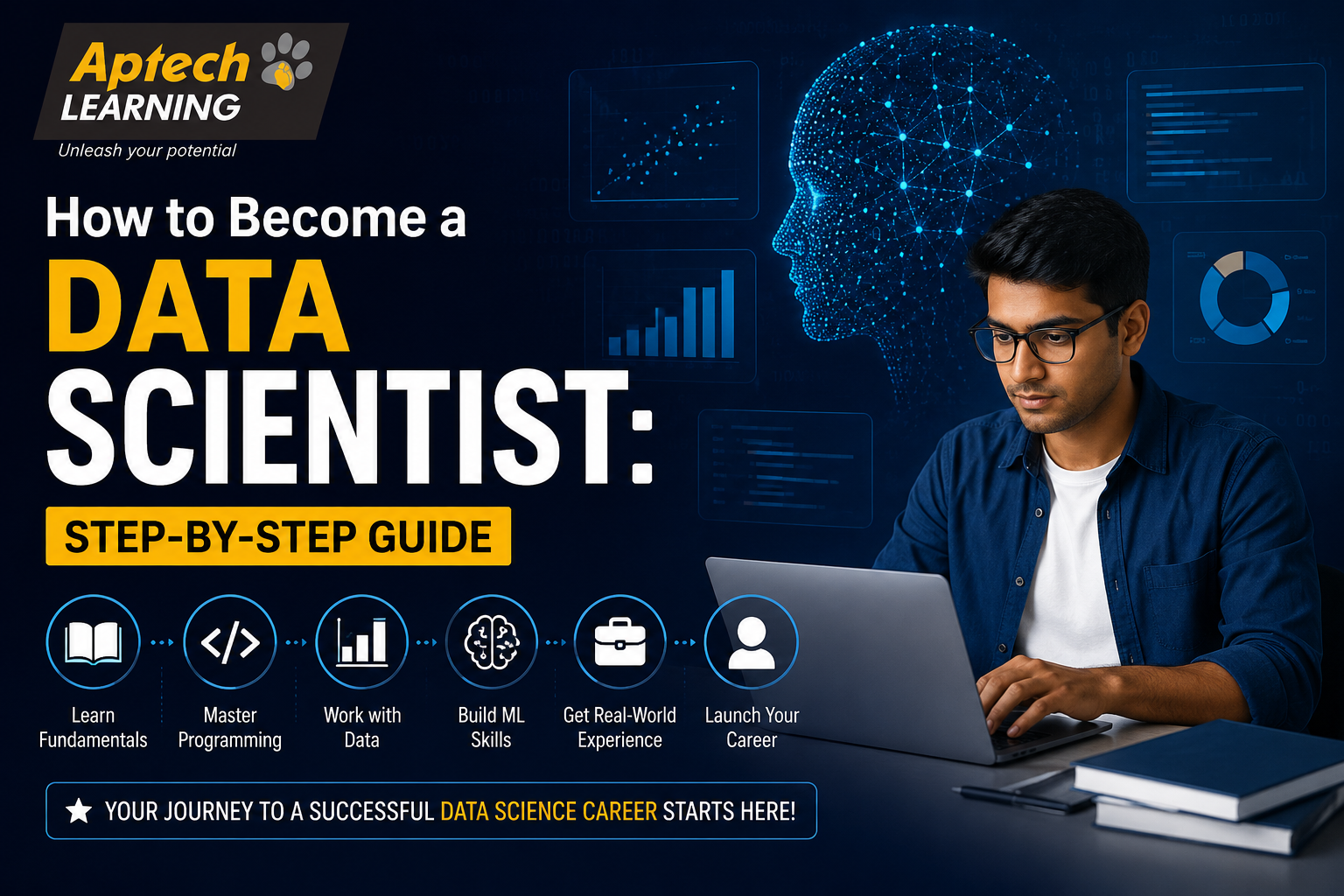
How to Become a Data Scientist: Step-by-Step Guide

How to Become a Data Scientist: Step-by-Step Guide

Who is a Data Scientist A data scientist is someone who uses statistics, programming, and business knowledge to extract insights from data and build models that can predict future outcomes. Unlike roles that mainly describe what already happened, data scientists often go a step further, building systems that can forecast what is likely to happen next. Think of a data scientist like a skilled navigator on a ship. A navigator does not just look at where the ship has been; they study currents, weather patterns, and past routes to predict the best path forward. A data scientist does something similar, studying historical data to build models that help a business predict customer behaviour, demand, or risk. In India, data scientists work across industries like IT, banking, e-commerce, healthcare, and manufacturing, applying predictive models to solve real business problems rather than just producing descriptive reports. Why Data Science is a Strong Career Choice Becoming a data scientist continues to be a strong career choice for a few clear reasons: Businesses across nearly every industry are investing in predictive capabilities, creating consistent demand for skilled data scientists. The role combines technical depth with real business impact, since data scientists often work directly on problems that affect company strategy and revenue. It offers strong long-term growth, with clear paths into senior technical roles, specialised research positions, or leadership in data-driven teams. The learning path, while demanding, has become more structured and accessible through project-based courses rather than requiring years of academic research alone. It connects closely with related fields like AI and machine learning, giving data scientists flexibility to specialise further as the field evolves. Types of Data Scientist Roles Data scientist roles can vary depending on industry focus and specialisation. Business-Focused Data ScientistThis role focuses on solving specific business problems, such as predicting customer churn or optimising pricing strategies. Research-Focused Data ScientistThis role focuses on developing new methods or models, often working closely with more theoretical or academic approaches. Product Data ScientistThis role focuses on improving a specific product using data, such as refining recommendation systems or personalisation features. Healthcare Data ScientistThis role focuses on applying data science techniques to medical data, supporting diagnosis, treatment planning, or hospital operations. Financial Data ScientistThis role focuses on building models related to risk assessment, fraud detection, or investment forecasting within the finance sector. Role Type | Main Focus | Example TaskBusiness-Focused | Solving specific business problems | Predicting customer churnProduct Data Scientist | Improving a specific product | Refining a recommendation engineFinancial Data Scientist | Risk and forecasting models | Building a fraud detection modelHealthcare Data Scientist | Medical and hospital data | Predicting patient readmission risk Step-by-Step Guide to Becoming a Data Scientist Data Scientist vs Data Analyst vs Machine Learning Engineer These three roles overlap but focus on different responsibilities. A data analyst focuses mainly on analysing existing data to answer specific business questions, typically using tools like SQL, Excel, and visualisation software. A data scientist goes further, building predictive models using machine learning and statistics, often requiring stronger programming and mathematical skills. A machine learning engineer focuses specifically on building, optimising, and deploying machine learning models into real, production-level applications, often requiring stronger software engineering skills. In simple words: a data analyst studies existing data, a data scientist builds predictive models from that data, and a machine learning engineer focuses on turning those models into reliable, real-world systems. Practical Examples E-commerce Company: A data scientist builds a recommendation model that predicts which products a customer is most likely to buy next, based on past purchase behaviour. Banking Sector: A data scientist builds a credit risk model that predicts the likelihood of loan default, helping the bank make more informed lending decisions. Healthcare Organisation: A data scientist builds a model that predicts which patients are at higher risk of readmission, allowing hospitals to plan follow-up care more effectively. Retail Business: A data scientist builds a demand forecasting model that predicts inventory needs across different store locations, reducing both stockouts and overstocking. Common Mistakes Beginners Make Jumping into machine learning without strong statistics. Beginners sometimes try to build models before understanding the underlying statistical concepts, making it harder to interpret results correctly. Skipping data cleaning and exploration. Moving straight to modelling without properly cleaning and exploring the data often leads to inaccurate or misleading results. Focusing only on model accuracy. Beginners sometimes focus purely on technical accuracy while ignoring whether the model actually solves a meaningful business problem. Not validating models properly. Skipping proper testing can lead to models that appear accurate during training but perform poorly on new, real-world data. Trying to learn every tool at once. Beginners often attempt to learn multiple programming languages and tools simultaneously, which slows down genuine mastery of core skills. Underestimating communication skills. Being able to clearly explain complex models and findings to non-technical stakeholders is often just as important as technical modelling skill. Career Opportunities A career in data science opens up a wide range of roles across technical and business-facing positions. Common roles include: Data Scientist — builds predictive models and extracts insights from complex datasets. Machine Learning Engineer — focuses on building and deploying machine learning models into real applications. Data Analyst — a related, often earlier-career role focused more on analysing existing data. Research Scientist — works on advancing data science techniques, often in more research-focused environments. Business Intelligence Developer — builds dashboards and reporting systems that support data-driven decisions. AI Engineer — applies data science and machine learning techniques to build intelligent systems and applications. As experience grows, professionals can move into roles like Senior Data Scientist, Lead Data Scientist, or specialised research and leadership positions. Salary Information Salary for data scientists depends on factors such as your city, the industry and size of the company, your specific role, your skill level, and your years of experience. Entry-level roles naturally pay less than senior, specialised positions, and metro cities generally offer higher packages compared to smaller towns. Rather than fixed numbers,

Explore More
What is Data Science? Complete Beginner's Guide

What is Data Science? Complete Beginner’s Guide

Data science is the field of extracting knowledge and useful insights from data using a mix of statistics, programming, and subject expertise. Unlike a simple analysis report that describes what already happened, data science often goes a step further to build models that can predict or automate decisions. Think of a weather forecaster. They do not just report today’s temperature; they study years of past weather patterns, current atmospheric data, and complex models to predict tomorrow’s weather. A data scientist works in a similar way, except instead of weather, they might be predicting customer churn, product demand, or loan default risk. Data science sits at the intersection of three areas: mathematics and statistics, computer programming, and business or domain knowledge. A good data scientist does not just know how to code; they also understand the problem they are solving well enough to ask the right questions. Why Data Science Matters Businesses today are sitting on massive amounts of data, but raw data by itself has no value. Data science is what turns that raw data into a genuine competitive advantage. Here is why it has become so essential: Companies can predict customer behaviour, such as which customers are likely to stop using a service, and act before it happens. Products and services can be personalised at scale, something that was not possible with manual analysis alone. Businesses can automate decisions, like approving loans or flagging fraud, using models trained on historical data. Research and healthcare fields use data science to accelerate discoveries, from drug research to disease prediction. Organisations that use data science effectively tend to make faster, more accurate decisions than those relying purely on intuition. Types of Data Science Applications Data science is applied in different ways depending on the goal. Predictive ModellingThis involves building models that forecast future outcomes, such as predicting next month’s sales or the likelihood of equipment failure. Classification ProblemsThis involves sorting data into categories, such as identifying whether an email is spam or not, or whether a transaction is fraudulent. Recommendation SystemsThis involves suggesting relevant items to users, such as product recommendations on shopping websites or content suggestions on streaming platforms. Natural Language Processing ApplicationsThis involves working with human language, such as chatbots, sentiment analysis, and text summarisation tools. Anomaly DetectionThis involves identifying unusual patterns that do not fit expected behaviour, commonly used in fraud detection and network security. Application Type | What It Does | ExamplePredictive Modelling | Forecasts future outcomes | Sales forecastingClassification | Sorts data into categories | Spam email detectionRecommendation Systems | Suggests relevant items | Product recommendationsAnomaly Detection | Flags unusual patterns | Fraud detection How Data Science Works (Step-by-Step) Data Science vs Data Analytics vs Machine Learning These three terms overlap but are not identical. Data analytics focuses mainly on analysing existing data to answer specific business questions, often using descriptive and diagnostic methods. Data science is broader. It includes data analytics but also involves building predictive models, using programming, and applying machine learning techniques to solve complex problems. Machine learning is a core tool within data science. It refers specifically to algorithms that learn patterns from data and improve automatically without being explicitly reprogrammed for every task. In simple words: data analytics answers questions about existing data, data science builds systems that can predict and automate using that data, and machine learning is one of the main techniques data science relies on. Practical Examples E-commerce: An online store uses past purchase data to build a recommendation model, showing each customer products they are more likely to buy, increasing sales. Healthcare: Hospitals use data science models to predict which patients are at higher risk of readmission, allowing early intervention and better care planning. Banking: Banks build fraud detection models that analyse transaction patterns in real time, flagging suspicious activity before major losses occur. Transportation: Ride-sharing companies use data science to predict demand in different areas at different times, helping balance driver availability with rider demand. Manufacturing: Factories use predictive models to estimate when a machine is likely to fail, allowing maintenance before a costly breakdown happens. Common Mistakes Beginners Make Jumping straight to machine learning without learning statistics. A strong foundation in statistics makes model building far easier to understand. Skipping the data cleaning step. Poorly cleaned data leads to inaccurate models, no matter how advanced the algorithm used. Ignoring the business problem. Building a technically impressive model that does not actually solve a real business question wastes effort. Overfitting models. Beginners sometimes build models that perform well on training data but fail on new, real-world data. Not validating results properly. Skipping proper testing can lead to models that seem accurate but fail once deployed. Focusing only on tools, not concepts. Learning a tool without understanding the underlying statistical concept makes it hard to solve new, unfamiliar problems. Career Opportunities Data science offers diverse career paths across almost every industry that deals with data, which today means nearly every industry. Common roles include: Data Scientist — builds predictive models and extracts insights from complex datasets. Machine Learning Engineer — focuses on building and deploying machine learning models into real applications. Data Analyst — a related role focused more on analysing existing data than building predictive models. Business Intelligence Developer — builds dashboards and reporting systems that support data-driven decisions. Research Scientist — works on advancing data science techniques, often in more research-focused environments. AI Engineer — applies data science and machine learning techniques to build intelligent systems and applications. As experience grows, professionals can move into roles like Senior Data Scientist, Lead Data Scientist, or specialised research and leadership positions. Salary Information Salary in data science depends on several factors, including your city, the industry and size of the company, your specific role, your skill level, and your years of experience. Entry-level roles naturally pay less than senior specialised roles, and metro cities generally offer higher packages compared to smaller towns. Instead of fixed numbers, it is more useful to understand that salaries tend to grow

Explore More
Python for Data Science — Complete Beginner's Guide

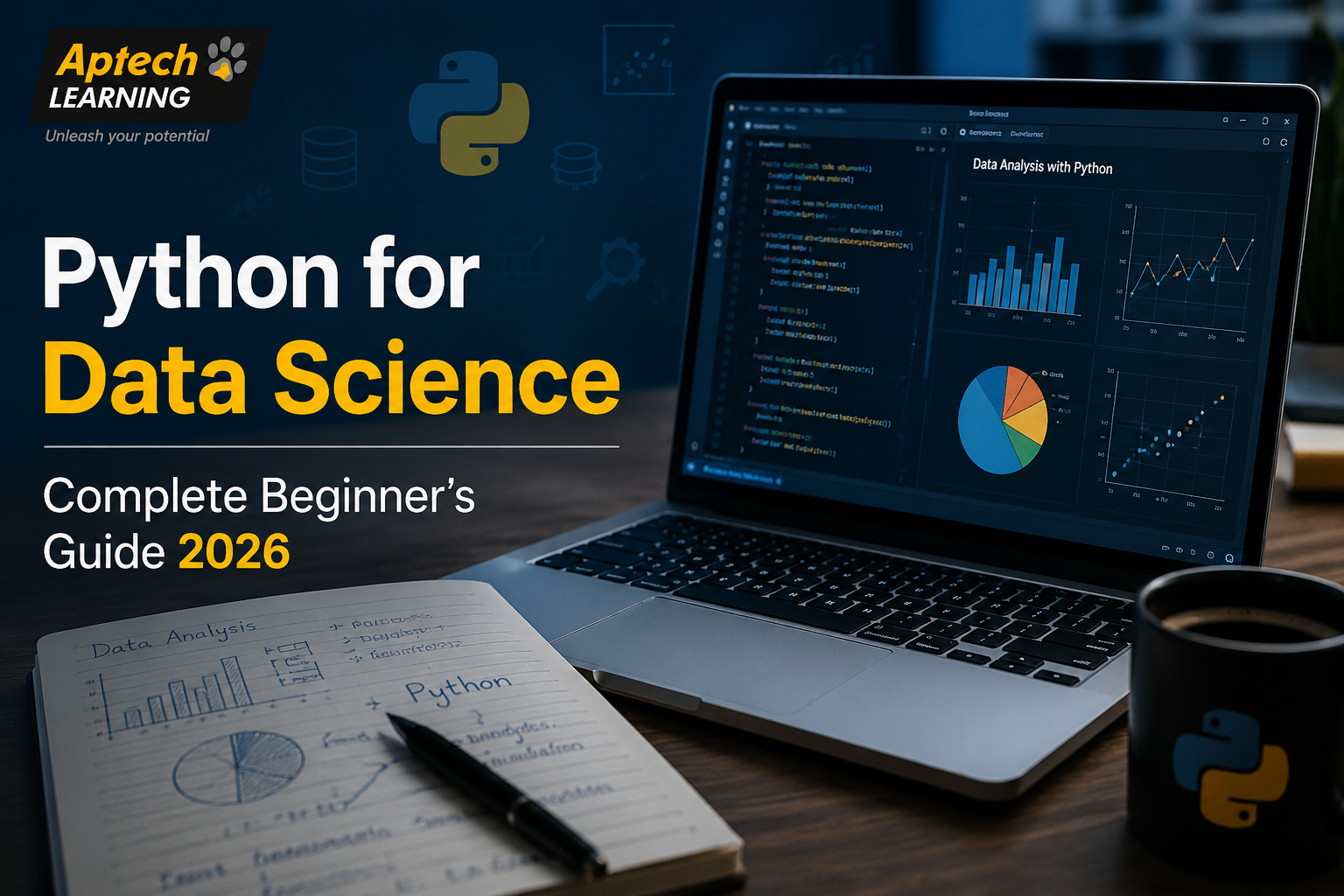
Python for Data Science — Complete Beginner’s Guide 2026

If you’re planning to build a career in Data Science, Python is likely the first skill you’ll come across — and for good reason. It’s simple to learn, widely used in the industry, and powerful enough to handle everything from data cleaning to machine learning. For someone starting from zero, though, it can still feel confusing to know where exactly to begin. This guide walks you through Python for Data Science in a beginner-friendly way, so you know exactly what to learn and in what order. Why Python Is the Top Choice for Data Science Python’s simple syntax makes it easy for beginners to pick up, even without a programming background. Beyond that, it has a huge collection of ready-made libraries built specifically for data analysis, visualization, and machine learning, which saves time and effort compared to writing everything from scratch. What You Need to Learn — Step by Step Step Topic What It Covers 1 Python Basics Variables, data types, loops, conditionals 2 Data Structures Lists, tuples, dictionaries, sets 3 Functions & Modules Writing reusable code, importing libraries 4 File Handling Reading/writing CSV, Excel, JSON files 5 NumPy Working with arrays and numerical data 6 Pandas Data cleaning, filtering, and manipulation 7 Data Visualization Matplotlib, Seaborn for charts and graphs 8 Intro to Machine Learning Scikit-learn basics for building models Following this order helps beginners avoid confusion and build a strong base before jumping into advanced topics. Must-Know Python Libraries for Data Science Library Purpose NumPy Numerical computing and array operations Pandas Data cleaning, analysis, and manipulation Matplotlib Basic data visualization and plotting Seaborn Advanced statistical visualizations Scikit-learn Machine learning algorithms and models How Long Does It Take to Learn Python for Data Science? Learning Pace Estimated Time Basics Only 3–4 Weeks Basics + Pandas/NumPy 2–3 Months Full Data Science Readiness 4–6 Months The timeline depends on how consistently you practice and whether you’re working on real datasets alongside the theory. Common Mistakes Beginners Make While Learning Python Best Way to Start Learning Python for Data Science Rather than learning Python in isolation, it helps to learn it alongside real data projects — such as analyzing a sales dataset or visualizing survey results. Structured courses that combine Python fundamentals with hands-on datasets and mentor guidance tend to help beginners progress faster than self-study alone. Frequently Asked Questions (FAQs) Final Thoughts Learning Python for Data Science doesn’t have to feel overwhelming when you follow a clear, step-by-step path. Starting with the basics, moving into essential libraries like Pandas and NumPy, and gradually exploring visualization and machine learning gives beginners a strong, practical foundation. As Data Science continues to grow across industries in 2026, Python remains one of the most valuable skills to learn early. With consistent practice and real project exposure, beginners can confidently build the coding foundation needed for a successful Data Science career.

Explore More
Is Data Science a Good Career Option for Freshers

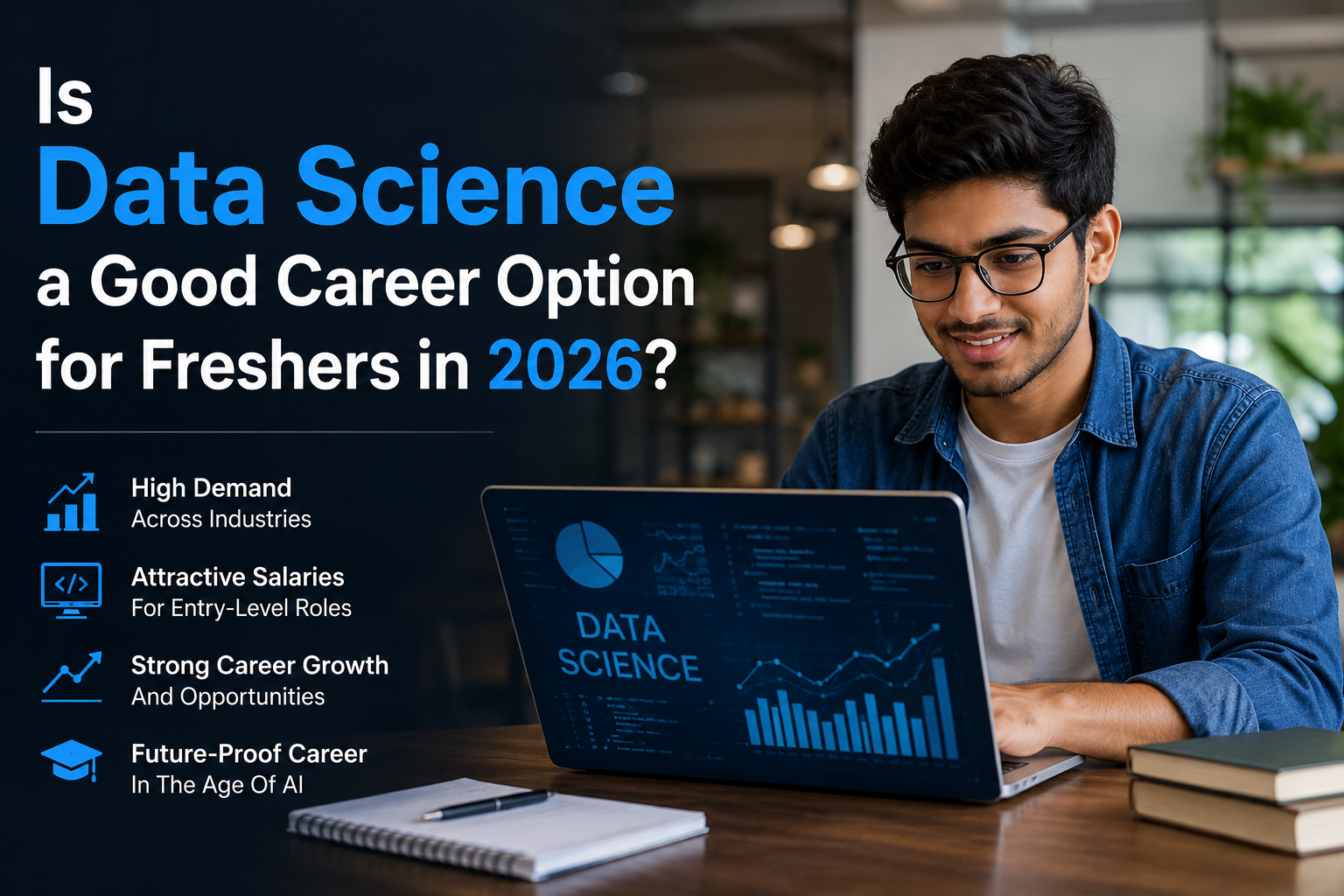
Is Data Science a Good Career Option for Freshers in 2026?

With businesses across every industry relying heavily on data to make smarter decisions, Data Science has become one of the most sought-after career fields in India. But for freshers still exploring their options, one question keeps coming up — is Data Science actually a good career choice in 2026? This blog breaks down the job scope, salary potential, required skills, and long-term growth to help you decide with clarity. Why Data Science Is Gaining Importance in 2026 As companies collect massive amounts of data through digital platforms, apps, and customer interactions, the need for professionals who can analyze and interpret this data has grown rapidly. This demand spans across banking, healthcare, e-commerce, and IT sectors, making Data Science a consistently strong career option. Key Reasons Data Science Is a Good Career for Freshers Reason Why It Matters High Job Demand Growing reliance on data has increased hiring across industries Strong Salary Packages Even entry-level roles offer competitive pay Multiple Career Paths Options like analyst, scientist, ML engineer & more Future-Proof Field Data-driven decision-making is only expected to grow Cross-Industry Opportunities Skills apply across banking, healthcare, retail & more Entry-Level Data Science Job Roles Job Role Key Responsibilities Data Analyst Analyzing data & creating reports/dashboards Junior Data Scientist Assisting in building predictive models Business Intelligence Analyst Turning data into business insights Data Science Trainee Supporting data cleaning & model testing Data Science Salary for Freshers in India (2026) Experience Level Job Role Average Salary (INR/Year) 0–1 Year Data Analyst ₹4 – ₹6 LPA 1–3 Years Junior Data Scientist ₹6 – ₹9 LPA 3–5 Years Data Scientist ₹9 – ₹15 LPA 5+ Years Senior Data Scientist/Lead ₹15 LPA+ Skills Freshers Need to Start This Career Skill Category Key Skills Technical Basics Statistics, Python, SQL Data Handling Data Cleaning, Data Visualization Machine Learning Regression, Classification, Clustering Tools Power BI, Tableau, Jupyter, Pandas Soft Skills Analytical Thinking, Communication Challenges Freshers Should Be Aware Of While Data Science offers strong growth, freshers should expect continuous learning, as tools, techniques, and industry practices keep evolving. Staying updated through projects and practical exposure is key to long-term success in this field. How Freshers Can Start Their Data Science Journey Enrolling in a structured Data Science course with hands-on projects, real datasets, and mentorship helps freshers build job-ready skills faster compared to self-study alone. Frequently Asked Questions (FAQs) Final Thoughts Data Science is proving to be a strong and future-proof career option for freshers in 2026. With rising demand for data-driven decision-making, growing job opportunities, and competitive salary packages, this field offers both stability and long-term growth potential. For freshers willing to build the right technical skills and gain hands-on project experience, Data Science can be a rewarding career path with multiple growth opportunities across industries.

Explore More
Data Science Jobs in India 2026

Data Science Jobs in India 2026 — Roles, Salary & Skills Required

Data Science continues to be one of the highest-demand career fields in India, with companies across banking, healthcare, retail, and IT actively hiring skilled professionals. As businesses rely more on data-driven decision-making, the number of job openings in this field keeps growing every year. If you’re planning to enter this field in 2026, here’s a complete breakdown of job roles, salary expectations, and the skills you need to get hired. Why Data Science Jobs Are in High Demand Every industry today generates massive amounts of data, and companies need skilled professionals to turn that data into meaningful business decisions. This growing dependency on data has created strong, consistent demand for Data Science talent across experience levels. Popular Data Science Job Roles in India (2026) Job Role Key Responsibilities Data Analyst Analyzing data, creating reports & dashboards Data Scientist Building predictive models using ML algorithms Machine Learning Engineer Developing & deploying ML models into production Business Intelligence Analyst Turning data into business insights using BI tools Data Engineer Building & maintaining data pipelines AI Research Analyst Working on advanced AI/ML research projects Data Science Salary in India (2026) Job Role Experience Level Average Salary (INR/Year) Data Analyst 0–1 Year ₹4 – ₹6 LPA Data Scientist 1–3 Years ₹6 – ₹10 LPA Machine Learning Engineer 2–4 Years ₹8 – ₹14 LPA Business Intelligence Analyst 1–3 Years ₹5 – ₹8 LPA Senior Data Scientist 5+ Years ₹15 LPA+ Skills Required for Data Science Jobs Skill Category Key Skills Programming Python, SQL Statistics & Math Probability, Statistical Analysis Data Visualization Power BI, Tableau Machine Learning Regression, Classification, Clustering Tools Pandas, NumPy, Scikit-learn, Jupyter Soft Skills Problem-Solving, Business Communication Industries Hiring Data Science Professionals Industry Common Use Cases Banking & Finance Fraud detection, risk analysis Healthcare Predictive diagnosis, patient data analysis E-commerce Recommendation systems, customer analytics IT & Software Product analytics, automation How to Prepare for a Data Science Job in 2026 Enrolling in a structured Data Science course with hands-on projects, real datasets, and mentorship helps candidates build job-ready skills faster, especially when guided practice and portfolio-building are included. Frequently Asked Questions (FAQs) Final Thoughts Data Science jobs in India continue to grow across industries, offering strong salary packages and long-term career stability. From entry-level roles like Data Analyst to advanced positions like Machine Learning Engineer, there’s a clear career path for professionals at every stage. By focusing on the right skills, tools, and hands-on project experience, freshers and career switchers can confidently enter this field in 2026 and build a rewarding, future-ready career in Data Science.

Explore More
How to Become a Data Scientist in India 2026

How to Become a Data Scientist in India 2026 — Step-by-Step Roadmap for Beginners

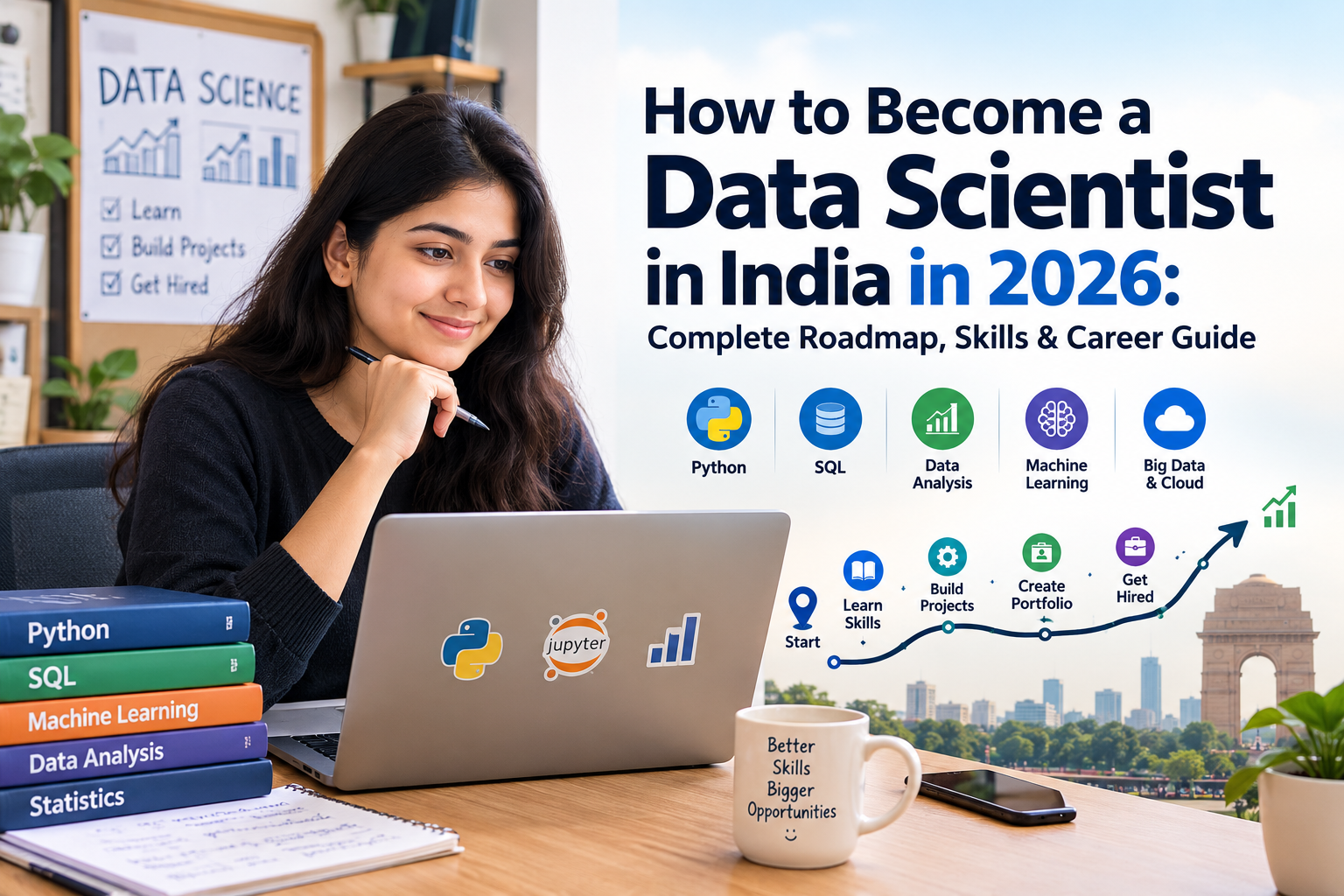
Becoming a Data Scientist in 2026 is one of the smartest career moves for students and professionals in India. With companies across banking, healthcare, retail, and IT hiring data experts, the demand for skilled Data Scientists continues to grow rapidly. But for beginners, the path can feel confusing without proper direction. This step-by-step roadmap simplifies the journey — from basic skills to landing your first job. Why Follow a Structured Roadmap? Many beginners waste time learning random tools without a clear plan. A structured roadmap ensures you build skills in the right order, avoid confusion, and stay job-ready by the end of your learning journey. Step-by-Step Roadmap to Become a Data Scientist Step Focus Area What to Learn Step 1 Foundation Statistics, Probability, Excel Step 2 Programming Python, SQL Step 3 Data Handling Data Cleaning, Data Visualization (Power BI/Tableau) Step 4 Core Data Science Machine Learning Algorithms Step 5 Advanced Skills Deep Learning, NLP Basics Step 6 Tools Mastery Pandas, NumPy, Scikit-learn, Jupyter Step 7 Real Exposure Capstone Projects & Internships Step 8 Job Preparation Resume Building, Interview Practice Following these steps in order helps beginners build both theoretical knowledge and practical, hireable skills. Skills Every Data Scientist Needs in 2026 Skill Category Key Skills Technical Skills Python, SQL, Statistics Analytical Skills Data Interpretation, Problem Solving Tools Power BI, Tableau, Jupyter Notebook Soft Skills Communication, Business Understanding Career Path After Becoming a Data Scientist Experience Level Job Role Average Salary (INR/Year) 0–1 Year Data Analyst ₹4 – ₹6 LPA 1–3 Years Junior Data Scientist ₹6 – ₹9 LPA 3–5 Years Data Scientist ₹9 – ₹15 LPA 5+ Years Senior Data Scientist / Lead ₹15 LPA+ Best Way to Start Learning Enrolling in a structured Data Science course with live projects, mentorship, and certification helps beginners move faster compared to self-learning alone, especially when guidance is available for doubts and career direction. Common Mistakes Beginners Should Avoid Frequently Asked Questions (FAQs) Final Thoughts Becoming a Data Scientist in 2026 doesn’t have to feel overwhelming if you follow a clear, step-by-step roadmap. Starting with strong fundamentals in statistics and Python, moving into Machine Learning, and finishing with real-world projects gives beginners a solid foundation employers actively look for. The Indian job market continues to open up for skilled Data Scientists across industries, making this the right time to begin. With consistent learning, the right course structure, and hands-on project experience, freshers can confidently build a rewarding and future-ready career in Data Science.

Explore More
Data Science Course in India 2026

Data Science Course in India 2026 — Fees, Syllabus & Career Scope for Freshers

Data Science has become one of the most in-demand career paths in India, and 2026 is shaping up to be a big year for freshers who want to enter this field. With companies across banking, healthcare, e-commerce, and IT actively hiring data professionals, choosing the right Data Science course can set the direction of your entire career. If you’re a fresher confused about fees, syllabus, or job scope, this guide breaks it all down in a simple, easy-to-understand format. Why Data Science Is a Smart Career Choice in 2026 Every industry today runs on data. Businesses need people who can collect, clean, analyze, and interpret data to make smarter decisions. This growing demand has created a huge gap between the number of skilled professionals and available jobs — which means great opportunities for freshers who upskill now. Data Science Course Fees in India (2026) Course Type Duration Approximate Fees (INR) Certificate Course 3–4 Months ₹15,000 – ₹35,000 Diploma Course 6–8 Months ₹40,000 – ₹80,000 Advanced/Integrated Program 10–12 Months ₹80,000 – ₹1,50,000 Online Self-Paced Course Flexible ₹10,000 – ₹50,000 Fees vary depending on the institute, mode of learning (online/offline), and depth of curriculum, including live projects and certifications. Data Science Syllabus for Freshers Module Topics Covered Foundations Statistics, Probability, Excel Programming Python, SQL Data Handling Data Cleaning, Data Visualization (Power BI/Tableau) Machine Learning Regression, Classification, Clustering Advanced Concepts Deep Learning, NLP basics Tools Jupyter, Pandas, NumPy, Scikit-learn Capstone Real-world Industry Projects This structured syllabus helps freshers build both theoretical knowledge and practical, job-ready skills. Career Scope After a Data Science Course Job Role Average Starting Salary (INR/Year) Data Analyst ₹4 – ₹6 LPA Junior Data Scientist ₹5 – ₹8 LPA Machine Learning Engineer ₹6 – ₹10 LPA Business Intelligence Analyst ₹4.5 – ₹7 LPA With experience and specialization, salaries can grow significantly, especially in product-based and MNC companies. Skills You’ll Gain Who Should Enroll? This course is ideal for BCA, BSc, BTech graduates, commerce students, and working professionals who want to switch into a data-driven career — even with zero prior coding background. Frequently Asked Questions (FAQs) Final Thoughts Data Science is no longer just a buzzword — it’s one of the fastest-growing career fields in India, and 2026 offers freshers a genuine window of opportunity. Whether you’re a BCA, BSc, or commerce graduate, or someone looking to switch careers, the right course can equip you with practical, job-ready skills in Python, SQL, Machine Learning, and Data Visualization. The key is to choose a course that balances strong fundamentals with hands-on projects, since employers value real-world problem-solving over just theoretical knowledge. With consistent effort and the right guidance, freshers can build a rewarding, future-proof career in Data Science — starting right from 2026. If you’re ready to take the first step, now is the perfect time to enroll and start building your data-driven future.

Explore More
Data Science & AI Course in Lucknow

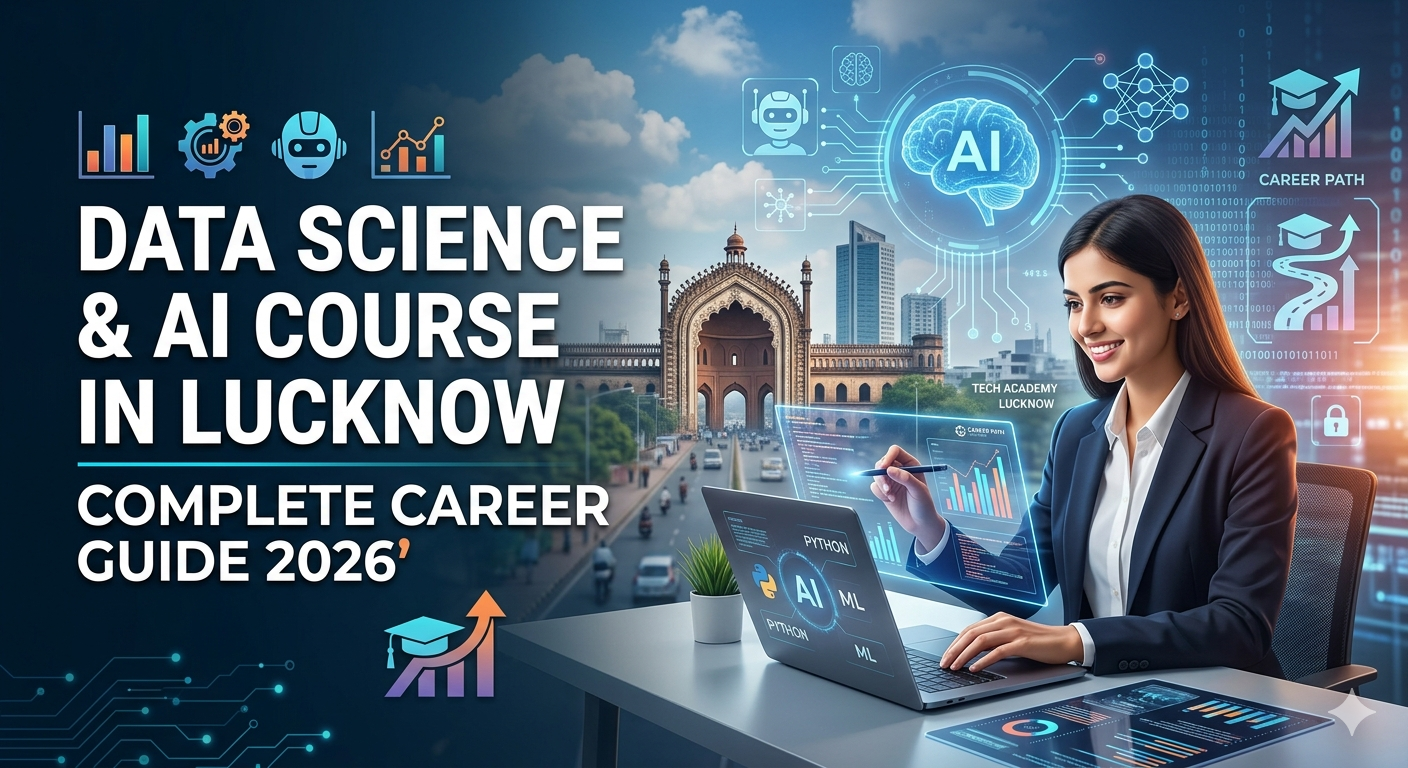
Data Science & AI Course in Lucknow | Complete Career Guide 2026

If you have been searching for a reliable data science and AI course in Lucknow, the timing has never been better. Indian companies across every sector — banking, healthcare, retail, logistics, and government — are aggressively building data teams in 2026. And Lucknow, with its expanding IT ecosystem, is no longer just a recruitment destination — it is an active hiring market. This guide gives you everything in one place: what data science actually involves, what the course covers, what jobs it opens, what it pays, and how Aptech Learning Lucknow prepares you for this career. What Is Data Science — And Why Is AI Now Part of It? Data science is the practice of extracting meaningful insights from data using statistics, programming, and machine learning. Artificial intelligence — specifically machine learning and deep learning — is what powers the predictive and automation layer on top of those insights. In 2026, the two fields are inseparable in practice. A data scientist who cannot build and evaluate ML models is underqualified for most roles. An AI engineer who cannot handle, clean, and interpret data is missing the foundation. Every serious data science program today covers both. Data Science and AI Course Syllabus — Module by Module Module Topics Covered Tools Used Module 1 — Python Foundations Syntax, data structures, functions, OOP basics Python, VS Code Module 2 — Data Handling NumPy, Pandas, data cleaning, merging datasets NumPy, Pandas Module 3 — Data Visualization Charts, dashboards, storytelling with data Matplotlib, Seaborn, Power BI Module 4 — Statistics for Data Science Probability, distributions, hypothesis testing, regression Python, SciPy Module 5 — Machine Learning Supervised and unsupervised algorithms, model evaluation scikit-learn Module 6 — Deep Learning Neural networks, CNNs, RNNs, transfer learning TensorFlow, Keras Module 7 — NLP and Generative AI Text processing, transformers, ChatGPT API basics Hugging Face, OpenAI Module 8 — SQL and Databases Queries, joins, aggregation, database design MySQL, PostgreSQL Module 9 — Big Data Basics Hadoop, Spark, cloud data platforms AWS/GCP basics Module 10 — Capstone Project End-to-end data science project with mentorship All tools combined Data Science vs AI — Key Differences at a Glance Factor Data Science Artificial Intelligence Primary Focus Extracting insights from data Building intelligent systems Core Skills Statistics, Python, visualization ML algorithms, deep learning Main Tools Pandas, Power BI, SQL TensorFlow, PyTorch, scikit-learn Output Reports, dashboards, predictions Models, applications, automation Overlap in 2026 Both require ML and Python Both require data handling In practice, most job roles in 2026 sit at the intersection of both — which is exactly why a combined data science and AI program produces better placement outcomes than learning either in isolation. Career Options After Data Science and AI Course in Lucknow Job Role Key Skills Starting Salary (Lucknow) Data Analyst Python, SQL, Power BI, Excel ₹3.5 LPA – ₹6 LPA Data Scientist ML, statistics, Python, visualization ₹5 LPA – ₹10 LPA Machine Learning Engineer scikit-learn, TensorFlow, model deployment ₹6 LPA – ₹14 LPA Business Intelligence Analyst SQL, Power BI, Tableau, reporting ₹4 LPA – ₹8 LPA AI Engineer Deep learning, APIs, LLMs, Python ₹7 LPA – ₹18 LPA Data Engineer SQL, Spark, cloud pipelines, ETL ₹6 LPA – ₹15 LPA NLP Engineer Transformers, Hugging Face, text models ₹7 LPA – ₹20 LPA Industries Hiring Data Science and AI Professionals in Lucknow Industry Data Science Use Case Roles Hiring Banking and Finance Fraud detection, credit scoring, risk analysis Data Scientist, ML Engineer Healthcare Patient outcome prediction, medical imaging AI AI Analyst, Data Scientist E-commerce and Retail Recommendation systems, demand forecasting Data Analyst, ML Engineer Government and Public Sector Smart city projects, traffic analysis, welfare data BI Analyst, Data Engineer IT and Software Services Product analytics, automation, AI feature development AI Engineer, Data Scientist EdTech Learning analytics, personalized content Data Analyst, NLP Engineer Why Aptech Learning Lucknow for Data Science and AI Training Factor What Aptech Learning Lucknow Offers Training Mode 100% offline hands-on classroom training Faculty 20+ years of real industry experience Hiring Partners 100+ active placement partners Placement Support Job interview guarantee until placed Certification Globally recognized Aptech brand Location Aliganj, Mahanagar, Lucknow Contact +91 6386 119 566 Email digilearninglko@gmail.com No pre-recorded videos. No theory-only sessions. Every class involves live coding, real datasets, and project work that builds the portfolio you need for interviews. Data Science Course Fees in Lucknow — Honest Comparison Program Type Duration Fee Range Best For Short online certificate 4–8 weeks ₹5,000 – ₹20,000 Basic awareness only Mid-level online course 3–5 months ₹20,000 – ₹50,000 Self-motivated learners Offline institute program 5–7 months ₹35,000 – ₹80,000 Job placement focused University PG certificate 6–12 months ₹80,000 – ₹2,00,000 Academic credential For Aptech Learning Lucknow’s exact fee structure, batch schedule, and installment options, call +91 6386 119 566 or visit the center directly at First Floor, Above Radiance, 18 J Road, Near Midland Healthcare and Research Center, Mahanagar, Lucknow. Frequently Asked Questions | Aptech Learning Mahanagar Conclusion Data science and AI together represent one of the clearest, most well-supported career paths available in Lucknow in 2026. The demand is real, the salaries are competitive, and the barrier to entry is lower than most people expect — a structured 5 to 6 month program, a strong portfolio, and a recognized certification are genuinely sufficient to start a career that grows significantly over the following years. Aptech Learning Lucknow combines offline classroom training, experienced mentors, and a job interview guarantee backed by 100+ hiring partners — everything a serious learner needs to go from beginner to employed data science professional. Call +91 6386 119 566 today or visit the center in Aliganj, Lucknow. One conversation is all it takes to get the complete picture.

Explore More
Data Analytics vs Data Science Course

Data Analytics vs Data Science Course — Which One Should You Choose in 2026?

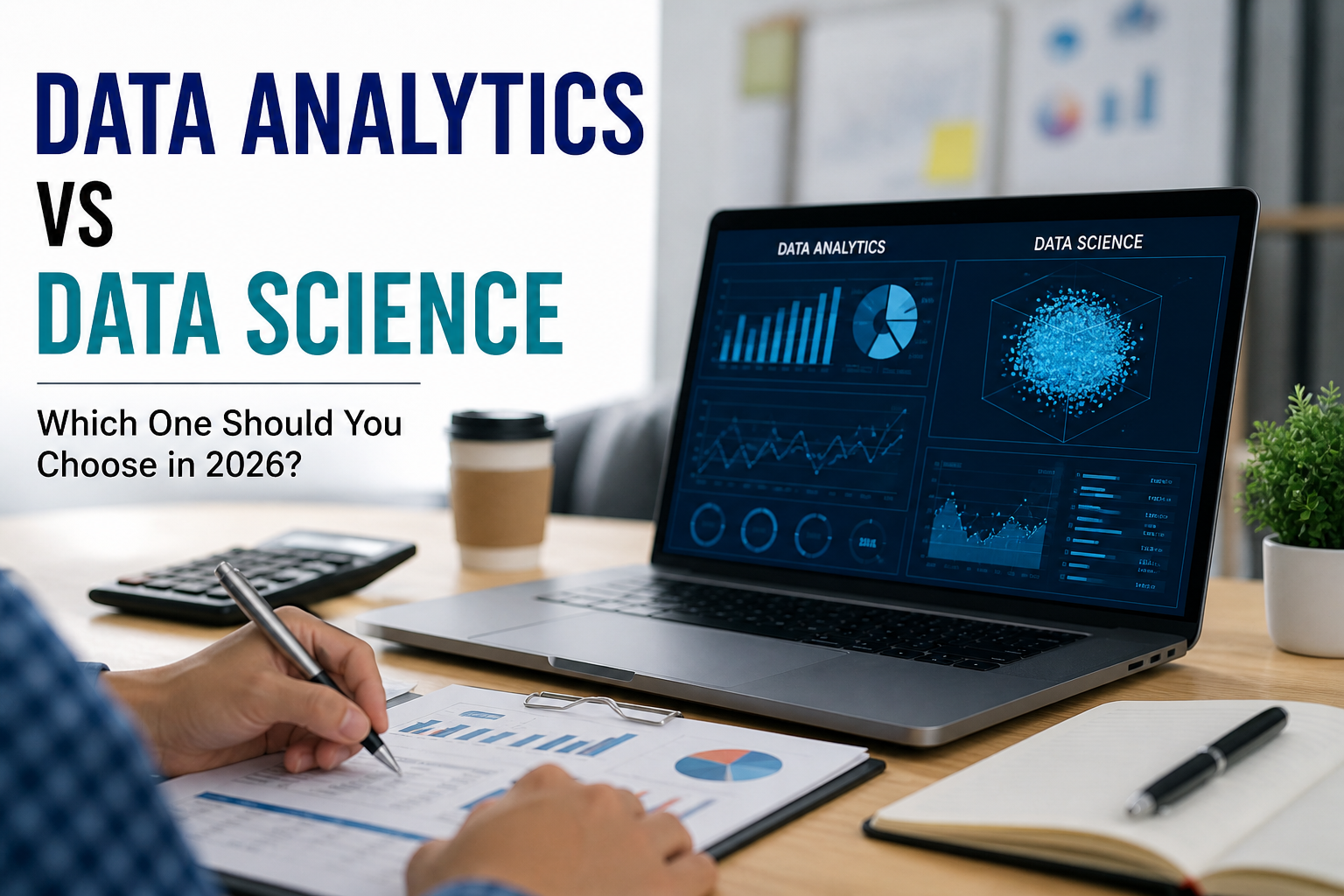
Choosing between Data Analytics and Data Science in 2026 depends on your career goals, skills, and learning curve preference. Data Analytics focuses on interpreting data and generating insights, while Data Science involves advanced algorithms, machine learning, and predictive modeling for deeper decision-making. What is Data Analytics? Data Analytics is the process of analyzing raw data to uncover meaningful insights and trends. It focuses on data visualization, reporting, and decision-making. Key Responsibilities: Best Tools: What is Data Science? Data Science is an advanced field that uses machine learning, statistics, and programming to predict future outcomes and build intelligent systems. Key Responsibilities: Best Tools: Key Differences: Data Analytics vs Data Science Feature Data Analytics Data Science Focus Past Data Analysis Future Predictions Difficulty Beginner-Friendly Advanced Tools Excel, SQL, BI Tools Python, ML, AI Goal Insights & Reports Predictions & Automation Career Path Analyst Scientist/ML Engineer Skills Required in 2026 For Data Analytics Course: For Data Science Course: Career Opportunities & Salary in 2026 Data Analytics Jobs: 💰 Average Salary in India: ₹4–10 LPA Data Science Jobs: 💰 Average Salary in India: ₹8–25 LPA Which Course Should You Choose in 2026? Choose Data Analytics if: Choose Data Science if: Pro Tip (Important for Students) If you are confused, start with Data Analytics, then upgrade to Data Science later. This is the most practical and job-oriented roadmap in 2026. Frequently Asked Questions | Aptech Learning Mahangar Conclusion Both Data Analytics and Data Science are excellent career options in 2026. Data Analytics is ideal for beginners looking for quick entry into the job market, while Data Science is best for those aiming for advanced, high-paying roles in AI and machine learning.

Explore More
Data Science vs Data Analytics Course in Lucknow

Data Analytics vs Data Science Course in Lucknow 2026

1. What is Data Analytics? Data Analytics is the practice of examining existing data sets — past transactions, customer behaviour, sales figures — to draw conclusions that help organisations make better decisions. Think of a data analyst as a detective: they take raw information and turn it into a clear, actionable story. If a retail chain wants to know why sales dipped in Q3, or which product category drives the most profit in a particular region, they call a data analyst. The work is grounded in tools that are relatively approachable, which is precisely why data analytics is the faster path into employment. Skill Area Primary Tool What You Learn to Do Spreadsheet Analysis Microsoft Excel (Advanced) Pivot tables, VLOOKUP, dashboards Database Querying SQL Extract, filter, and join data from databases Data Visualisation Power BI / Tableau Build interactive reports and charts Web & Marketing Data Google Analytics Track traffic, conversions, user behaviour Business Reporting BI Dashboards Communicate insights to non-technical teams The honest truth: Data analytics does not require a programming background. If you can think logically, ask the right questions, and communicate clearly, you can build a strong career in analytics — regardless of whether you studied arts, commerce, or science. 2. What is Data Science? Data Science goes a step further. Rather than analysing what has already happened, a data scientist builds mathematical models that predict what is likely to happen next. It combines statistics, programming, and machine learning to extract deep patterns from large, complex data sets. Consider a banking application that flags a suspicious transaction before it processes, or a recommendation engine that knows what you want to watch before you do. Those systems are built by data scientists. Skill Area Primary Tool What You Learn to Do Programming Python / R Write algorithms, automate analysis pipelines Machine Learning Scikit-learn, XGBoost Build predictive and classification models Deep Learning TensorFlow, Keras Neural networks for image, text, speech Big Data Engineering Hadoop, Apache Spark Process and manage massive data sets AI Applications NLP, Computer Vision Language models, object detection systems Keep in mind: Data science is genuinely demanding. You need comfort with mathematics, statistical thinking, and at least one programming language. The rewards are significant, but so is the learning curve. 3. Head-to-Head Comparison The table below covers every dimension a student in Lucknow should evaluate before committing to a course — from eligibility and fees to salary expectations and time to first job. Parameter Data Analytics Data Science Core Purpose Analyse existing data for insights Build predictive models using AI/ML Key Question It Answers “What happened and why?” “What will happen next?” Primary Tools Excel, SQL, Power BI, Tableau Python, R, TensorFlow, Spark Difficulty Level ⭐⭐ Beginner–Intermediate ⭐⭐⭐⭐ Advanced Programming Required Optional Mandatory Eligibility Any graduate / 12th pass B.Tech / BCA / MCA preferred Maths Requirement Basic statistics Linear algebra, calculus, probability Course Duration (Lucknow) 3–6 months 6–12 months Avg. Fees in Lucknow ₹15,000 – ₹40,000 ₹25,000 – ₹70,000 Time to First Job 🚀 3–5 months ⏳ 7–14 months Average Starting Salary (Lucknow) ₹3 – ₹6 LPA ₹5 – ₹10 LPA Senior-Level Salary Potential ₹8 – ₹14 LPA ₹15 – ₹30 LPA Top Job Roles Data Analyst, BI Analyst, MIS Executive Data Scientist, ML Engineer, AI Developer Industry Demand (Lucknow) Very High High & Growing Best Suited For Quick career entry or switch Long-term AI/ML career Upgrade Path Can move to Data Science later Builds on analytics foundation 4. Career Paths & Salaries in Lucknow Lucknow’s job market for data professionals has matured considerably. IT parks in Gomti Nagar, government digitalisation projects, banking sector expansion, and a growing startup ecosystem have all increased demand for both profiles. After a Data Analytics Course Job Role Avg. Salary (Fresher) Avg. Salary (2–3 Years Exp.) Common Sectors in Lucknow Junior Data Analyst ₹2.5 – ₹4 LPA ₹5 – ₹8 LPA IT, E-commerce, BFSI Business Intelligence Analyst ₹3 – ₹5 LPA ₹6 – ₹10 LPA Banking, Retail, Telecom MIS Executive ₹2 – ₹3.5 LPA ₹4 – ₹6 LPA Manufacturing, Logistics Reporting Analyst ₹2.5 – ₹4 LPA ₹5 – ₹8 LPA Healthcare, Government Market Research Analyst ₹2.5 – ₹4.5 LPA ₹5 – ₹9 LPA Consulting, FMCG After a Data Science Course Job Role Avg. Salary (Fresher) Avg. Salary (2–3 Years Exp.) Common Sectors in Lucknow Data Scientist ₹5 – ₹8 LPA ₹12 – ₹20 LPA IT, Fintech, Healthcare Machine Learning Engineer ₹6 – ₹10 LPA ₹14 – ₹24 LPA Product Companies, IT Services AI Developer ₹6 – ₹9 LPA ₹13 – ₹22 LPA Startups, R&D Labs NLP / Computer Vision Engineer ₹6 – ₹11 LPA ₹15 – ₹28 LPA AI Product Firms Business Analyst (ML) ₹4.5 – ₹7 LPA ₹9 – ₹15 LPA Consulting, BFSI 5. Who Should Choose Which? There is no universally correct answer here — the right choice genuinely depends on your background, financial situation, and how much time you can invest before you need an income. Choose Data Analytics If… Choose Data Science If… 6. Lucknow’s Data Job Market in 2026 Lucknow is no longer just an administrative centre. The IT ecosystem centred around Vibhuti Khand and Gomti Nagar has expanded, and government initiatives under Digital India and Smart City Lucknow have created consistent demand for data professionals across both public and private sectors. Sector Key Employers in Lucknow Roles Available IT Services TCS, Infosys, HCL, Wipro (Lucknow offices) Data Analyst, BI Developer Banking & Finance HDFC, Axis Bank, SBI, PNB Analytics Specialist, Risk Analyst Government / PSU Smart City Lucknow, NIC, UPSDC MIS Executive, Data Consultant E-Commerce & Retail Startups in Indira Nagar, Aliganj Marketing Analyst, Operations Analyst Healthcare Apollo, Medanta, KGMU Health Data Analyst, Reporting Analyst Education Technology Ed-tech startups (Mahanagar, Hazratganj) Data Analyst, Product Analyst Lucknow’s data analytics job market is projected to grow by 35%+ between 2024 and 2027, according to regional IT industry estimates. Over 3,000 data-related vacancies are currently active across the Lucknow metropolitan area. 7. Best Institute for Data Analytics & Data Science in Lucknow Whether you search “best coaching for data analytics near

Explore More
About Image
Guaranteed & Certified

Students are joining

For our career programs like Full Stack Development, Data Science, Data Analyst, and Business Analyst, we guarantee to arrange job interviews for you with our 100+ hiring partners until you get placed

You will be trained by experienced faculty and top-notch mentors. Our senior mentors bring over 20+ years of real-world industry experience directly to your classroom

All our programs are conducted in 100% offline mode at our modern training center in Aliganj, Lucknow. We believe in face-to-face, hands-on learning for the best results

“Aptech Learning Center Mahanagar, founded by renowned educationists, provides high-quality IT education to empower Lucknow’s youth for competitive tech careers.”

Contact Info.

Aptech Learning Center, first floor, Above Radiance, 18 J Road, Near Midland Healthcare and Research center, Mahanagar Lucknow
+91 6386 119 566
digilearninglko@gmail.com

© 2025 Aptech Learning Center Mahanagar | All Rights Reserved | Designed and Developed By DigiGrow Solutions