
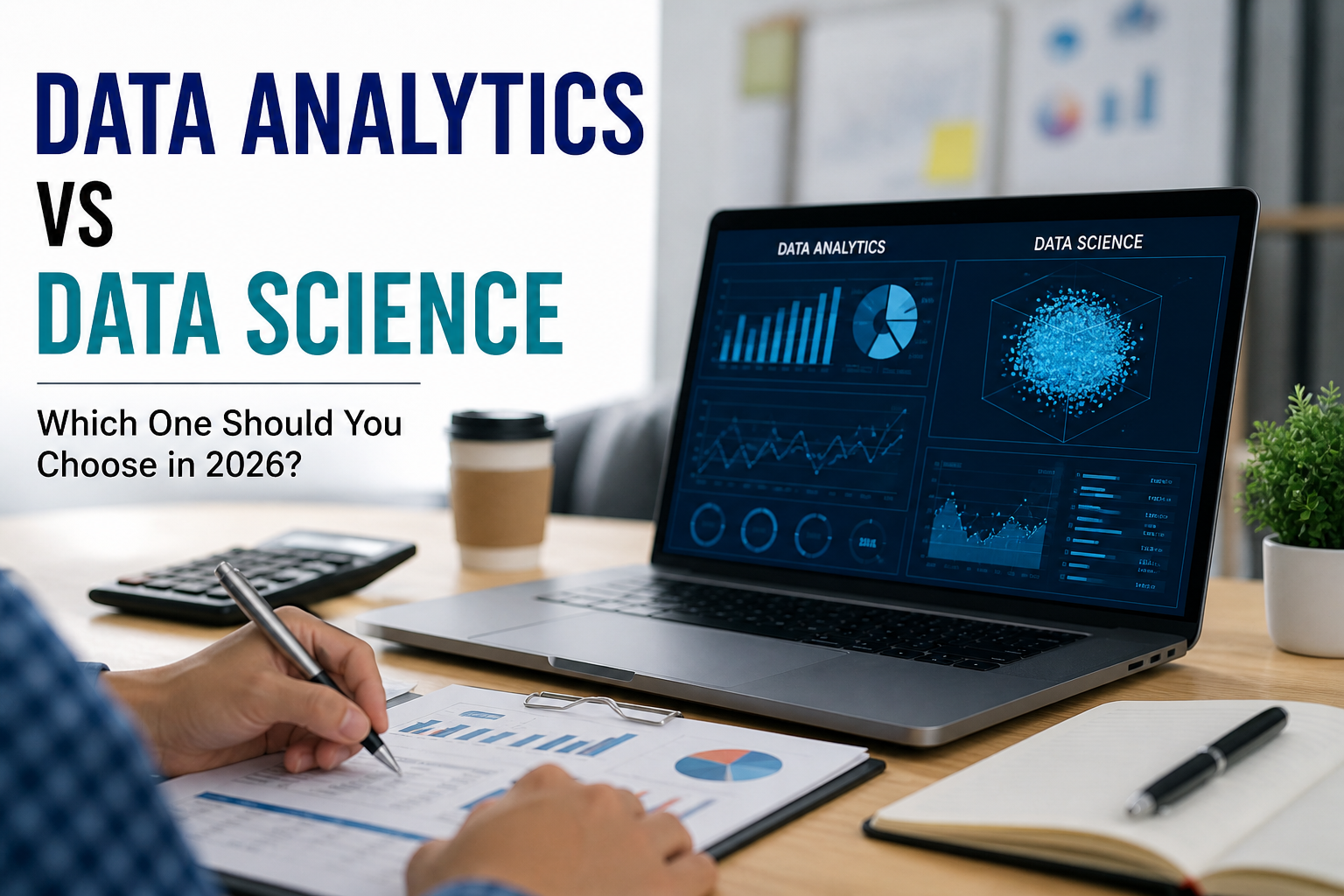
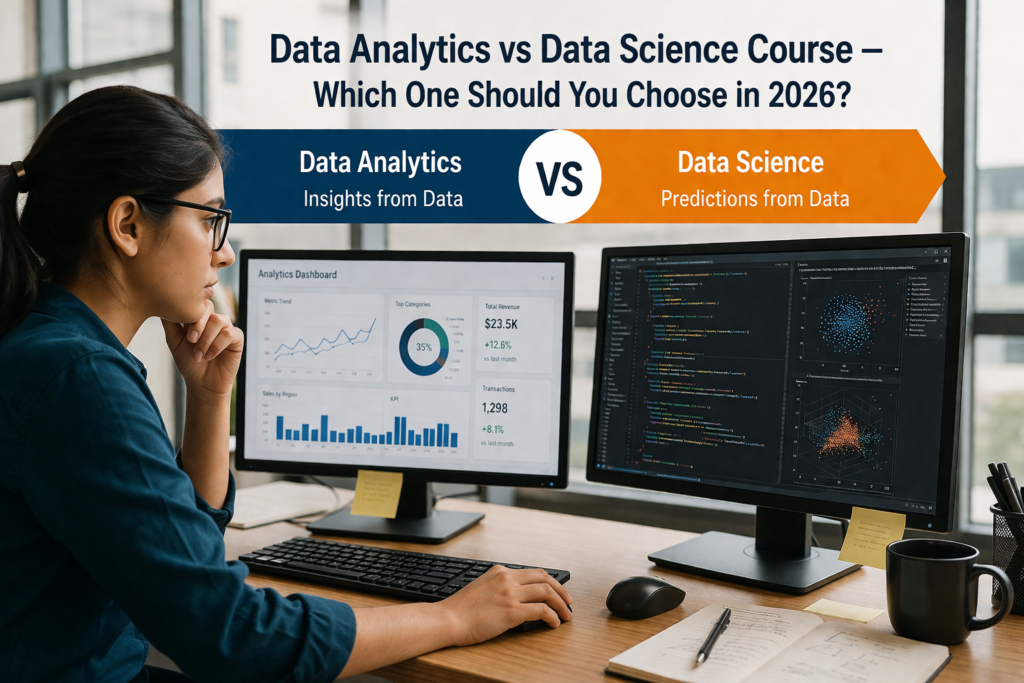
Data Analytics vs Data Science Course — Which One Should You Choose in 2026?
Choosing between Data Analytics and Data Science in 2026 depends on your career goals, skills, and learning curve preference. Data Analytics focuses on interpreting data and generating insights, while Data Science involves advanced algorithms, machine learning, and predictive modeling for deeper decision-making.
What is Data Analytics?
Data Analytics is the process of analyzing raw data to uncover meaningful insights and trends. It focuses on data visualization, reporting, and decision-making.
Key Responsibilities:
- Data cleaning and processing
- Creating dashboards (Excel, Power BI, Tableau)
- Generating reports
- Identifying trends and patterns
Best Tools:
- Excel
- SQL
- Power BI
- Python (basic)
What is Data Science?
Data Science is an advanced field that uses machine learning, statistics, and programming to predict future outcomes and build intelligent systems.
Key Responsibilities:
- Building machine learning models
- Predictive analysis
- Data mining
- AI-based solutions
Best Tools:
- Python
- R Programming
- TensorFlow
- Machine Learning Algorithms
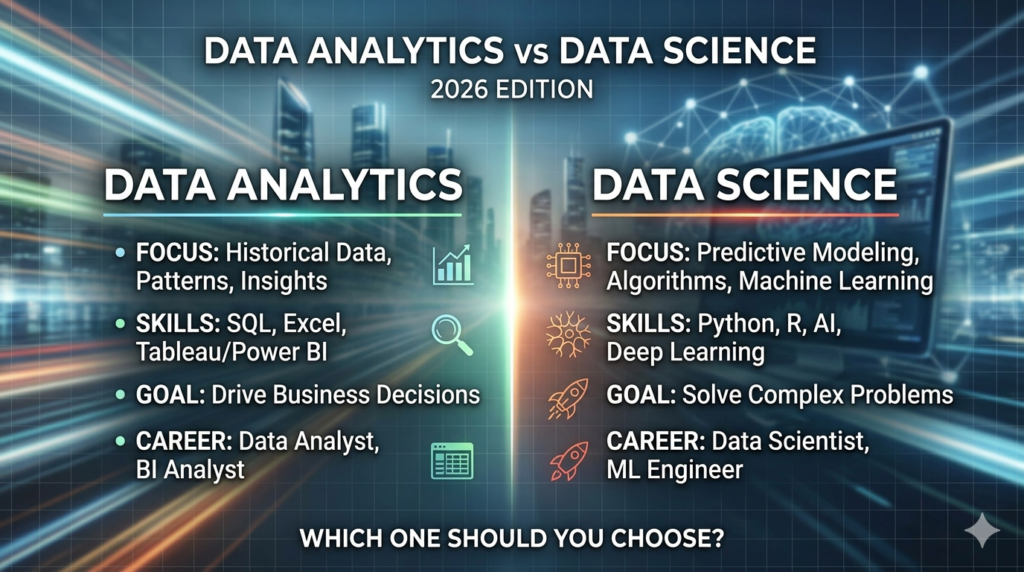
Key Differences: Data Analytics vs Data Science
| Feature | Data Analytics | Data Science |
|---|---|---|
| Focus | Past Data Analysis | Future Predictions |
| Difficulty | Beginner-Friendly | Advanced |
| Tools | Excel, SQL, BI Tools | Python, ML, AI |
| Goal | Insights & Reports | Predictions & Automation |
| Career Path | Analyst | Scientist/ML Engineer |
Skills Required in 2026
For Data Analytics Course:
- Data Visualization
- Excel & SQL
- Basic Python
- Analytical Thinking
For Data Science Course:
- Python Programming
- Machine Learning
- Statistics & Mathematics
- Deep Learning & AI
Career Opportunities & Salary in 2026
Data Analytics Jobs:
- Data Analyst
- Business Analyst
- Reporting Analyst
💰 Average Salary in India: ₹4–10 LPA
Data Science Jobs:
- Data Scientist
- Machine Learning Engineer
- AI Engineer
💰 Average Salary in India: ₹8–25 LPA
Which Course Should You Choose in 2026?
Choose Data Analytics if:
- You are a beginner
- You want a quick job
- You prefer less coding
- You like working with dashboards
Choose Data Science if:
- You love coding and math
- You want high-paying roles
- You are interested in AI & ML
- You can invest more learning time
Pro Tip (Important for Students)
If you are confused, start with Data Analytics, then upgrade to Data Science later. This is the most practical and job-oriented roadmap in 2026.
Frequently Asked Questions | Aptech Learning Mahangar
1. Which is better: Data Analytics or Data Science?
It depends on your goals. Data Analytics is easier and faster to learn, while Data Science offers higher salaries and advanced career growth.
2. Can I switch from Data Analytics to Data Science later?
Yes, many professionals start with Data Analytics and later transition into Data Science with additional skills.
3. Is coding required for Data Analytics?
Basic coding (Python/SQL) is helpful but not mandatory for beginners.
4. Which course is best for beginners in 2026?
Data Analytics is the best starting point for beginners.
5. What is the salary difference between both fields?
Data Science roles generally pay higher due to advanced skills and demand.
6. Is Data Science hard to learn?
Yes, it requires strong knowledge of math, statistics, and programming.
Conclusion
Both Data Analytics and Data Science are excellent career options in 2026. Data Analytics is ideal for beginners looking for quick entry into the job market, while Data Science is best for those aiming for advanced, high-paying roles in AI and machine learning.