Cart

Your cart is currently empty.

Sub Total: 0.00

Tag: AI course in Lucknow

How to Start a Career in Artificial Intelligence: Guide

How to Start a Career in Artificial Intelligence: Guide

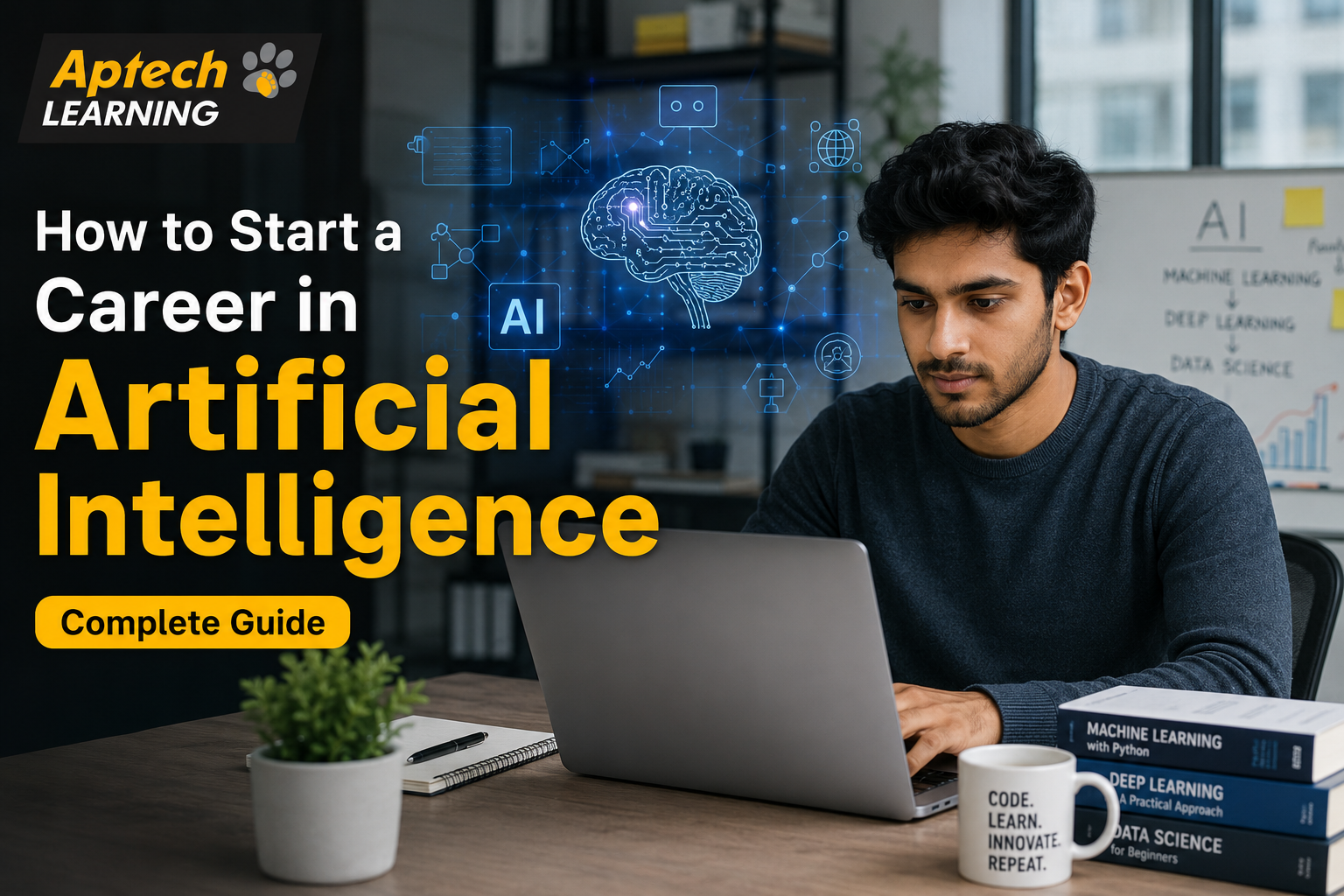
Who Works in Artificial Intelligence People working in artificial intelligence build systems that can recognise patterns, make predictions, and automate decisions that would normally require human judgment. This is a broad field, meaning AI professionals work on very different things: some build the algorithms themselves, some apply existing AI tools to solve specific business problems, and some focus on the data that feeds these systems. Think of AI work like the film industry. There are directors who create the overall vision, technicians who handle the cameras and lighting, and editors who shape the final product. Similarly, AI research scientists push the boundaries of what is technically possible, machine learning engineers build and deploy practical systems, and applied AI specialists focus on using existing AI tools to solve real business problems. In India, AI-related roles now exist across IT services, product companies, startups, banking, healthcare, and e-commerce, since AI has moved well beyond being a purely research-focused field. Why AI is a Strong Career Choice Right Now Starting a career in AI makes sense for a few clear reasons: Indian companies across sectors are actively adopting AI tools, creating growing demand for professionals who understand how to apply them. The field offers multiple entry points, from applied AI roles that require practical tool knowledge to more technical roles requiring stronger programming and math skills. AI skills are increasingly valued even in non-AI-specific roles, since understanding how these tools work is becoming useful across marketing, operations, and product roles too. The learning path has become more accessible, with structured courses that build skills progressively, rather than requiring years of academic research first. AI-related roles often connect closely with data science and software development, giving professionals flexibility to move between related career paths over time. Types of AI Career Paths AI careers generally fall into a few broad categories, each requiring a slightly different skill focus. Machine Learning EngineeringThis path focuses on building, training, and deploying machine learning models into real applications and products. AI ResearchThis path focuses on advancing AI techniques and algorithms, often requiring deeper academic or research-focused study. Applied AI and AutomationThis path focuses on using existing AI tools and platforms to solve specific business problems, without necessarily building models from scratch. Natural Language Processing (NLP)This path focuses specifically on systems that understand and generate human language, such as chatbots and text analysis tools. Computer VisionThis path focuses on building systems that interpret images and video, used in areas like quality inspection or facial recognition. Career Path | Main Focus | Example WorkMachine Learning Engineering | Building and deploying models | Training a prediction model for a businessAI Research | Advancing AI techniques | Developing new algorithms or methodsApplied AI | Using existing AI tools practically | Implementing an AI chatbot for customer supportNLP | Language-based AI systems | Building sentiment analysis tools Step-by-Step Guide to Starting an AI Career AI Career vs Data Science Career vs Software Development Career These three career paths overlap but focus on different areas. An AI career focuses specifically on building systems that can learn from data and make intelligent decisions, often centred around machine learning and related techniques. A data science career is broader, including AI and machine learning as tools, but also involving data analysis, statistics, and extracting insights from data more generally. A software development career focuses on building applications and systems more broadly, and while it can overlap with AI work, it does not always centre specifically around machine learning or predictive modelling. In simple words: AI careers focus on building intelligent, learning systems, data science careers focus more broadly on extracting insights and building predictive models, and software development careers focus on building applications, which may or may not include AI components. Practical Examples E-commerce Company: An applied AI specialist implements a recommendation system that suggests products to customers based on their browsing and purchase history. Banking Sector: A machine learning engineer builds a fraud detection model that flags unusual transaction patterns in real time, helping prevent financial losses. Customer Support: An AI professional builds and fine-tunes a chatbot that handles common customer queries, reducing wait times for simple issues. Healthcare Organisation: A computer vision specialist works on a system that helps analyse medical scans, supporting faster and more accurate diagnosis alongside doctors. Manufacturing: An applied AI specialist implements a predictive maintenance system that flags when factory equipment is likely to fail, based on sensor data patterns. Common Mistakes Beginners Make Jumping into advanced AI topics too early. Beginners sometimes try to learn deep learning before building a solid foundation in Python, statistics, and basic machine learning. Focusing only on theory without building projects. Watching tutorials without hands-on practice makes it hard to actually apply AI concepts to real problems. Ignoring the importance of clean data. Beginners sometimes assume model-building is the hardest part, when in reality, preparing good quality data is often just as important. Trying to specialise too soon. Choosing a narrow AI specialisation before understanding core fundamentals can limit flexibility and understanding later on. Underestimating the math behind AI. Skipping basic statistics and linear algebra makes it harder to understand why certain models work the way they do. Not building communication skills. Being able to explain AI results clearly to non-technical stakeholders is often just as important as the technical work itself. Career Opportunities A career in artificial intelligence opens up a wide range of roles across technical and applied positions. Common roles include: Machine Learning Engineer — builds and deploys models that power AI-driven applications. AI Research Scientist — works on advancing AI techniques, often in more research-focused roles. Applied AI Specialist — implements existing AI tools and platforms to solve specific business problems. NLP Engineer — focuses on language-based AI systems like chatbots and text analysis tools. Computer Vision Engineer — builds systems that interpret images and video data. AI Product Manager — bridges the gap between technical AI teams and business goals. As experience grows, professionals can move into senior technical roles,

Explore More
What is Artificial Intelligence

What is Artificial Intelligence? Complete Beginner Guide

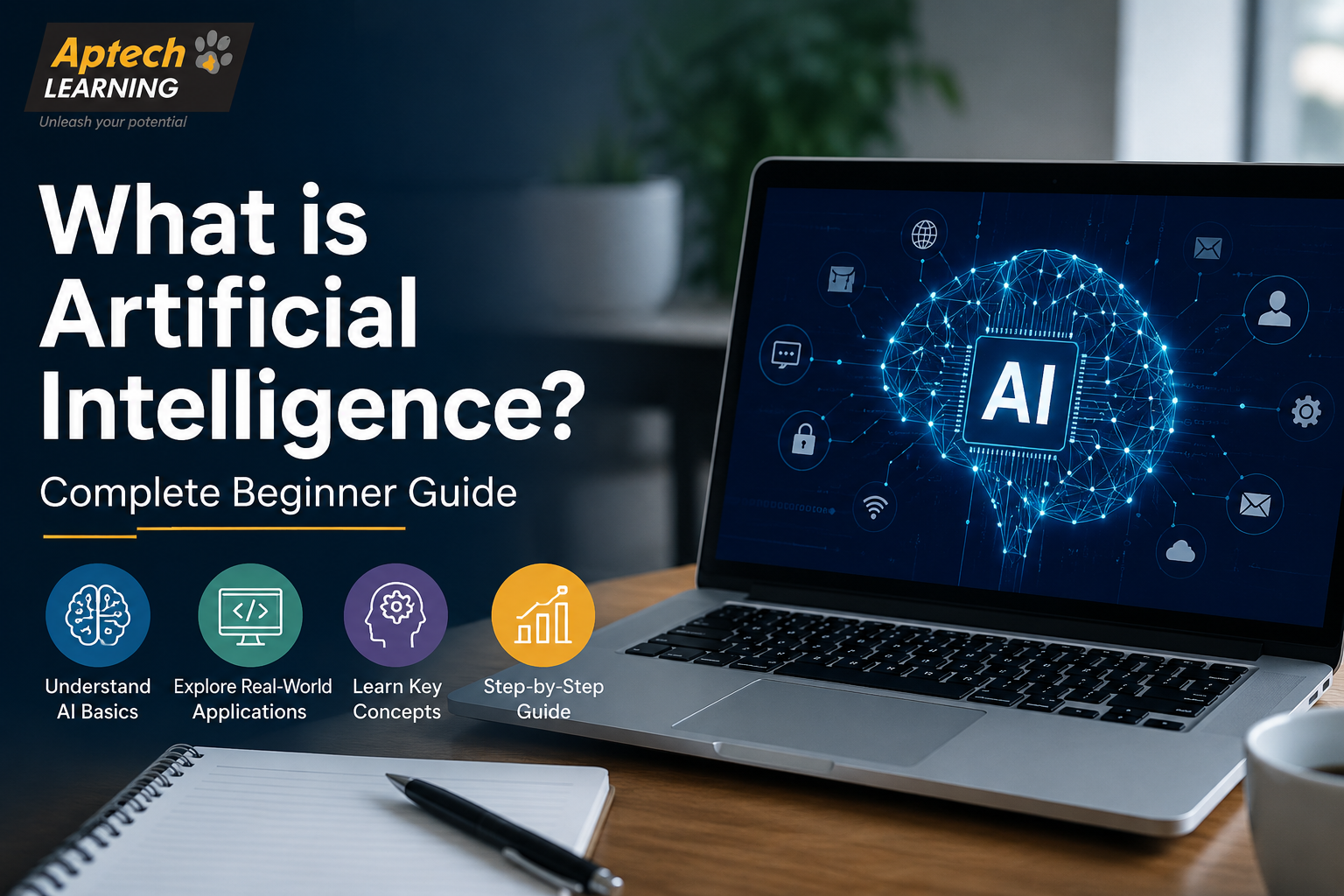
When you unlock your phone using your face, ask Alexa to play a song, or see Netflix recommend a show you actually end up liking, you are interacting with artificial intelligence. AI is not something from a science fiction movie anymore. It is quietly running in the background of almost everything we use daily. But what does the term actually mean, and how does a machine “think”? This guide breaks down artificial intelligence in plain language, covering how it works, where it is used, and how you can build a career in this field, even if you have zero technical background right now. Direct Answer Artificial intelligence is the ability of a computer system to perform tasks that normally require human intelligence, such as recognising speech, making decisions, solving problems, and learning from experience. Instead of following one fixed set of instructions, AI systems study data and improve their performance over time. What is Artificial Intelligence Artificial intelligence, or AI, is a branch of computer science focused on building machines that can perform tasks which usually need human thinking. This includes things like understanding language, recognising images, making predictions, and solving problems. Think of how a human doctor diagnoses an illness. They look at symptoms, compare them with past knowledge, and reach a conclusion. An AI system does something similar. It studies large amounts of data, spots patterns, and uses those patterns to make a decision or prediction, without a person manually programming every single rule. AI is not one single technology. It is a broad field that includes several techniques, and machine learning is one of the most important ones used to build modern AI systems. Why Artificial Intelligence Matters AI has moved from research labs into everyday products used by billions of people. Here is why it has become so important right now. Data is being generated at massive scale, from smartphones, apps, sensors, and websites, and AI helps make sense of it faster than humans ever could. Businesses use AI to automate repetitive work, freeing up people to focus on more complex tasks. AI improves accuracy in fields like healthcare diagnosis, fraud detection, and quality control, where mistakes can be costly. Personalisation, such as product recommendations or content suggestions, is only possible at scale because of AI. Competitive industries are adopting AI quickly, which means AI-related skills are becoming valuable across almost every job sector. Types of Artificial Intelligence AI can be classified in two major ways: by capability and by functionality. Based on Capability Narrow AIThis is AI designed to perform one specific task well, such as voice assistants, spam filters, or recommendation systems. Almost all AI in use today falls into this category. General AIThis refers to a machine that could perform any intellectual task a human can do. This level of AI does not exist yet and remains a research goal. Super AIThis is a theoretical stage where AI would surpass human intelligence in every field. It remains purely conceptual at this point. Based on Functionality Reactive MachinesThese systems respond to specific inputs without using past experience. An example is a chess-playing program that only reacts to the current board position. Limited MemoryThis is the most common type of AI today. It uses recent past data to make decisions, such as self-driving cars that use recent sensor data to navigate. Theory of MindThis is an advanced concept where AI would understand human emotions and intentions. It is still under research. Self-Aware AIThis is a theoretical future stage where AI would have its own consciousness. It does not exist today. Type | Category | ExampleNarrow AI | Capability | Voice assistants, spam filtersGeneral AI | Capability | Not yet developedReactive Machines | Functionality | Chess-playing programsLimited Memory | Functionality | Self-driving cars How Artificial Intelligence Works (Step-by-Step) AI vs Machine Learning vs Deep Learning These three terms are related but not identical, and beginners often confuse them. Artificial intelligence is the broad concept of machines performing tasks that require human-like intelligence. Machine learning is a subset of AI where systems learn patterns from data instead of being explicitly programmed with fixed rules. Deep learning is a further subset of machine learning that uses layered structures called neural networks, inspired loosely by the human brain, to handle complex tasks like image recognition and language understanding. In simple words: AI is the overall goal, machine learning is one major approach to achieve it, and deep learning is an advanced technique within machine learning. Practical Examples Healthcare: AI systems analyse medical scans to help doctors detect abnormalities faster, supporting quicker diagnosis alongside human expertise. E-commerce: Online stores use AI to recommend products based on browsing and purchase history, increasing the chances of a relevant suggestion. Banking: Banks use AI to detect unusual transaction patterns in real time, helping flag potential fraud before major damage occurs. Customer Service: Many companies use AI-powered chatbots to answer common customer queries instantly, reducing wait times for simple issues. Transportation: Ride-sharing apps use AI to estimate arrival times and optimise routes based on traffic and demand patterns. Common Mistakes Beginners Make Thinking AI can “think” like humans. AI recognises patterns in data; it does not understand context or meaning the way people do. Ignoring data quality. Poor or biased data leads to poor or biased AI results, regardless of how advanced the model is. Jumping straight into deep learning. Beginners often skip foundational concepts like statistics and basic machine learning before attempting complex neural networks. Expecting instant expertise. AI is a broad field, and building real skill takes consistent practice over time, not a few days of study. Confusing AI with automation. Simple rule-based automation is not the same as AI, which involves learning from data rather than fixed instructions. Not learning the math behind it. A basic understanding of statistics and probability makes it much easier to understand why AI models behave the way they do. Career Opportunities Artificial intelligence has created demand for professionals across technical and non-technical roles. Common

Explore More
AI Course in Lucknow 2026 — Learn, Earn & Get Placed Fast

AI Course in Lucknow 2026 — Learn, Earn & Get Placed Fast

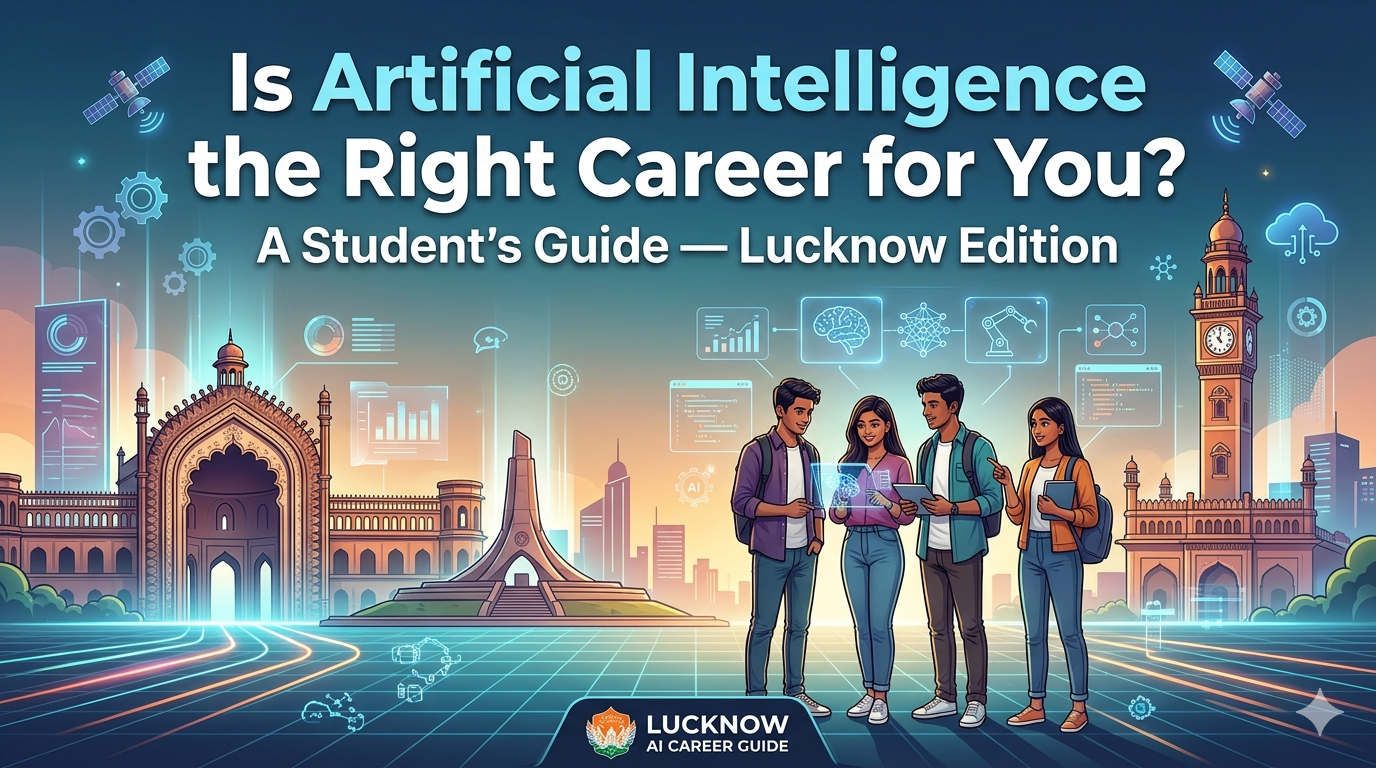
Are you wondering which skill will keep you employable for the next 20 years? Across every city in India — and especially in Lucknow — companies are actively hiring people who understand Artificial Intelligence. But most students have no clear idea where to start, which institute to trust, or whether an AI course in Lucknow will actually get them a job. This guide answers all of that. You’ll find out exactly what an AI course covers, who should join it, what career you can build after it, and why Aptech Learning Lucknow is the right place to get started — whether you’re a school student, a college-goer, or a working professional ready for a career shift. Why Is an AI Course in Lucknow Trending Right Now? It’s not just a global trend. Lucknow’s IT sector, MSME companies, healthcare firms, and e-commerce players are all moving toward AI-powered systems. Employers in nearby tech hubs like Noida, Kanpur, and Agra are also actively looking for AI-skilled candidates from Uttar Pradesh. Course Highlights — What Makes This AI Training Practical? At Aptech Learning Lucknow, the AI course isn’t theoretical classroom learning. The focus is on doing. Students work on real datasets, build actual projects, and leave with a portfolio — not just a certificate. Also explore our Data Science Course in Lucknow — often taken alongside the AI program for maximum career impact. Career Opportunities After Completing the AI Course in Lucknow This is the part every student and parent wants to know about — what happens after the course? The honest answer is: a lot of doors open. In Lucknow specifically, the UPSIDA IT parks, Gomti Nagar tech offices, and growing startup ecosystem are creating local AI job opportunities. Many of our students also get placed in Noida and Delhi NCR — which are just 4–5 hours away. AI Engineer Data Analyst ML Developer Chatbot Developer NLP Engineer ₹6–15 LPA ₹4–9 LPA ₹6–12 LPA ₹4–8 LPA ₹7–14 LPA IT Companies, Startups E-commerce, Finance Product Companies Customer Tech, SaaS EdTech, HealthTech Why Choose Aptech Learning Lucknow for Your AI Course? There are dozens of institutes in Lucknow offering tech courses. But very few can back up their promises with actual student outcomes. Here’s what makes Aptech Learning different: 🎓Experienced Industry Trainers Our faculty members have real corporate and product experience — not just teaching backgrounds. They teach you the way employers actually work. 📋Up-to-Date Industry Curriculum The syllabus is revised regularly to stay aligned with what companies are hiring for — including GenAI, LLMs, and Python automation skills for 2025. 💼 Placement Assistance & Career Counseling From building your resume to cracking interviews, we stay with you until you land your first job. Our network includes IT firms, agencies, and startups. 📍Easily Accessible Location — Mahanagar, Lucknow Our center is well-connected by local transport. Students from Gomti Nagar, Hazratganj, Aliganj, Indira Nagar, and surrounding areas reach us easily. 🤝 Student Support — From Day 1 to Job Day Doubt-clearing sessions, recorded lessons, mentorship, and a supportive peer community make the learning experience much smoother than self-study. Who Should Join This AI Course in Lucknow? The AI course at Aptech Learning is designed for a wide range of learners. If any of these describe you, this course is for you: 🏫 School students (Class 10/12 pass) 🎓 College students (B.Tech, BCA, B.Sc, BA) 💼 Job seekers wanting IT careers 👩‍💼 Working professionals upskilling 🚀 Entrepreneurs automating their business 🧑‍💻 Fresher wanting placement quickly No matter where you’re starting from — even with zero coding background — our curriculum is structured to take you from the basics to job-ready skills step by step. Start with our Python Programming Course in Lucknow if you’d like a solid foundation before diving into AI. Course Duration, Learning Mode & Certification Course Duration 3 to 6 Months — Short & Long term batches available Learning Mode Online + Offline— Classroom in Mahanagar, Lucknow Certification Aptech Certified–Nationally recognized credential Contact Us — +91 6386 119 566 digilearninglko@gmail.com Ready to Start Your AI Career in Lucknow? Don’t wait for the right time — the right time is right now. Seats are limited and new batches fill up fast. Call or message us today to check batch schedules, fee structure, and enrollment process.📞 +91 6386 119 566✉ digilearninglko@gmail.comCall Now to Enroll Email Us Frequently Asked Questions (FAQs) Conclusion Lucknow is no longer just a city of heritage and culture — it’s quietly becoming a city of career opportunities in technology. And among all the skills shaping the future of work, Artificial Intelligence sits right at the top. If you’ve been thinking about joining an AI course in Lucknow, this is your sign to stop waiting. With Aptech Learning’s practical curriculum, experienced trainers, placement support, and flexible learning modes, you’ll have everything you need to move from student to professional — faster than you expect. Whether you’re a student fresh out of school, a graduate looking for your first IT job, or a professional tired of being left behind — this AI course is built for you. The next batch is forming. Your seat is waiting. 📞 Call Now: +91 6386 119 566✉ Email: digilearninglko@gmail.com📍 Location: Mahanagar, Lucknow, Uttar Pradesh

Explore More
About Image
Guaranteed & Certified

Students are joining

For our career programs like Full Stack Development, Data Science, Data Analyst, and Business Analyst, we guarantee to arrange job interviews for you with our 100+ hiring partners until you get placed

You will be trained by experienced faculty and top-notch mentors. Our senior mentors bring over 20+ years of real-world industry experience directly to your classroom

All our programs are conducted in 100% offline mode at our modern training center in Aliganj, Lucknow. We believe in face-to-face, hands-on learning for the best results

“Aptech Learning Center Mahanagar, founded by renowned educationists, provides high-quality IT education to empower Lucknow’s youth for competitive tech careers.”

Contact Info.

Aptech Learning Center, first floor, Above Radiance, 18 J Road, Near Midland Healthcare and Research center, Mahanagar Lucknow
+91 6386 119 566
digilearninglko@gmail.com

© 2025 Aptech Learning Center Mahanagar | All Rights Reserved | Designed and Developed By DigiGrow Solutions