
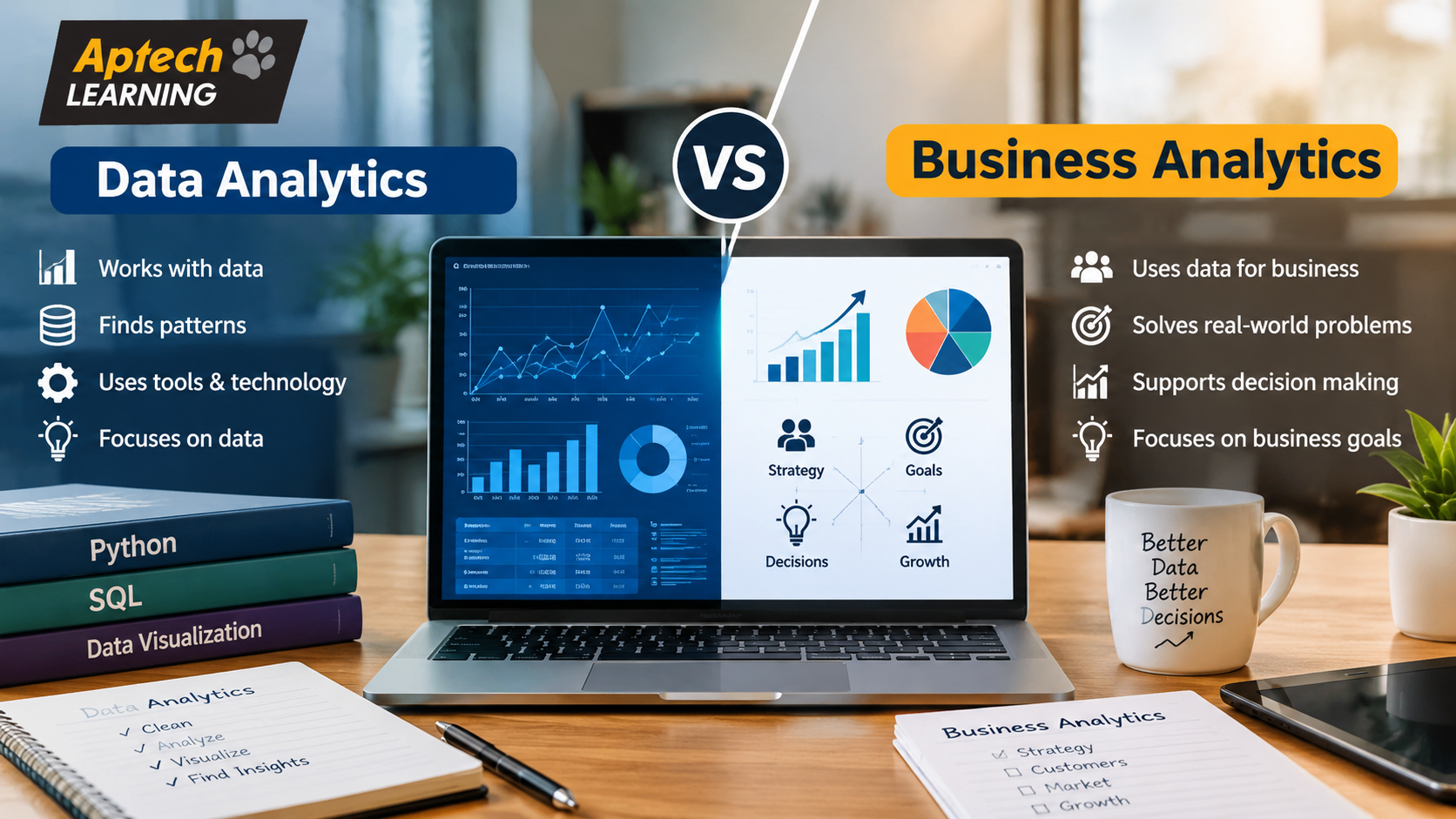
Data Analytics vs Business Analytics: The Difference
What is Data Analytics Data analytics is the process of collecting, cleaning, and studying data to identify patterns, trends, and answers to specific questions. It is a fairly technical field, relying heavily on tools like Excel, SQL, and data visualisation software to work directly with raw data and extract meaningful insights from it. Think of a data analyst as someone working closely with the raw material itself, cleaning messy spreadsheets, writing queries to pull specific information from databases, and building charts that clearly show what the numbers actually reveal. The focus here is primarily on the technical process of working with data accurately and efficiently, answering questions like “what happened” and “why did it happen” through direct data work. What is Business Analytics Business analytics is a broader field that combines data analysis with business strategy, decision-making frameworks, and organisational understanding. While it still involves working with data, its primary focus is on using those insights to guide business decisions, identify opportunities, and solve strategic problems, rather than purely on the technical process of data handling itself. Think of a business analyst as someone standing a bit further back from the raw data, using insights, sometimes produced by a data analyst, to answer bigger-picture questions like “what should the business do next” or “how should we approach this market opportunity.” The focus shifts from the technical mechanics of data work toward applying those insights within a broader business and strategic context. Why This Distinction Genuinely Matters Understanding the real difference between these two fields matters for a few practical reasons: It helps you choose the right course or learning path, since data analytics courses often go deeper into technical tools, while business analytics programs typically include more business strategy and decision-making content. It clarifies job descriptions, since companies sometimes use these titles inconsistently, and understanding the core distinction helps you evaluate what a specific role actually involves. It helps you play to your natural strengths, since some people are drawn more to technical, detail-oriented data work, while others are more interested in strategic, big-picture business thinking. It supports better long-term career planning, since these two paths can lead to somewhat different specialisations and growth trajectories over time. It prevents miscommunication in professional settings, where using these terms accurately reflects genuine understanding of your own role and skill set. Key Differences Between Data Analytics and Business Analytics Aspect | Data Analytics | Business AnalyticsPrimary Focus | Technical data collection, cleaning, and analysis | Applying insights to business strategy and decisionsCore Tools | Excel, SQL, Power BI, sometimes Python | Business intelligence tools, forecasting models, strategic frameworksTypical Questions Answered | What happened, why did it happen | What should we do next, how do we solve this business problemSkill Emphasis | Technical, detail-oriented data handling | Strategic thinking combined with data interpretationCommon Job Titles | Data Analyst, Reporting Analyst | Business Analyst, Business Intelligence AnalystEducational Background Fit | Works well for detail-oriented, technically curious learners | Works well for strategically minded, business-focused learners How the Two Fields Work Together (Step-by-Step) Data Analyst vs Business Analyst as Job Roles Looking at these as actual job roles helps clarify the distinction further. A data analyst typically spends most of their time directly working with data, writing SQL queries, cleaning datasets, building dashboards, and identifying patterns, focusing primarily on the technical accuracy and clarity of the analysis itself. A business analyst typically spends more time understanding business processes, gathering requirements from stakeholders, and translating data insights or business needs into clear recommendations or specifications for change. There is often meaningful overlap between these roles in smaller companies, where one person may handle both responsibilities, while larger organisations tend to separate them into more distinct, specialised positions. Practical Examples Retail Sales Analysis: A data analyst studies raw sales data to identify which products are underperforming in specific regions, while a business analyst uses these findings to recommend a specific regional marketing or pricing strategy adjustment. New Product Launch: A data analyst analyses customer survey and market data, while a business analyst combines this with competitive market understanding to recommend whether and how the company should proceed with the new product launch. Process Improvement Project: A data analyst identifies bottlenecks in a company’s operational data, while a business analyst works with different departments to design and recommend a specific process change based on those findings. Customer Churn Reduction: A data analyst builds a report identifying patterns in customer churn data, while a business analyst uses this information to propose specific retention strategies aligned with overall business goals. Common Mistakes People Make When Choosing Assuming the two fields are essentially identical. While overlapping, they genuinely emphasise different skill sets, technical data work versus strategic business application. Choosing based only on job title popularity without understanding actual role content. Some learners pick a path based on which title sounds more appealing, without checking what the actual day-to-day work involves. Not considering personal strengths and interests. Choosing a highly technical data analytics path despite genuinely preferring big-picture strategic thinking, or vice versa, can lead to less career satisfaction. Assuming one path is definitively “better” than the other. Both fields offer strong, legitimate career opportunities; the better choice depends entirely on individual interest and strengths, not inherent superiority. Ignoring the overlap between the two fields. Some learners treat these as completely separate, unrelated fields, missing how frequently they work together in real business environments. Not researching specific course content before enrolling. Course names can be inconsistent, so it is important to check actual syllabus content rather than assuming based on the course title alone. Career Opportunities Compared Career paths differ somewhat between the two fields, though meaningful overlap exists. Data Analytics Career Opportunities Data Analyst — collects, cleans, and analyses data to answer specific business questions Reporting Analyst — focuses specifically on building and maintaining regular data reports Data Visualisation Specialist — focuses on building clear, effective dashboards and visual reports Junior Data Scientist Pathway — data analytics often serves
Explore More