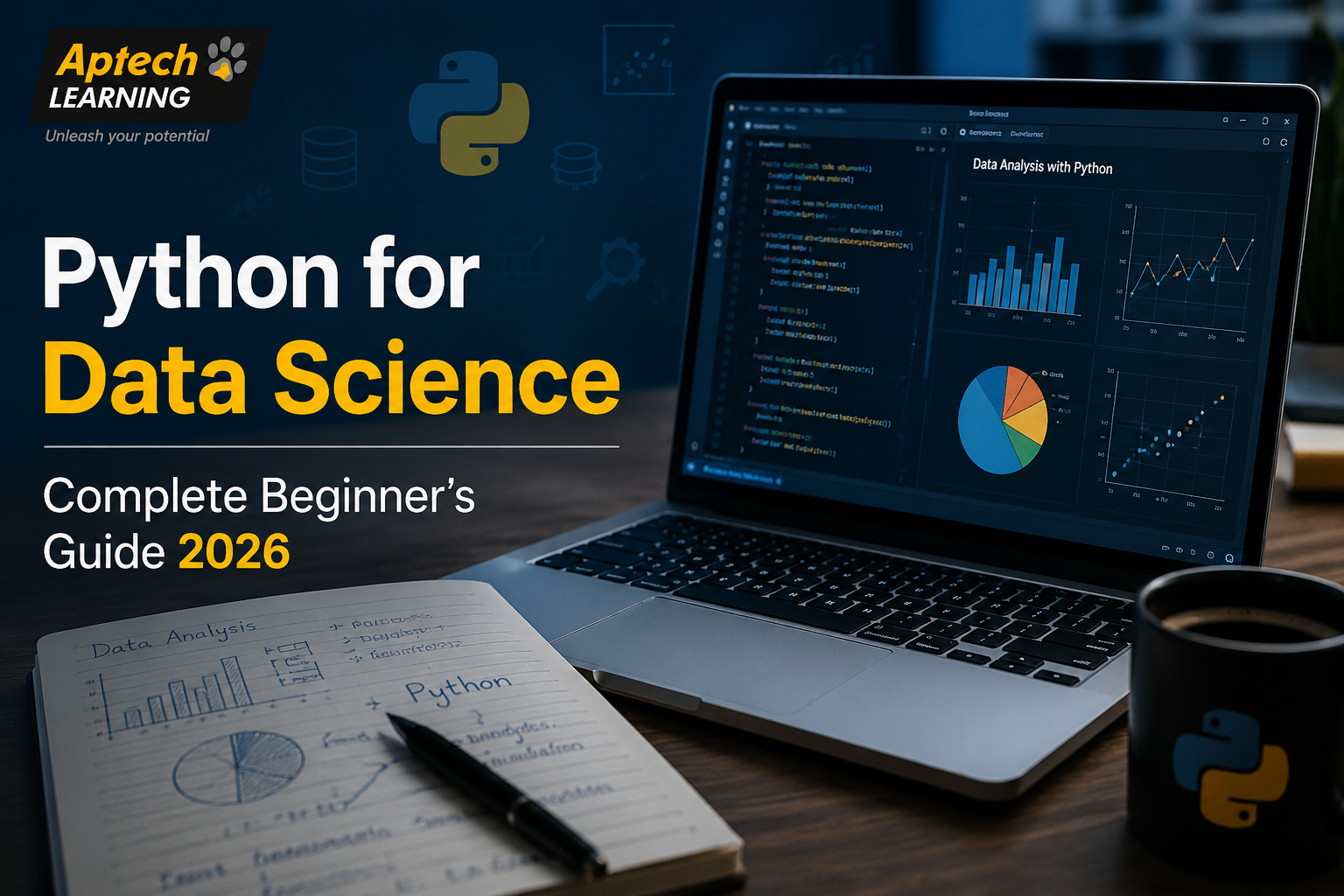
Python for Data Science — Complete Beginner’s Guide 2026
If you’re planning to build a career in Data Science, Python is likely the first skill you’ll come across — and for good reason. It’s simple to learn, widely used in the industry, and powerful enough to handle everything from data cleaning to machine learning. For someone starting from zero, though, it can still feel confusing to know where exactly to begin.
This guide walks you through Python for Data Science in a beginner-friendly way, so you know exactly what to learn and in what order.
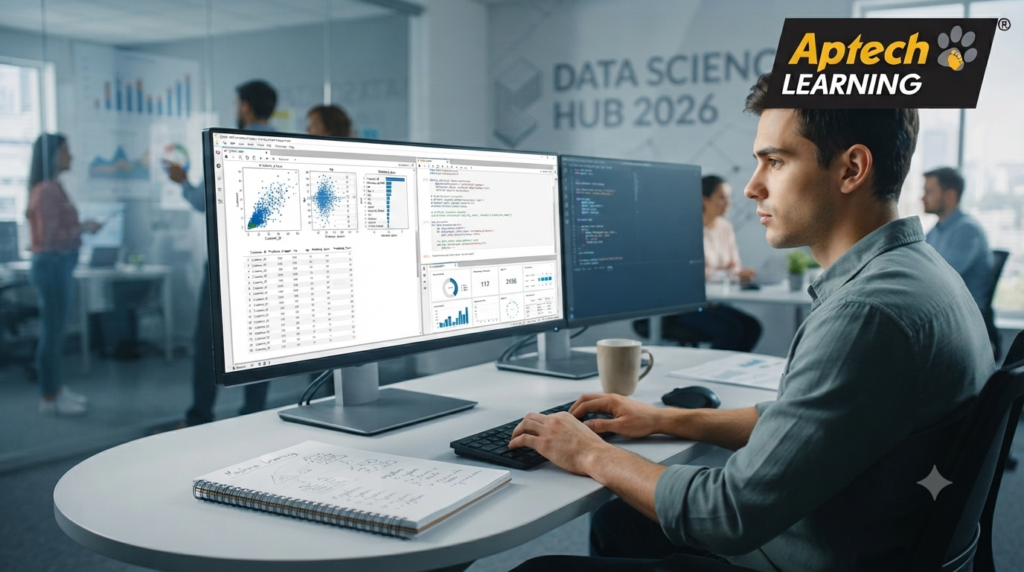
Why Python Is the Top Choice for Data Science
Python’s simple syntax makes it easy for beginners to pick up, even without a programming background. Beyond that, it has a huge collection of ready-made libraries built specifically for data analysis, visualization, and machine learning, which saves time and effort compared to writing everything from scratch.
What You Need to Learn — Step by Step
| Step | Topic | What It Covers |
|---|---|---|
| 1 | Python Basics | Variables, data types, loops, conditionals |
| 2 | Data Structures | Lists, tuples, dictionaries, sets |
| 3 | Functions & Modules | Writing reusable code, importing libraries |
| 4 | File Handling | Reading/writing CSV, Excel, JSON files |
| 5 | NumPy | Working with arrays and numerical data |
| 6 | Pandas | Data cleaning, filtering, and manipulation |
| 7 | Data Visualization | Matplotlib, Seaborn for charts and graphs |
| 8 | Intro to Machine Learning | Scikit-learn basics for building models |
Following this order helps beginners avoid confusion and build a strong base before jumping into advanced topics.
Must-Know Python Libraries for Data Science
| Library | Purpose |
|---|---|
| NumPy | Numerical computing and array operations |
| Pandas | Data cleaning, analysis, and manipulation |
| Matplotlib | Basic data visualization and plotting |
| Seaborn | Advanced statistical visualizations |
| Scikit-learn | Machine learning algorithms and models |
How Long Does It Take to Learn Python for Data Science?
| Learning Pace | Estimated Time |
|---|---|
| Basics Only | 3–4 Weeks |
| Basics + Pandas/NumPy | 2–3 Months |
| Full Data Science Readiness | 4–6 Months |
The timeline depends on how consistently you practice and whether you’re working on real datasets alongside the theory.
Common Mistakes Beginners Make While Learning Python
- Jumping straight into Machine Learning without mastering Pandas and NumPy first
- Learning syntax without practicing on real datasets
- Skipping data visualization, which is essential for understanding data patterns
- Not building small projects to apply what’s learned
Best Way to Start Learning Python for Data Science
Rather than learning Python in isolation, it helps to learn it alongside real data projects — such as analyzing a sales dataset or visualizing survey results. Structured courses that combine Python fundamentals with hands-on datasets and mentor guidance tend to help beginners progress faster than self-study alone.

Frequently Asked Questions (FAQs)
1. Do I need prior coding experience to learn Python for Data Science?
No, Python is beginner-friendly and can be learned from scratch, even without any prior programming background.
2. How long does it take to learn Python for Data Science as a beginner?
Most beginners can learn Python basics within 3–4 weeks, while becoming fully job-ready may take 4–6 months with consistent practice.
3. Which Python libraries are most important for Data Science?
NumPy, Pandas, Matplotlib, Seaborn, and Scikit-learn are the most commonly used libraries in Data Science projects.
4. Is Python better than other languages for Data Science?
Python is widely preferred due to its simple syntax, large community support, and extensive library ecosystem built for data analysis.
5. Can I learn Python for Data Science through online courses?
Yes, structured online courses with hands-on projects are an effective way to learn Python for Data Science, especially for beginners.
6. What should I learn first — Python basics or Pandas?
It’s best to master Python basics and data structures first, before moving on to Pandas and NumPy for data handling.
Final Thoughts
Learning Python for Data Science doesn’t have to feel overwhelming when you follow a clear, step-by-step path. Starting with the basics, moving into essential libraries like Pandas and NumPy, and gradually exploring visualization and machine learning gives beginners a strong, practical foundation.
As Data Science continues to grow across industries in 2026, Python remains one of the most valuable skills to learn early. With consistent practice and real project exposure, beginners can confidently build the coding foundation needed for a successful Data Science career.