
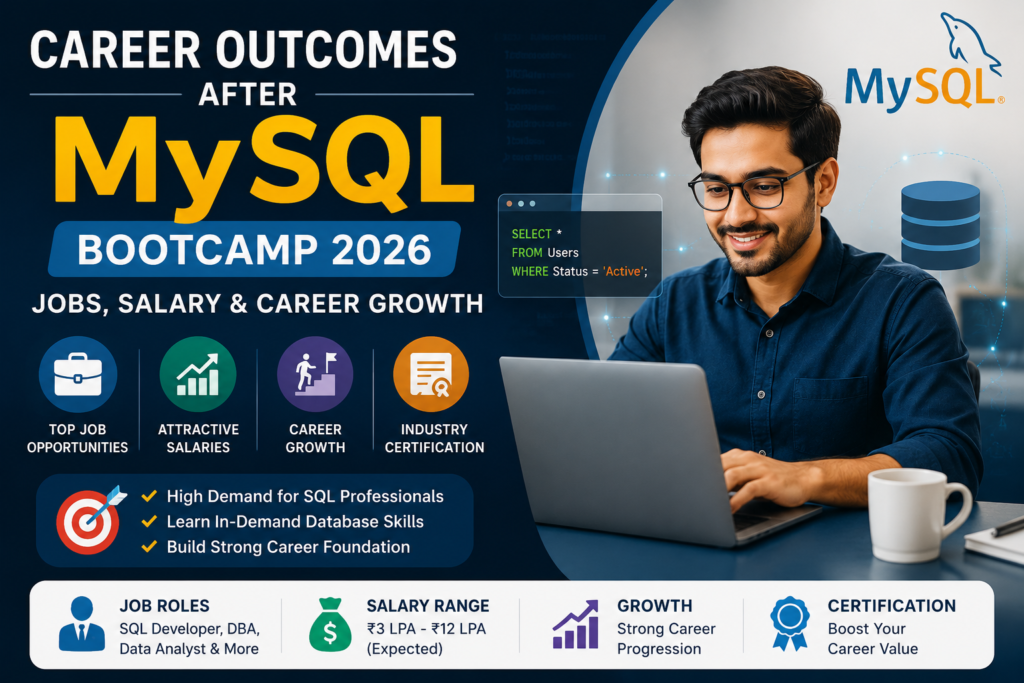
Career Outcomes After MySQL Bootcamp 2026 | Jobs, Salary & Career Growth
Database management has become one of the most important skills in today’s technology-driven world. Every company — from startups to multinational corporations — relies on databases to store, organize, and manage information efficiently. This growing demand has made MySQL Bootcamps highly popular among students and working professionals.
If you are planning to enroll in a MySQL Bootcamp in 2026, understanding the career outcomes can help you make a smart decision. A practical SQL and database training program can open doors to multiple job opportunities in IT, analytics, software development, and cloud computing.
In this guide, we’ll explore the best career options, skills, salaries, and future growth opportunities after completing a MySQL Bootcamp.
Why MySQL Skills Are in High Demand
MySQL is one of the world’s most widely used relational database management systems. Companies use it for websites, applications, analytics systems, customer management platforms, and cloud-based services.
Industries Using MySQL
| Industry | Usage of MySQL |
|---|---|
| IT & Software | Application databases |
| eCommerce | Customer & order management |
| Banking | Transaction storage |
| Healthcare | Patient records |
| Education | Student management systems |
| Digital Marketing | Analytics reporting |
Because data is growing rapidly, companies need professionals who can manage databases efficiently.
What You Learn in a MySQL Bootcamp
A professional MySQL Bootcamp focuses on practical database skills instead of only theoretical concepts.
Core Topics Covered
| Module | Skills Included |
|---|---|
| SQL Basics | Queries, Tables, Databases |
| Advanced SQL | Joins, Views, Indexing |
| Database Design | Schema & Relationships |
| Data Management | CRUD Operations |
| Performance Optimization | Query Optimization |
| Real Projects | Industry Database Scenarios |
| Backup & Security | Data Protection Concepts |
This hands-on learning approach helps students become job-ready faster.
Top Career Outcomes After MySQL Bootcamp
One of the biggest advantages of learning MySQL is career flexibility. SQL skills are useful in multiple technology roles.
Popular Job Roles in 2026
| Job Role | Main Responsibilities |
|---|---|
| SQL Developer | Write & manage database queries |
| Database Administrator | Maintain database performance |
| Data Analyst | Analyze and organize business data |
| Backend Developer | Work with databases in applications |
| BI Analyst | Generate business insights |
| Data Support Executive | Manage data systems |
| Junior Database Engineer | Database optimization tasks |
These roles are available in both startups and large enterprises.
Salary Scope After SQL Training
Salary depends on practical skills, certifications, projects, and location. However, SQL professionals continue to enjoy strong demand across industries.
Estimated Career Growth Scope
| Experience Level | Career Potential |
|---|---|
| Fresher | Entry-level database roles |
| 1–2 Years | SQL Developer & Analyst roles |
| 3+ Years | Senior DBA & Data Engineer roles |
Candidates with strong SQL + analytics knowledge often get better opportunities in the tech industry.
Why Companies Prefer Candidates with Practical SQL Skills
Recruiters today prefer candidates who can solve real database problems instead of only knowing theoretical definitions.
Important Practical Skills
- Writing optimized SQL queries
- Handling large databases
- Data filtering and sorting
- Creating reports and dashboards
- Managing relational databases
- Understanding business data flow
Hands-on project training gives candidates a competitive advantage during interviews.
Benefits of Joining a MySQL Bootcamp
A structured MySQL training program helps students learn quickly with proper guidance.
| Benefit | Advantage |
|---|---|
| Short-Term Learning | Faster skill development |
| Beginner Friendly | Easy for non-programmers |
| Live Projects | Real industry experience |
| Certification | Resume credibility |
| Placement Support | Interview preparation |
| Flexible Learning | Online & offline options |
Bootcamps are especially useful for students who want job-ready technical skills within a short duration.
Future Scope of MySQL in 2026 and Beyond
Even with the rise of modern cloud technologies, SQL databases remain essential for businesses worldwide.
Future Demand Areas
| Technology Area | MySQL Usage |
|---|---|
| Web Development | Backend databases |
| Data Analytics | Structured data analysis |
| Cloud Applications | Cloud-hosted databases |
| SaaS Platforms | Customer data management |
| AI & Automation | Data storage systems |
Professionals who combine SQL with Python, Power BI, or cloud skills can unlock even better career opportunities.
How to Choose the Right MySQL Bootcamp
Before joining any training program, compare these important factors:
| Checklist | Importance |
|---|---|
| Updated Curriculum | Industry relevance |
| Practical Projects | Hands-on learning |
| Experienced Trainers | Better guidance |
| Certification | Career credibility |
| Placement Assistance | Job preparation |
| Flexible Schedule | Learning convenience |
Choosing the right institute can make a huge difference in your career growth.
Frequently Asked Questions | Aptech Learning Mahanagar
1. What jobs can I get after a MySQL Bootcamp?
You can apply for roles like SQL Developer, Database Administrator, Data Analyst, Backend Developer, and BI Analyst.
2. Is MySQL good for beginners?
Yes, MySQL is beginner-friendly and widely recommended for students starting database management.
3. How long does it take to learn MySQL professionally?
Most practical MySQL Bootcamps can help learners build job-ready skills within a few months.
4. Is SQL still in demand in 2026?
Yes, SQL remains one of the most in-demand technical skills across IT, analytics, and business industries.
5. Do I need coding experience to learn MySQL?
No, beginners can start learning MySQL without prior programming experience.
6. Can I learn MySQL online?
Yes, many institutes offer online MySQL training with live classes and project-based learning.
Conclusion
Completing a MySQL Bootcamp in 2026 can be a valuable step toward building a successful tech career. SQL remains one of the most essential skills in software development, analytics, and database management.
Whether you are a student, fresher, or working professional, learning MySQL can improve your technical expertise and increase your job opportunities. With practical projects, industry-focused training, and certification, a MySQL Bootcamp helps candidates become job-ready in a competitive market.
As businesses continue relying on structured data systems, skilled SQL professionals will remain in demand for years to come.