
Cyber Security Course Syllabus: Topics, Duration & Eligibility Explained
Before enrolling in any program, most students search for one thing: the cyber security course syllabus. Knowing exactly what topics are covered, how long the course runs, and whether you are eligible helps you make a confident decision rather than a confused one. This guide breaks down the complete syllabus structure, duration options, and eligibility criteria so you know exactly what to expect before you join.
Cyber security courses are designed in a layered format, starting with networking basics and gradually moving into hands-on, practical security skills. The exact syllabus may vary slightly between institutes, but most follow a similar core structure recognized across the industry.
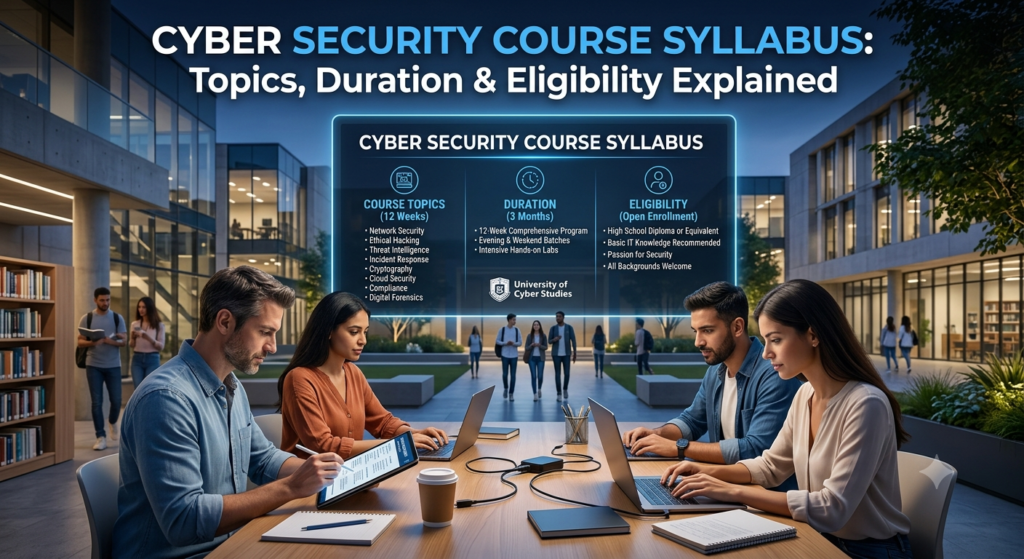
Complete Cyber Security Course Syllabus Breakdown
| Module | Topics Covered |
|---|---|
| Networking Fundamentals | OSI model, IP addressing, firewalls, VPNs |
| Operating System Security | Windows and Linux security basics |
| Ethical Hacking | Footprinting, scanning, vulnerability assessment |
| Cryptography | Encryption algorithms, hashing, digital signatures |
| Malware and Threat Analysis | Viruses, ransomware, trojans, spyware detection |
| Web Application Security | SQL injection, XSS, session hijacking prevention |
| Network Security Tools | Wireshark, Nmap, Metasploit, Kali Linux |
| Cloud Security Basics | AWS, Azure, Google Cloud security fundamentals |
| Incident Response | Detecting, reporting, and handling cyberattacks |
| Compliance and Policies | GDPR, ISO 27001, basic legal frameworks |
This structure ensures students move from theory to real-world application, which is exactly what employers look for in entry-level hires.
Cyber Security Course Duration Options
Duration usually depends on how deep and specialized the program is:
| Course Type | Typical Duration |
|---|---|
| Short Certification Course | 4 to 8 weeks |
| Diploma Course | 6 months |
| Advanced Specialization Course | 6 to 12 months |
| Weekend Batch (Working Professionals) | 3 to 6 months |
Students who want quick job-readiness usually start with a certification course and later upgrade to a diploma or specialization once they decide their focus area, such as ethical hacking or cloud security.
Eligibility Criteria for Cyber Security Courses
One of the biggest advantages of cyber security as a career is that eligibility requirements are quite flexible:
| Criteria | Details |
|---|---|
| Minimum Qualification | 12th pass or graduate (any stream) |
| Preferred Background | BCA, BTech, MCA, or basic computer knowledge |
| Coding Requirement | Not mandatory for beginner-level courses |
| Age Limit | Usually no strict upper age limit |
This flexible eligibility makes cyber security accessible to students from non-technical backgrounds as well, including commerce and arts graduates who want to switch into IT.
How the Syllabus Prepares You for Real Jobs
Most institutes structure the syllabus around practical lab work rather than only theory. Students get hands-on exposure to real attack-and-defense scenarios using industry-standard tools, which makes the transition into roles like SOC Analyst or Security Trainee much smoother after course completion.
Why Choose Aptech Learning Lucknow for Cyber Security Training
Aptech Learning Lucknow offers a well-structured cyber security course syllabus covering networking, ethical hacking, cryptography, and cloud security with hands-on lab sessions. The course is designed for both beginners and working professionals, with flexible batch timings and placement support. Visit aptechlearninglko.com to download the detailed syllabus or book a free demo class.
Frequently Asked Questions | Aptech Learning Mahanagar
1. What topics are covered in a cyber security course syllabus?
The syllabus typically covers networking, ethical hacking, cryptography, malware analysis, web security, and cloud security basics.
2. How long is a cyber security course?
Duration ranges from 4-8 weeks for short certifications to 6-12 months for diploma and specialization programs.
3. What is the eligibility for a cyber security course?
Most courses require only a 12th pass or graduate qualification, with no strict coding background needed for beginners.
4. Can commerce or arts students join a cyber security course?
Yes, eligibility is flexible and many institutes welcome students from non-technical backgrounds.
5. Is there an age limit for cyber security courses?
No, most cyber security courses do not have a strict upper age limit, making them suitable for career switchers too.
6. Does the syllabus include practical lab training?
Yes, most cyber security courses include hands-on lab sessions using tools like Wireshark, Nmap, and Kali Linux.
Conclusion
A clear understanding of the cyber security course syllabus, duration, and eligibility helps you choose the right program with confidence instead of guesswork. With flexible eligibility criteria and structured, hands-on syllabus design, this field remains accessible to students from almost any academic background, technical or not.
If you are ready to start, Aptech Learning Lucknow offers a complete cyber security syllabus with practical training and placement support to help you build real, job-ready skills. Visit aptechlearninglko.com today to explore the full syllabus or book your free demo class.