
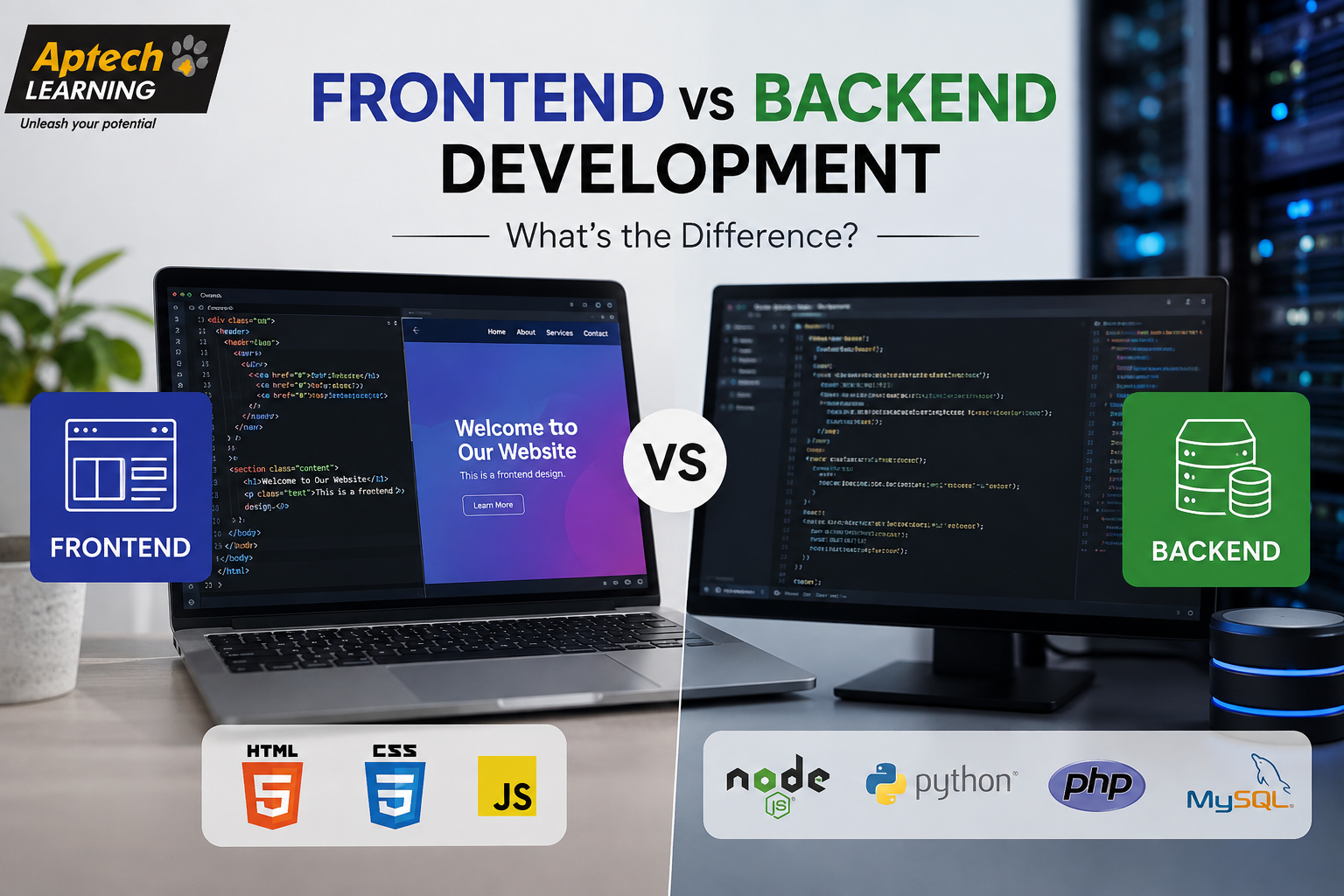
Frontend vs Backend Development: What’s the Difference
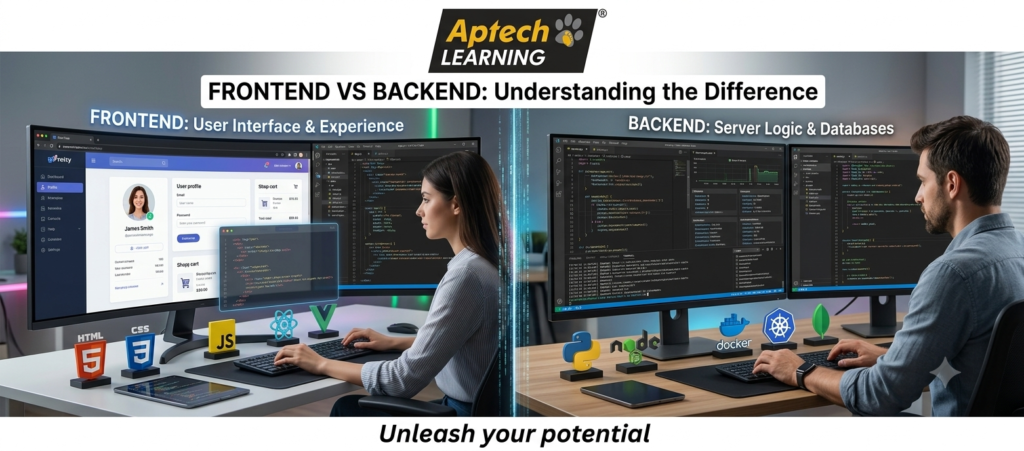
What is Frontend Development
Frontend development refers to building the part of a website or application that users see and interact with directly in their browser. This includes the layout, colours, fonts, buttons, forms, and how the page responds when a user clicks, scrolls, or types something.
Think of frontend development like the front of a shop, the display windows, the layout of shelves, the signboards, and how easy it is for a customer to walk in and find what they need. A frontend developer’s job is to make sure this experience is visually appealing, easy to use, and works smoothly across different devices, from desktop computers to mobile phones.
Frontend developers primarily work with HTML, CSS, and JavaScript, often using frameworks like React to build more dynamic and interactive interfaces efficiently.
What is Backend Development
Backend development refers to building the server side of a website or application, the part users never directly see but that makes everything work behind the scenes. This includes managing databases, processing requests, handling user authentication, and running the core logic of the application.
Going back to the shop comparison, backend development is like the storeroom, the billing system, and the inventory management happening behind the shop floor. Customers never see this directly, but without it, the shop simply could not function properly, orders would not process, and stock would not update correctly.
Backend developers typically work with server-side languages like Node.js, Python, or Java, along with databases like MySQL or MongoDB, to build the logic and data systems that power an application.
Why Understanding This Difference Matters
Understanding the difference between frontend and backend matters for a few practical reasons:
It helps you choose the right learning path based on your interests, whether you enjoy visual design and interactivity, or logic and data handling.
It clarifies job roles and requirements, since job postings often specifically ask for frontend, backend, or full stack skills.
It helps you understand how web applications actually function, which is useful even if you eventually specialise in just one area.
It supports better team collaboration, since frontend and backend developers need to understand each other’s work well enough to build a smoothly functioning application together.
It helps you set realistic learning goals, since frontend and backend each involve a different set of tools and concepts to master.
How Frontend and Backend Work Together (Step-by-Step)
- User Interacts with the Frontend
A user visits a website and interacts with the interface, such as clicking a button or submitting a form. - Frontend Sends a Request
The frontend sends a request to the backend, asking it to process the action, such as logging in or submitting an order. - Backend Processes the Request
The backend receives the request, applies the necessary logic, and interacts with the database if needed, such as checking login credentials. - Database Stores or Retrieves Data
The backend communicates with the database to store new information or retrieve existing data required to complete the request. - Backend Sends a Response
Once processing is complete, the backend sends a response back to the frontend, such as confirming a successful login or returning search results. - Frontend Displays the Result
The frontend receives this response and updates what the user sees, such as showing a success message or displaying new content on the page. - The Cycle Repeats
This request-and-response cycle happens continuously as users interact with different parts of a website or application.
Frontend vs Backend vs Full Stack Development
These three terms describe different levels of involvement in building a web application.
Frontend development focuses specifically on the user-facing side, handling layout, design, and interactivity using tools like HTML, CSS, and JavaScript.
Backend development focuses specifically on the server side, managing databases, business logic, and how data is processed, without directly handling the visual interface.
Full stack development combines both frontend and backend skills, allowing a developer to build and connect a complete web application independently.
In simple words: frontend developers focus on what users see, backend developers focus on what happens behind the scenes, and full stack developers are comfortable working across both.
Practical Examples
E-commerce Website: A frontend developer builds the product pages and shopping cart interface, while a backend developer manages the database of products, orders, and payment processing.
Social Media App: A frontend developer builds the scrollable feed and profile pages users see, while a backend developer handles the logic for storing posts, likes, and comments.
Banking App: A frontend developer designs the account dashboard and transaction history screen, while a backend developer manages the secure processing of transactions and account data.
Booking System: A frontend developer builds the calendar interface for selecting dates, while a backend developer handles checking availability and confirming bookings in the database.
Common Mistakes Beginners Make
Assuming frontend is “easier” than backend, or vice versa. Both areas have their own depth and complexity, and difficulty often depends on individual interest and strengths, not the field itself.
Learning a framework before understanding the fundamentals. Beginners often jump into React or Node.js before properly understanding core HTML, CSS, JavaScript, or basic programming logic.
Choosing a path only based on trends. Beginners sometimes choose frontend or backend purely based on what seems popular, rather than what genuinely interests them.
Ignoring how the two sides communicate. Beginners sometimes learn frontend or backend in isolation without understanding how APIs connect the two together.
Not exploring both before specialising. Trying a bit of both early on can help beginners make a more informed choice about which path truly suits them.
Underestimating non-technical skills. Both frontend and backend developers benefit from problem-solving and communication skills, which beginners sometimes overlook while focusing purely on code.
Career Opportunities
Both frontend and backend development open up strong career paths across industries like IT services, startups, and e-commerce. Common roles include:
Frontend Developer — builds the visual and interactive parts of websites and applications.
Backend Developer — manages servers, databases, and application logic.
Full Stack Developer — works across both frontend and backend development.
UI Developer — focuses specifically on building user interface components, closely related to frontend work.
API Developer — focuses on building and maintaining the backend systems that allow different parts of an application to communicate.
Web Application Developer — a broader role that can involve frontend, backend, or both, depending on the company.
As experience grows, professionals in either path can move into senior developer roles, technical leadership positions, or transition into full stack development.
Salary Information
Salary for frontend and backend developers depends on factors such as your city, the size and industry of the company, your specific role, your skill level, and your years of experience. Entry-level positions naturally pay less than senior roles, and metro cities generally offer higher packages than smaller towns. Rather than fixed numbers, it is more useful to know that salaries in both frontend and backend roles tend to grow steadily as you build a strong project portfolio and gain hands-on, real-world experience.
Skills Required
Frontend Development Skills
HTML and CSS for structuring and styling web pages
JavaScript for adding interactivity and dynamic behaviour
A frontend framework such as React for building modern user interfaces
Understanding of responsive design for different screen sizes
Basic knowledge of design principles for creating clean, usable interfaces
Backend Development Skills
A server-side language such as Node.js, Python, or Java
Database knowledge, such as SQL or MongoDB, for storing and managing data
Understanding of APIs and how the frontend and backend communicate
Knowledge of server management and application deployment
Understanding of authentication and data security practices
Tools Used in Frontend and Backend Development
Tool | Primary Use
HTML and CSS | Structuring and styling frontend interfaces
React | Building dynamic frontend user interfaces
Node.js | Building backend applications using JavaScript
MySQL or MongoDB | Storing and managing backend data
Git and GitHub | Version control for both frontend and backend code
Postman | Testing APIs that connect frontend and backend
Eligibility
There is no single fixed background required to learn either frontend or backend development. Students from any stream, including science, commerce, or arts, can learn these skills, since the core requirement is logical thinking rather than a specific degree. Generally, learners should have completed at least higher secondary education (12th grade) or be graduates, along with basic comfort using computers. No prior coding experience is required, as most beginner-friendly courses build these skills from the fundamentals.
Course Duration
Frontend and backend development courses can range from a few weeks for focused, single-track programs to several months for more comprehensive, project-based training. The right duration depends on your current skill level, whether you are focusing on one path or both, and how deep you want to go into frameworks and real-world projects. It is best to confirm the exact course structure and duration directly with the training provider.
Who Should Learn Frontend or Backend Development
College students who want to explore both paths before choosing a specialisation
Working professionals looking to switch into a flexible, in-demand tech role
Design-oriented learners who may lean more toward frontend development
Logic and systems-oriented learners who may lean more toward backend development
Job seekers looking for a practical, in-demand skill set applicable across industries
Frequently Asked Questions
What is the main difference between frontend and backend development?
Frontend development focuses on what users see and interact with, while backend development handles the server, database, and logic working behind the scenes.
Which is better, frontend or backend development?
Neither is inherently better; the right choice depends on your personal interests, whether you enjoy visual design and interactivity or logic-based, data-focused work.
Do frontend developers need to know backend concepts?
Basic understanding of how frontend and backend communicate through APIs is helpful, though deep backend expertise is not required for a purely frontend-focused role.
What programming languages are used in backend development?
Common backend languages include Node.js, Python, Java, and PHP, each used to build the server-side logic and database interactions of an application.
Is JavaScript used in both frontend and backend development?
Yes, JavaScript is used in frontend development for interactivity, and it is also used in backend development through Node.js, making it a versatile language across both areas.
Can I learn both frontend and backend development?
Yes, learning both is possible and is often referred to as full stack development, allowing a developer to build complete web applications independently.
Conclusion
Frontend and backend development represent two different but equally important sides of building a website or application. Frontend brings the interface to life for users, while backend makes sure everything works reliably behind the scenes, and both are essential for a fully functioning product.
The key is to understand your own interests, whether you are drawn to visual design and interactivity or logic-based systems and data handling, and build your learning path accordingly. Many developers eventually explore both, but starting with a clear focus makes the learning process much more manageable.
Soft Call to Action
If you are based in Lucknow and want structured, hands-on training instead of learning everything alone, Aptech Learning Lucknow offers frontend, backend, and full stack development courses designed for beginners and working professionals alike. You can visit the institute, speak with their counsellors, or attend a demo class to understand how the course is structured and whether it fits your career goals.