
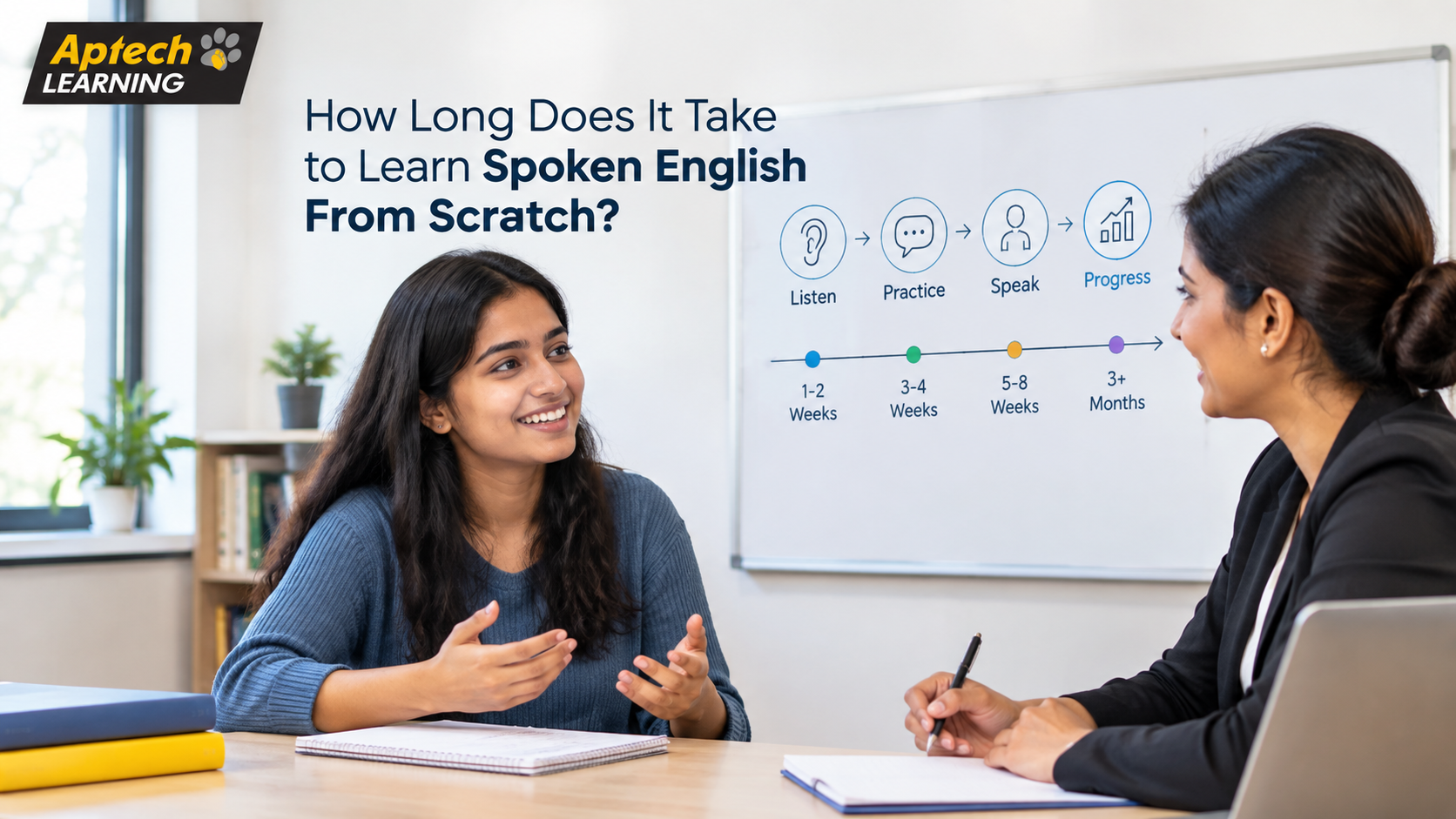
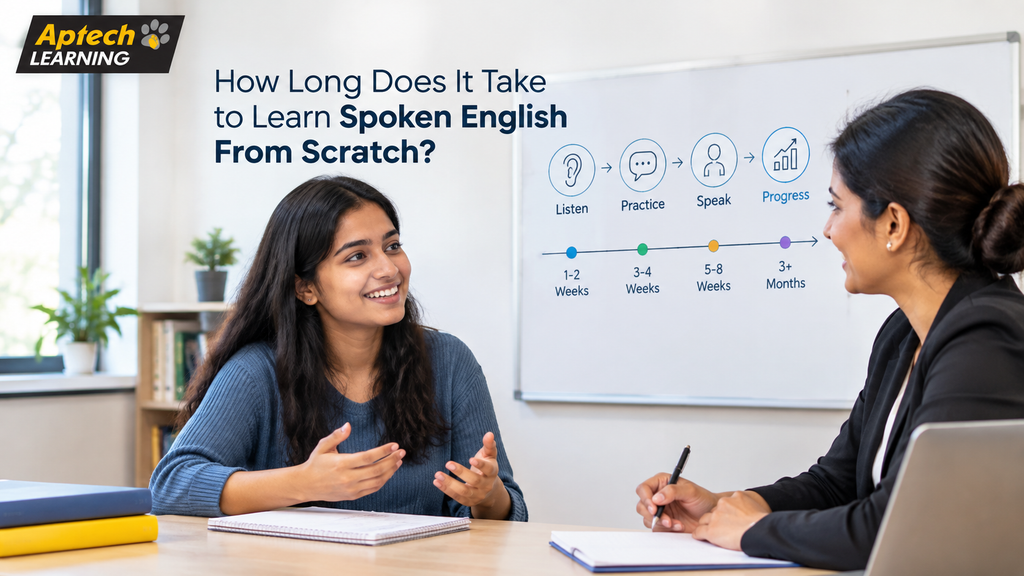
How Long Does It Take to Learn Spoken English From Scratch?

Why “How Long” Doesn’t Have a Single Universal Answer
Asking “how long does it take to learn spoken English” is a bit like asking “how long does it take to get fit.” The honest answer depends entirely on your starting point, how consistently you practise, and what specific goal you actually mean by “fit,” or in this case, “fluent.” Someone practising daily with focused methods will progress very differently from someone practising occasionally without much structure.
Think of it like learning to swim. Some people feel reasonably comfortable in water within a few weeks of regular practice, while true competitive-level swimming skill takes years to develop. Similarly, basic conversational comfort in English can develop within a couple of months of consistent practice, while deeper, more nuanced fluency naturally continues developing over a much longer period, sometimes years, especially if you want to sound highly polished or handle complex, specialised topics confidently.
Understanding this helps set expectations that are genuinely useful, rather than either unrealistically fast or vaguely open-ended.
Why Setting a Realistic Timeline Matters
Setting a genuinely realistic timeline matters for a few clear reasons:
It helps you stay motivated, since expecting fluency within a few days or weeks, then not achieving it, can lead to unnecessary frustration and giving up early.
It helps you plan your learning schedule more effectively, especially if you have a specific deadline in mind, like an upcoming interview or exam.
It sets appropriate expectations for what “success” looks like at each stage, rather than only recognising complete, polished fluency as the only marker of progress.
It helps you choose the right learning intensity, since a realistic timeline can guide how much daily time you genuinely need to commit to reach your specific goal.
It reduces comparison-based discouragement, since understanding that timelines vary naturally between individuals prevents unfair comparisons with others’ progress.
Stages of Learning Spoken English From Scratch
Learning spoken English generally progresses through a few identifiable stages, each with a different look and feel.
Absolute Beginner Stage
This stage involves learning basic vocabulary, simple sentence structures, and very short, functional phrases for everyday needs.
Basic Conversational Stage
This stage involves being able to hold simple, short conversations about familiar topics, though with noticeable hesitation and limited vocabulary.
Functional Fluency Stage
This stage involves comfortably handling everyday conversations, workplace discussions, and most common situations with reasonable confidence, even with occasional mistakes.
Confident, Natural Fluency Stage
This stage involves speaking naturally and smoothly across a wide range of topics, including more complex or nuanced discussions, with strong overall confidence.
Advanced, Polished Fluency Stage
This stage involves near-native level comfort, including handling specialised, professional, or highly nuanced topics with ease and precision.
Stage | What It Looks Like | Typical Timeframe (With Consistent Practice)
Absolute Beginner | Learning basic vocabulary and simple phrases | First few weeks
Basic Conversational | Short, hesitant conversations on familiar topics | 2 to 3 months
Functional Fluency | Comfortable everyday and workplace conversation | 6 months to 1 year
Confident, Natural Fluency | Smooth, natural conversation across varied topics | 1 to 2 years
Advanced, Polished Fluency | Near-native comfort with nuanced topics | Ongoing, often multiple years
Step-by-Step Timeline Breakdown
- Weeks 1 to 4: Building the Absolute Basics
Focus on essential vocabulary, simple sentence structures, and basic pronunciation, building a foundation for further learning. - Months 2 to 3: Developing Basic Conversational Ability
Begin practising short conversations, building comfort with common everyday topics and simple question-and-answer exchanges. - Months 3 to 6: Expanding Vocabulary and Reducing Hesitation
Continue building vocabulary while actively working on reducing pauses and hesitation during conversation through regular speaking practice. - Months 6 to 12: Reaching Functional, Confident Fluency
Develop the ability to comfortably handle everyday and basic workplace conversations, with noticeably reduced hesitation and stronger vocabulary range. - Year 1 to 2: Building Natural, Smooth Fluency
Continue refining pronunciation, expanding vocabulary further, and building comfort with more complex or nuanced conversations. - Beyond Year 2: Ongoing Refinement Toward Advanced Fluency
Continue developing deeper fluency, particularly for specialised, professional, or highly nuanced topics, which naturally continues improving with ongoing use and exposure. - Throughout All Stages: Consistent Daily Practice
Regardless of which stage you are in, consistent, regular practice remains the primary factor driving how quickly you progress through each stage.
Factors That Speed Up or Slow Down Progress
Several factors genuinely influence how quickly someone progresses through these stages.
Daily Practice Consistency
Consistent, even short, daily practice generally leads to faster progress than occasional, longer, but infrequent study sessions.
Amount of Real Speaking Practice
Actually speaking out loud regularly, rather than only studying passively, significantly accelerates genuine speaking confidence and fluency.
Exposure to Native or Fluent Speakers
Regular interaction with fluent English speakers, whether in person or through structured practice, often speeds up natural pronunciation and conversational comfort.
Starting Comfort With Language Learning
Individuals who have previously learned another language sometimes progress somewhat faster, having already built certain language-learning skills.
Structured Course vs Self-Guided Learning
A structured course with regular feedback often accelerates progress compared to entirely self-guided learning without external correction.
Personal Motivation and Specific Goals
Learners with a clear, specific goal, such as an upcoming interview or exam, often maintain more consistent practice, which naturally speeds up progress.
Practical Examples
Student Practising Daily for 30 Minutes: A student who consistently practises speaking and listening for 30 minutes daily reaches basic conversational ability within about 2 to 3 months, noticeably faster than occasional, inconsistent learners.
Working Professional With Limited Time: A working professional practising only a few times a week progresses more slowly, taking closer to a year to reach functional, confident fluency compared to someone practising daily.
Student in a Structured Course With Regular Feedback: A student enrolled in a structured spoken English course with weekly feedback sessions often reaches functional fluency somewhat faster than a similarly motivated self-guided learner without structured correction.
Complete Beginner With No Prior Language Learning Experience: A complete beginner with no prior experience learning a second language may take slightly longer in the initial absolute beginner stage compared to someone with prior language-learning exposure.
Common Mistakes That Delay Progress
Expecting fluency within just a few weeks. Unrealistic expectations often lead to frustration and giving up before genuine progress has had time to develop.
Studying only passively, without actual speaking practice. Reading or listening alone, without regularly speaking out loud, significantly slows down genuine speaking confidence development.
Practising inconsistently, in occasional bursts. Sporadic, infrequent practice generally leads to much slower progress than shorter, consistent daily practice sessions.
Avoiding speaking due to fear of mistakes. This natural hesitation, if not addressed early, can significantly slow down the transition from basic to confident conversational fluency.
Comparing your timeline unfairly to others. Since individual factors vary significantly, comparing your specific progress to someone else’s timeline can create unnecessary discouragement.
Giving up during the basic conversational stage. This stage often feels the most frustrating, since progress can feel slow, but pushing through it typically leads to noticeably faster improvement afterward.
What Realistic Progress Actually Looks Like
Realistic progress in learning spoken English generally does not feel like a smooth, steady climb; it often feels slow initially, with noticeable jumps in confidence appearing every few weeks or months as vocabulary and comfort build up. Many learners feel most frustrated during the early basic conversational stage, since they can understand more than they can comfortably say, but this gap naturally narrows significantly with continued, consistent practice. Recognising this pattern helps you stay patient and consistent, rather than mistaking normal, gradual progress for a lack of real improvement.
How This Timeline Affects Career Readiness
Understanding this realistic timeline is particularly useful for career planning, especially if you are working toward a specific goal like job interviews or workplace communication readiness. Reaching functional, confident fluency, generally achievable within 6 months to a year of consistent practice, is often sufficient for handling most everyday workplace communication and interview situations confidently. Waiting for complete, polished, advanced fluency before applying for jobs or attending interviews is usually unnecessary, since functional fluency is often genuinely sufficient for strong performance in most professional communication contexts.
Skills That Develop at Each Stage
Absolute Beginner Stage: Basic vocabulary recognition, simple phrase formation, and foundational pronunciation awareness
Basic Conversational Stage: Short sentence construction, basic question-and-answer exchanges, and initial listening comprehension
Functional Fluency Stage: Comfortable everyday conversation, reduced hesitation, and confident handling of common workplace scenarios
Natural Fluency Stage: Smooth, connected speech, broader vocabulary range, and comfort with more nuanced or complex topics
Tools That Can Help You Progress Faster
Tool or Method | How It Speeds Up Progress
Daily Speaking Practice | Directly builds speaking confidence and reduces hesitation
Active Listening Practice | Improves natural pronunciation and comprehension over time
Structured Speaking Course | Provides consistent feedback that accelerates correction of mistakes
Shadowing Technique | Builds natural pronunciation and rhythm through repeated practice
Speaking Groups or Partners | Provides real conversational practice that builds confidence faster than solo study alone
Eligibility
There is no fixed background or age requirement for learning spoken English from scratch, since these general timelines and learning stages apply broadly to complete beginners at any age or starting point. Anyone willing to commit to consistent, regular practice can realistically expect to progress through these stages, regardless of their specific starting circumstances.
Recommended Daily Practice Time
For realistic, steady progress, dedicating at least 20 to 30 minutes daily to a combination of speaking and listening practice generally supports meaningful improvement over the timelines outlined in this guide. Learners with more available time, an hour or more daily, combining structured lessons, speaking practice, and listening exposure, often progress somewhat faster through these stages, though consistency remains more important than occasional, longer sessions.
Who This Timeline Applies To
Complete beginners starting to learn spoken English with little to no prior exposure
Students or professionals planning around a specific goal, such as an upcoming interview or exam
Anyone wanting realistic expectations before committing to a structured spoken English course
Learners who have previously felt discouraged by unrealistic “fluent in weeks” promises and want an honest, practical timeline instead
Frequently Asked Questions
How long does it realistically take to learn spoken English from scratch?
Basic conversational ability often develops within 2 to 3 months of consistent practice, while functional, confident fluency typically takes 6 months to a year with regular effort.
Can I become fluent in English in just a few weeks?
Complete fluency in just a few weeks is generally unrealistic; however, basic functional phrases and simple conversation can begin developing within the first few weeks of consistent practice.
What factors most affect how quickly I learn spoken English?
Daily practice consistency, actual speaking practice, exposure to fluent speakers, and whether you use a structured course all significantly influence how quickly you progress.
Is 30 minutes of daily practice enough to learn spoken English?
Yes, 30 minutes of consistent daily practice, combining speaking and listening, generally supports meaningful progress over the realistic timelines described in this guide.
Why does progress feel slow during the basic conversational stage?
This stage often feels frustrating because your understanding grows faster than your speaking ability, though this gap typically narrows significantly with continued, consistent practice.
Do I need a structured course to learn spoken English faster?
A structured course with regular feedback often accelerates progress compared to entirely self-guided learning, though consistent self-practice can still lead to meaningful improvement.
How long does it take to become job-interview ready in English?
Reaching functional, confident fluency, generally within 6 months to a year of consistent practice, is often sufficient for handling most job interviews and workplace communication confidently.
What is the difference between functional fluency and advanced fluency?
Functional fluency means comfortably handling everyday and workplace conversations, while advanced fluency involves near-native comfort with nuanced, specialised, or highly complex topics.
How can I speed up my English speaking learning timeline?
Increasing daily practice consistency, focusing specifically on speaking rather than passive study, and using structured feedback can all help speed up realistic progress.
Conclusion
Learning spoken English from complete scratch genuinely takes time, and the honest, realistic timeline is closer to several months to a year for confident, functional fluency, rather than the unrealistic “fluent in weeks” promises often advertised. Understanding this helps you stay patient, motivated, and consistent, rather than becoming discouraged by normal, gradual progress.
The key is consistent, daily practice, an emphasis on actual speaking rather than passive study, and realistic expectations about which stage of fluency you are genuinely working toward. With steady, honest effort, functional, confident English speaking is a genuinely achievable goal within a realistic timeframe.
Soft Call to Action
If you are based in Lucknow and want structured, guided practice to progress through these stages more efficiently, Aptech Learning Lucknow offers spoken English courses designed for complete beginners and working professionals alike. You can visit the institute, speak with their counsellors, or attend a demo class to understand how the course could support your specific timeline and goals.