
How to Become a Web Developer: Step-by-Step Guide
A web developer is someone who builds and maintains websites and web applications. This includes everything from the visual layout you see on a screen to the systems working behind the scenes that handle data, logins, and payments.
Think of building a website like constructing a house. Some developers focus on what the visitors actually see and interact with, like the layout, colours, and buttons. Others focus on what happens behind the walls, like plumbing and electrical systems, which in web development means databases, servers, and application logic. Some developers do both.
Web developers work across almost every industry today, since nearly every business, from a small local shop to a large corporation, needs some kind of online presence or web-based tool to function.
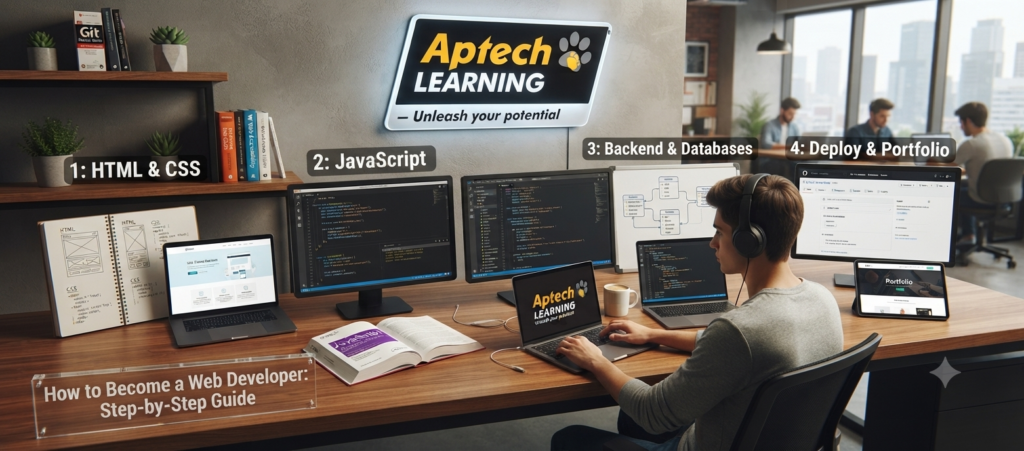
Why Web Development is a Good Career Choice
Web development remains one of the more accessible entry points into the tech industry, and here is why it continues to attract so many learners:
Almost every business needs a website or web application, keeping demand for developers fairly consistent across industries.
The learning path is very project-based, meaning you can build a visible portfolio of real work fairly early in your learning journey.
There is flexibility in career paths, including full-time jobs, freelancing, remote work, and even building your own products.
The field constantly evolves, which keeps the work interesting for people who enjoy continuous learning.
Many core skills, like HTML, CSS, and JavaScript, do not require expensive tools or setups to start learning.
Types of Web Developers
Web development is generally divided into a few core specialisations, each focusing on a different part of building a website.
Front-End Developer
Front-end developers focus on everything users see and interact with directly, such as layout, design, and interactive elements on a webpage.
Back-End Developer
Back-end developers focus on the server side of an application, handling databases, business logic, and how data is processed and stored.
Full-Stack Developer
Full-stack developers work across both front-end and back-end, handling the complete development of a web application from start to finish.
Web Designer (Related Role)
While not strictly a developer role, web designers focus on the visual and user experience side, often working closely with front-end developers.
Type | Main Focus | Example Work
Front-End Developer | User interface and interactions | Building responsive page layouts
Back-End Developer | Server, database, application logic | Managing user data and authentication
Full-Stack Developer | Both front-end and back-end | Building a complete web application
Step-by-Step Guide to Becoming a Web Developer
- Learn the Basics of HTML and CSS
Start with HTML to structure web pages and CSS to style them. These two form the foundation of every website. - Learn JavaScript
JavaScript adds interactivity to websites, such as clickable buttons, forms, and dynamic content that changes without reloading the page. - Understand Responsive Design
Learn how to make websites work well across different screen sizes, from desktops to mobile phones, since users access sites on many devices. - Choose a Specialisation
Decide whether you want to focus on front-end, back-end, or full-stack development, and go deeper into the relevant tools and frameworks. - Learn a Front-End or Back-End Framework
For front-end, this could mean learning a framework like React. For back-end, this could mean learning Node.js, Python, or another server-side technology, along with databases. - Build Real Projects
Apply what you learn by building actual websites or applications, such as a portfolio site, a to-do app, or a small e-commerce page. - Learn Version Control
Learn to use Git and platforms like GitHub to manage your code, track changes, and collaborate with other developers. - Create a Portfolio
Put your best projects together in a portfolio website, since this is often what employers or clients look at first. - Apply for Internships or Freelance Work
Gain real-world experience by working on actual client projects or internships, which strengthens both your skills and your resume. - Keep Learning Continuously
Web development tools and best practices evolve regularly, so staying updated through practice and continued learning is part of the job long-term.
Front-End vs Back-End vs Full-Stack Development
These three terms describe different areas of focus within web development, and beginners often wonder which one to choose first.
Front-end development focuses on the visual, interactive part of a website that users directly see and engage with, built mainly using HTML, CSS, and JavaScript.
Back-end development focuses on the server side, handling things like databases, user authentication, and business logic that power the website behind the scenes.
Full-stack development combines both front-end and back-end skills, allowing a developer to build a complete web application independently, from user interface to database.
In simple words: front-end is what users see, back-end is what runs behind the scenes, and full-stack means being comfortable working on both sides.
Practical Examples
E-commerce Website: A front-end developer builds the product pages and shopping cart interface, while a back-end developer manages the database of products, orders, and payment processing.
Portfolio Website: A beginner web developer might build a personal portfolio site using HTML, CSS, and JavaScript to showcase their skills and projects to potential employers.
Booking System: A full-stack developer might build an entire appointment booking system for a clinic, handling both the visible calendar interface and the backend logic that stores and manages bookings.
Company Website: A small business website often involves a front-end developer creating the layout and a back-end developer setting up a contact form that sends data to the business’s email or database.
Common Mistakes Beginners Make
Jumping into frameworks too early. Learning a framework like React before understanding core HTML, CSS, and JavaScript often leads to confusion later.
Watching tutorials without building projects. Passive learning without hands-on practice makes it hard to retain and apply concepts.
Trying to learn everything at once. Beginners often try to learn front-end, back-end, and multiple frameworks simultaneously, which slows progress instead of speeding it up.
Ignoring responsive design. Building websites that only work well on desktop, while ignoring how they appear on mobile devices, is a common early mistake.
Not learning version control early. Skipping Git and GitHub early on makes collaboration and project management harder later in your career.
Comparing progress with others online. Everyone learns at a different pace, and comparing your journey to curated online progress can create unnecessary pressure.
Career Opportunities
Web development offers multiple career paths across industries like IT services, e-commerce, startups, and freelancing. Common roles include:
Front-End Developer — builds the visual and interactive parts of websites and applications.
Back-End Developer — manages servers, databases, and application logic.
Full-Stack Developer — handles both front-end and back-end development.
Web Designer — focuses on layout, user experience, and visual design.
WordPress Developer — specialises in building and customising websites using WordPress.
Freelance Web Developer — works independently with multiple clients rather than a single employer.
As experience grows, professionals can move into roles like Senior Developer, Technical Lead, or transition into related fields like software engineering.
Salary Information
Salary in web development varies depending on factors such as your city, the size and industry of the company, your specific role, your skill level, and your years of experience. Entry-level positions naturally pay less than senior roles, and metro cities generally offer higher packages than smaller towns. Rather than fixed numbers, it is more useful to know that salaries tend to grow steadily as you build a strong portfolio, gain project experience, and develop expertise in both front-end and back-end technologies.
Skills Required
Technical Skills
HTML and CSS for structuring and styling web pages
JavaScript for adding interactivity and dynamic behaviour
A front-end framework such as React for building modern user interfaces
A back-end language such as Node.js, Python, or PHP for server-side logic
Basic database knowledge, such as SQL or MongoDB, for storing and managing data
Git and GitHub for version control and collaboration
Non-Technical Skills
Problem-solving mindset, since debugging code is a regular part of the job
Attention to detail, especially when it comes to layout and functionality
Patience, since learning to code well takes consistent practice over time
Communication skills, especially when working with clients or non-technical teams
Time management, particularly important for freelance or project-based work
Tools Used in Web Development
Tool | Primary Use
Visual Studio Code | Writing and editing code
Git and GitHub | Version control and collaboration
React | Building modern front-end user interfaces
Node.js | Building back-end applications using JavaScript
MySQL or MongoDB | Storing and managing application data
Chrome DevTools | Testing and debugging websites directly in the browser
Eligibility
There is no single fixed background required to start learning web development. Students from any stream, including science, commerce, or arts, can learn it, since the core requirement is logical thinking rather than a specific degree. Generally, learners should have completed at least higher secondary education (12th grade) or be graduates, along with basic comfort using computers. No prior coding experience is required, as most beginner-friendly courses start from the fundamentals.
Course Duration
Web development courses can range from a few weeks for short, focused programs to several months for in-depth, project-based training covering both front-end and back-end skills. The right duration depends on your current skill level, how many technologies you want to learn, and whether the course includes hands-on projects. It is best to confirm the exact course structure and duration directly with the training provider.
Who Should Learn Web Development
College students who want a practical, project-based skill for a strong career start
Working professionals looking to switch into a flexible, in-demand tech role
Freelancers who want to offer website building services to clients
Business owners who want to understand or manage their own company’s website
Job seekers looking for a skill that applies across almost every industry
Frequently Asked Questions
How do I become a web developer from scratch?
Start by learning HTML and CSS, then move on to JavaScript. After building a foundation, choose a specialisation like front-end or back-end and practice with real projects.
Is web development a good career choice?
Yes, web development remains in strong demand since almost every business needs an online presence, offering opportunities in full-time jobs, freelancing, and remote work.
Do I need a computer science degree to become a web developer?
No, a formal degree is not compulsory. Many successful web developers are self-taught or trained through structured courses, with strong project experience mattering most.
What is the difference between front-end and back-end development?
Front-end development focuses on what users see and interact with, while back-end development handles the server, database, and logic working behind the scenes.
Which programming language should I learn first for web development?
HTML and CSS are the starting point, followed by JavaScript, since these three form the foundation of nearly all web development work.
How long does it take to become a web developer?
This depends on your starting point and how much time you dedicate to learning and practising. Consistent, project-based learning generally leads to faster, more practical progress.
Conclusion
Becoming a web developer is one of the more accessible paths into the tech industry, especially because progress is visible through real projects you can build and showcase along the way. Whether you come from a technical or non-technical background, a structured, step-by-step approach makes the learning process much more manageable.
The key is to start with HTML, CSS, and JavaScript, choose a specialisation once you understand the basics, and build real projects consistently rather than only studying theory. Steady, hands-on practice is what ultimately turns a beginner into a job-ready web developer.
Soft Call to Action
If you are based in Lucknow and want structured, hands-on training instead of learning everything alone, Aptech Learning Lucknow offers web development courses designed for beginners and working professionals alike. You can visit the institute, speak with their counsellors, or attend a demo class to understand how the course is structured and whether it fits your career goals.